

3 Ways X+ Talent Advisor Drives Talent Team Strategies with People Analytics and AI
There’s a snag in people analytics, where leaders can't get to the HR data they need quickly enough and gain an understanding of the data without an analyst. People analytics has always held significant promise for talent teams, with data readily available across performance systems, applicant tracking tools, workforce planning platforms, and engagement systems. However, the bottleneck has been the inability to access this data on demand and gain enough clarity on what the data actually means for leaders to act.
Phenom X+ Talent Advisor directly addresses this gap. Powered by an AI-native people analytics solution now part of Phenom Applied AI, it automatically connects and cleanses data across disparate HR systems using continuous quality algorithms — no analyst required. The result is AI-generated insights that leadership teams can read and act on in seconds, not weeks.
This blog covers three capabilities that talent teams are using to shift from mere data collection to confident decision-making.
How X+ Talent Advisor is Purpose-Built to Serve HR
X+ Talent Advisor is a purpose-built people analytics solution, meaning every metric, integration, and insight layer is designed specifically for HR and talent acquisition use cases. The platform ships with:
4,000 out-of-the-box metrics covering 80 to 90% of typical talent analytics needs
Enterprise-grade permissioning so the right people see the right data,
Large Language Model (LLM) narration layer that translates complex analysis into plain-language summaries
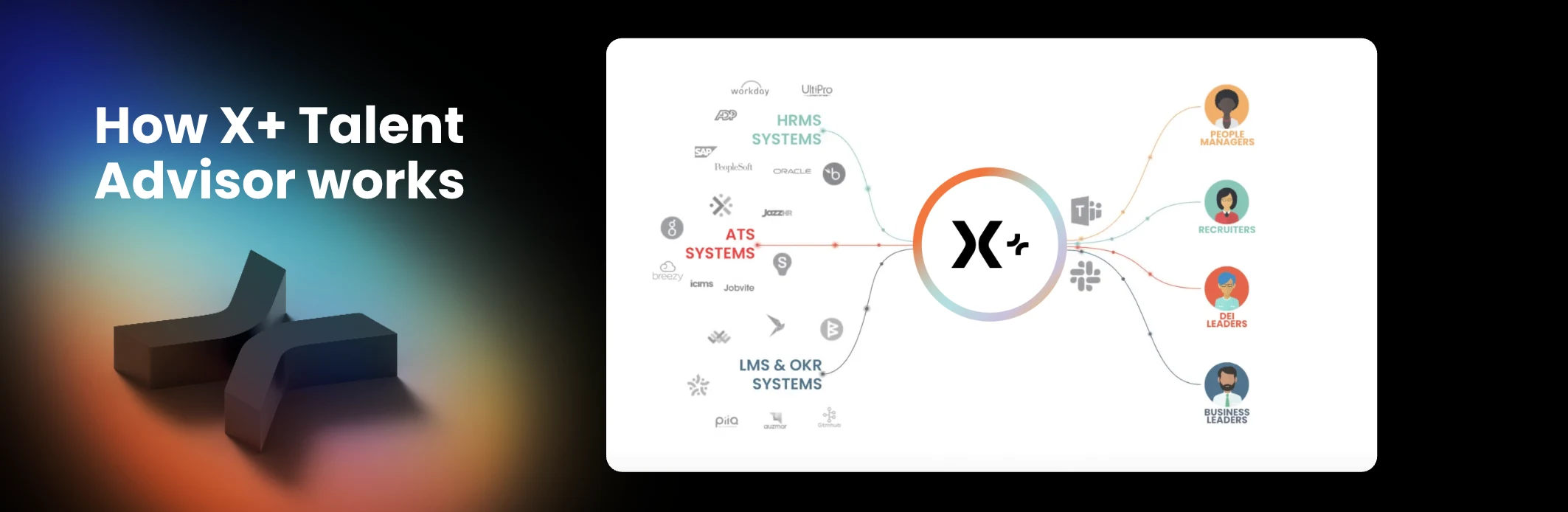
The three capabilities below address the specific points in the analytics workflow where speed and accessibility tend to create friction: data connectivity, data reliability, and insight generation.
1. Connect All Your People Data in One Unified View
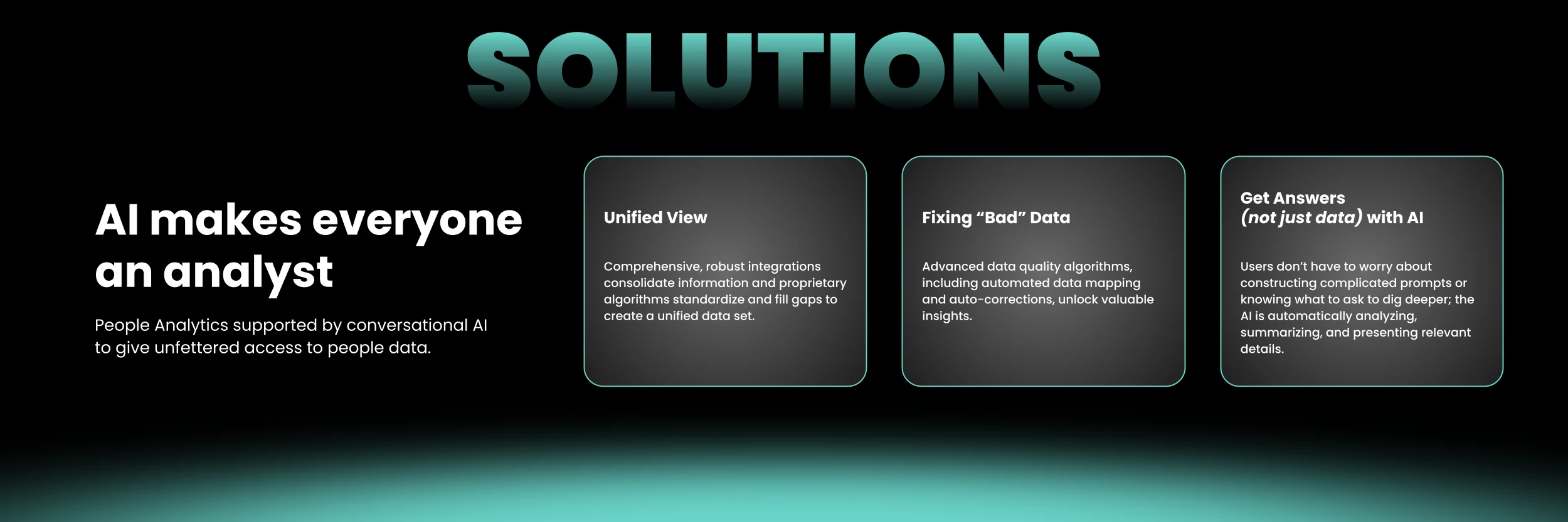
Answering a question like "which sources produced our top performers" typically requires data from four or more systems: a candidate relationship management (CRM) tool for sourcing activity, an application tracking system (ATS) for applicant records, a system of record for employee data, and a performance platform for outcomes. X+ Talent Advisor connects all of those sources natively, creating a unified data layer that makes cross-system questions answerable without manual data pulls and preparation.
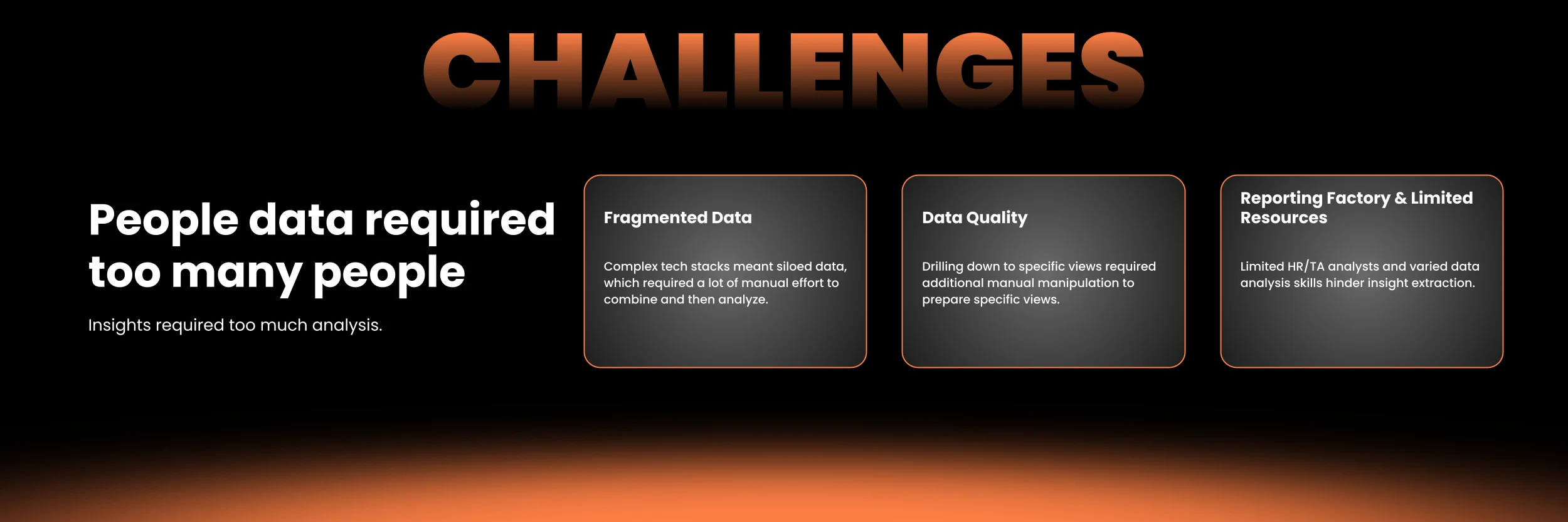
Getting unified data working in X+ Talent Advisor
The integration layer is designed to handle the complexity of enterprise HR tech stacks from the start. To get connected:
Identify data sources: Identify the systems that hold data most relevant to your highest-priority analytics: Human Capital Management (HCM), ATS, CRM, performance management, and engagement platforms are all supported
Connect systems: Connect each system through Phenom's native integrations. The platform handles field mapping and relationship building automatically, including linking organization hierarchy from your HCM to job and applicant data from your ATS
Validate results: Validate that cross-system queries return expected results by running a sample question once the integration is live, for example, pulling open roles by department leader to confirm that the org hierarchy is mapping correctly
Tip: For organizations with multiple ATS instances or complex org structures, the integration layer accommodates that natively. Your Account Manager can walk through what a connection looks like for your specific configuration before you begin.
2. Keep Talent Reporting Accurate With Automated Data Quality
HR data is dynamic and, over time, can get messy. Roles get filled without status updates in the ATS. Fields get populated inconsistently across systems. Records accumulate without standardisation over time. The data quality layer in X+ Talent Advisor addresses this continuously, applying automated algorithms that correct what can be corrected and surface what needs human intervention, so reporting reflects an accurate picture of the organization at all times.
A practical example is a role that remains listed as open in the ATS after the position has been filled. Talent Advisor detects inactivity on the record and closes it automatically, so leadership sees accurate open headcount. The original record is preserved and available for review; the operations team can audit all auto-corrected records as a separate exercise, fully independent of the insights layer.
Activating data quality management
The quality layer runs automatically once your data sources are connected. To get the most from it:
Validate Auto-Corrections: Review the auto-correction queue regularly to validate automatically updated records, ensuring clean reporting and a transparent audit trail.
Close the Loop on Incomplete Workflows: Use the process status completion feature to identify and resolve records where workflow steps remain incomplete (e.g., filled roles not formally closed in your ATS).
Configure Data Alerts: Set up alerts for specific data conditions to notify your team when records fall outside expected parameters, catching inconsistencies before the reporting cycle.
Treat the auto-correction review queue as a continuous data hygiene input rather than a one-time cleanup task. Teams that review flagged records weekly find that corrections are accurate in the vast majority of cases, and the exceptions reliably point to upstream process gaps worth resolving at the source.
3. Turn Analytical Questions Into Actionable Insight
One of the most meaningful shifts with X+ Talent Advisor is how leaders receive and use analytical outputs. Rather than receiving a static report that requires further interpretation, leaders ask questions in natural language and receive structured narrative responses that identify where performance is strong, where attention is warranted, and what the recommended next steps are, without an analyst mediating the process.
Using the agentic insights layer
The agent experience is conversational and requires no technical expertise. To get value from it quickly:
Start with the Big Question: Start with the question your leadership team asks most often and has historically waited the longest to receive an answer to. Type it in natural language into the agent interface.
Validate Insights: Review the narrative response and use the embedded data links to validate the insights before sharing them. Every claim in the AI-generated summary links to the underlying data
Package for Leadership: Use the board-ready summary feature for non-technical audiences.
The platform's LLM narration layer does not receive raw HR data. Insights and outliers are generated through the analytics engine first, and the LLM is used to narrate and summarise those findings, an architecture designed to meet enterprise privacy and security requirements.
How Customers Are Measuring The Value
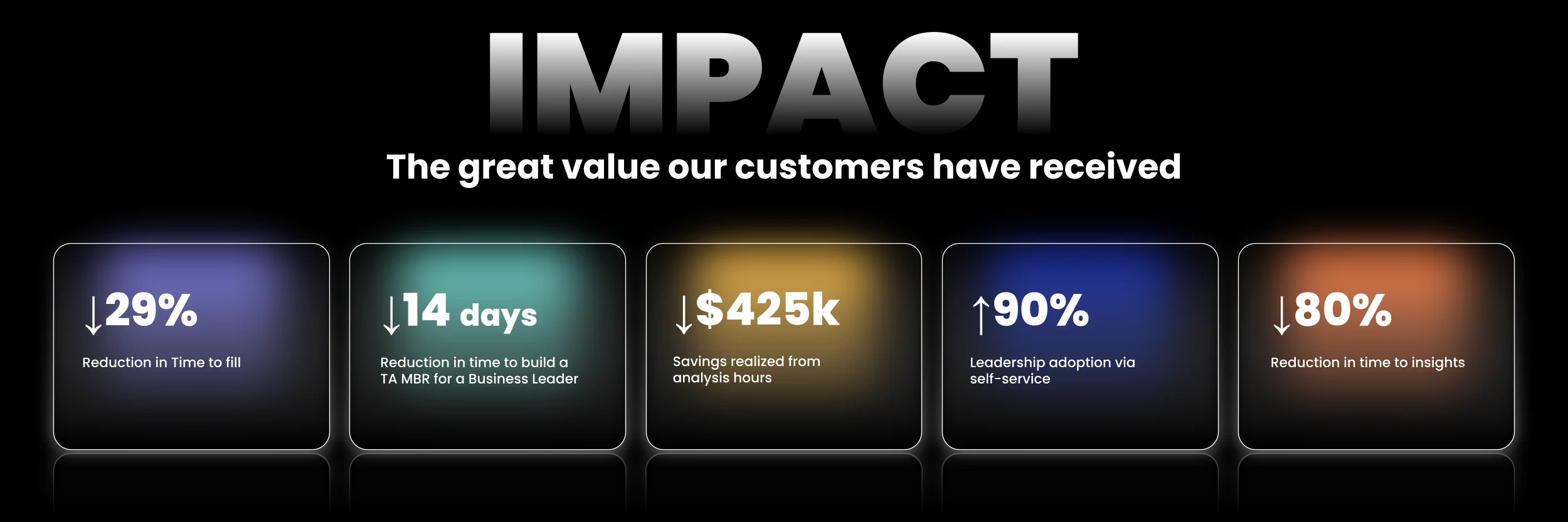
The following results reflect what organizations report after implementing X+ Talent Advisor across their talent analytics workflows:
29% reduction in time to fill: faster insight generation enables earlier identification of bottlenecks and more responsive intervention before delays compound.
14-day reduction in time to build a Talent Acquisition Reporting: leadership reporting that previously required weeks of analyst preparation is now generated in minutes within the platform.
$425k savings from analysis hours: time recovered from manual data preparation translates into measurable cost reduction.
90% leadership adoption via self-service: leaders are accessing insights without waiting for analyst-mediated reports, which reflects the democratisation goal the platform was designed around.
80% reduction in time to insights: the shift from weeks to seconds changes how quickly organizations can respond to hiring pressure, capacity gaps, and pipeline risks.
Getting Started With X+ Talent Advisor
Teams that start with a focused use case, their high-pressure hiring category, or their most frequently asked leadership question see the fastest return and build the internal confidence to expand.
Identify your highest-value question first: start with the analytics question your team spends the most time answering manually. That is where the time savings will be most impactful and make the case for expansion.
Give the data quality layer time to calibrate: review the auto-correction queue once after your initial data connections are live before concluding the output.
Put leadership in the platform day one: the 90% adoption rate reflects organizations that gave CHROs and TA Directors access from day one. The natural language interface is natural and built for the immediate answers this audience expects.
Explore X+ Talent Advisor for Your Organization
Talent acquisition teams are operating in a market where hiring decisions need to move faster, workforce planning needs to respond to change in real time, and leadership needs visibility that keeps pace with the business rather than lagging behind it. The organizations that are best positioned to hire well are the ones that can see clearly what is working, where the pipeline is stalling, and what needs to change before a delay becomes a problem. X+ Talent Advisor is entering its pilot phase within Phenom and is available now for teams that are ready to put that kind of visibility into practice.
Curious to learn more? Reach out to your account manager today about your pilot.

Devi is a content marketing writer passionate about crafting content that informs and engages. Outside of work, you'll find her watching films or listening to NFAK.


Get the latest talent experience insights delivered to your inbox.
Sign up to the Phenom email list for weekly updates!


