

Seasonal Hiring at Scale: Inside Viking’s Talent Marketing Journey
"We were not focusing on the candidate journey. We were focusing on the recruiters."
That's how Balázs Horváth, Executive Director of Organisation Effectiveness at Viking Cruises, described the company's first attempt at talent marketing. The site had been built around how recruiters organized roles internally, not how candidates would actually navigate them — and for a global, seasonal workforce, that quietly challenged the experience on both ends.
Viking operates river, ocean, and expedition cruises across Europe, the Mississippi, the Nile, and the polar regions, with 15,000 employees from 95 nationalities and a hiring cycle tied to which rivers freeze in winter. At IAMPHENOM 2026, Horváth shared how the team rebuilt its talent marketing strategy so candidates find the right roles faster and recruiters get stronger pipelines in return.
Watch the full session here, or explore the highlights below.
Why Do Global Career Sites Fail in High-Volume, Seasonal Hiring?
After Viking went live with Phenom in 2022, the early results looked promising with thousands of applications coming in.
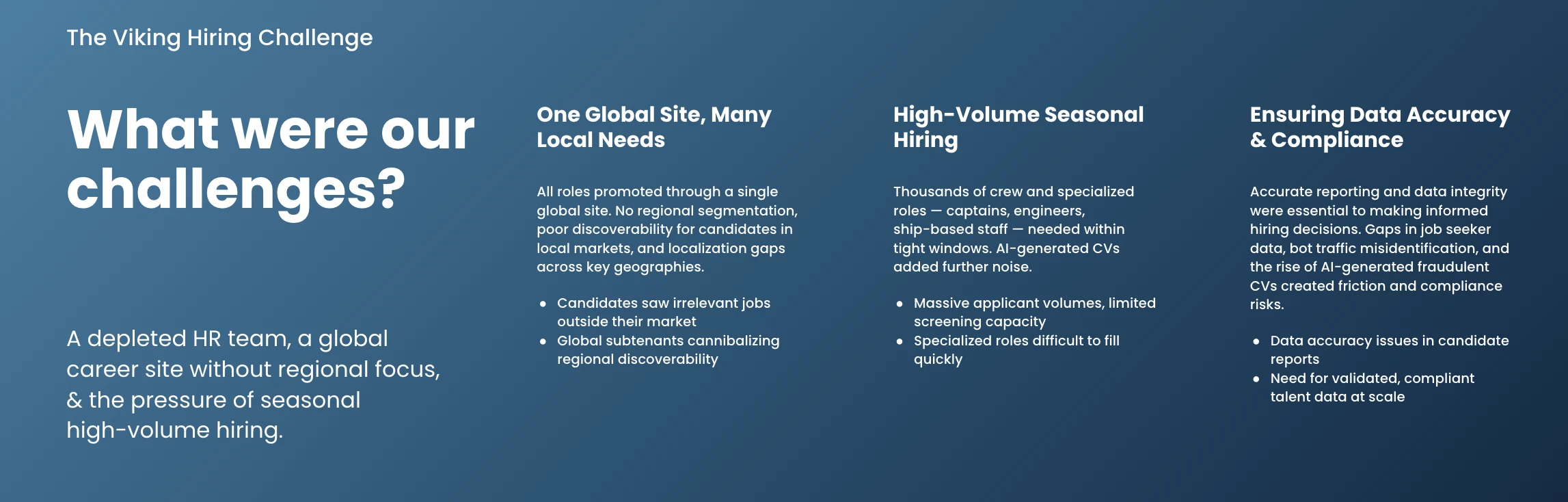
The problem was that most of them were ineligible. A candidate in Southeast Asia would apply for a Mississippi vessel role that explicitly required U.S. citizenship or a green card, and immediately become disqualified. For some positions, more than 75% of applications were disqualified on eligibility alone, burying qualified candidates and tying up recruiters in pre-screen volume that couldn't convert.
The global site was also losing candidates who might have been a good fit if they’d been routed to the right experience. A culinary professional in Europe doesn’t need to see U.S. call center jobs. A candidate applying for river vessel roles doesn’t need ocean expedition content. When the site presented all of it at once, candidates lost the thread of where they fit before they ever got to an application. The site had been built around internal categories rather than the path a candidate would actually take through them.
Layered on top of that, Viking saw a sharp rise in AI-generated fraudulent applications, particularly in high-volume geographies where entire agencies now specialize in manufacturing candidates. Profiles arrive with strong fit scores that fall apart under scrutiny. With no local ID verification available in many markets, the fraud is harder to detect and harder to prevent.
How Does Localizing the Career Site Improve Candidate Experience?
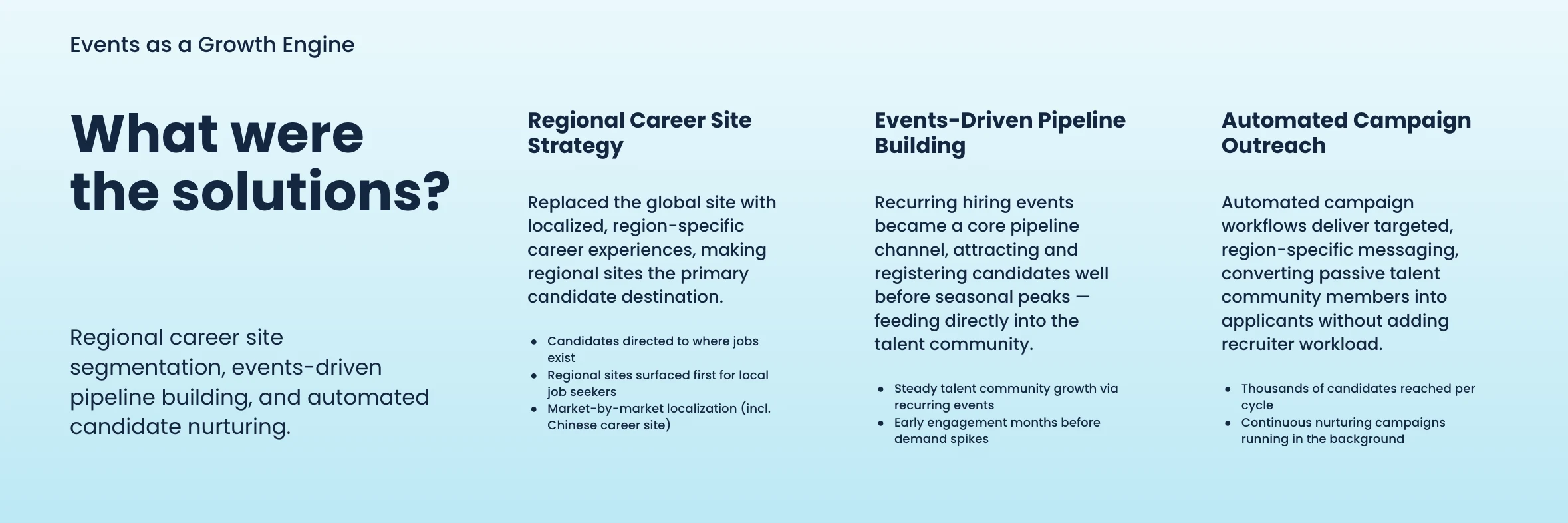
Through Phenom, Viking now operates four regional career sites, each with its own experience, content, and job visibility: Ocean Ships (globally accessible), U.S. (Mississippi vessels plus call center), European Rivers (EU work authorization required), and China (localized content for the growing Chinese market). Candidates are automatically geo-routed to the appropriate site. A candidate logging on from the Philippines sees the Asia-Pacific experience, not the U.S. one. A candidate in Germany sees the European rivers site without ever encountering the Mississippi roles they’re ineligible for.
The career site structure mirrors the journey a candidate would actually take: landing on Viking’s site, selecting a crew type (culinary, nautical, guest services), navigating to the vessel type that fits, and then seeing the specific roles available. At any point where there are no open roles because it’s the off-season or because seasonal needs haven’t triggered a req yet, candidates can set job alerts or join the talent community to stay connected. For Viking, that pipeline continuity is what makes seasonal rehire possible. The goal is for the right candidate to already be warm when the need appears.
How Can Recruiting Events Keep Candidates Engaged Between Hiring Cycles?
Events have become one of Viking’s core growth engines, and the strategy is more deliberate than simply hosting job fairs. Using Phenom Recruitment Events, Viking runs a mix of in-person assessment centers, career fairs by region, and networking events for candidates interested in specific vessel types. Roughly 50% of traffic to the career site now comes from social campaigns (Facebook, Instagram) or Phenom campaigns, with about 10% from job boards. Promoting events through those same social channels is what drives sign-ups and feeds the talent community.
Private events have become particularly effective for re-engaging dormant pipeline. A candidate who expressed interest six months ago gets an invitation to an event curated for people in their situation. The framing matters. Rather than going dark, Viking acknowledges the gap directly: it's been three months, there hasn't been an opening, and here's a way to stay connected. That’s meaningfully different from the experience most cruise lines offer, where candidates hear nothing for months and assume the opportunity has passed. Post-event follow-up campaigns then surface relevant open roles, letting candidates move from event attendee to applicant in one click.
"This makes us unique because most of our competitors never call back. Come to us, because you'll definitely hear from us," said Horváth.
Related Resource: How Tech Care Leader Asurion Scaled Hiring with Unified Event Management
What Results Has Viking’s Talent Marketing Strategy Produced?
Horváth was candid about what a good result looks like for Viking’s model: steady, sustainable growth that keeps the pipeline at the right volume, not explosive growth that creates candidate backlogs no one can manage. As he put it, "It is just exactly what we need to make sure that we build up that continuity for the business."
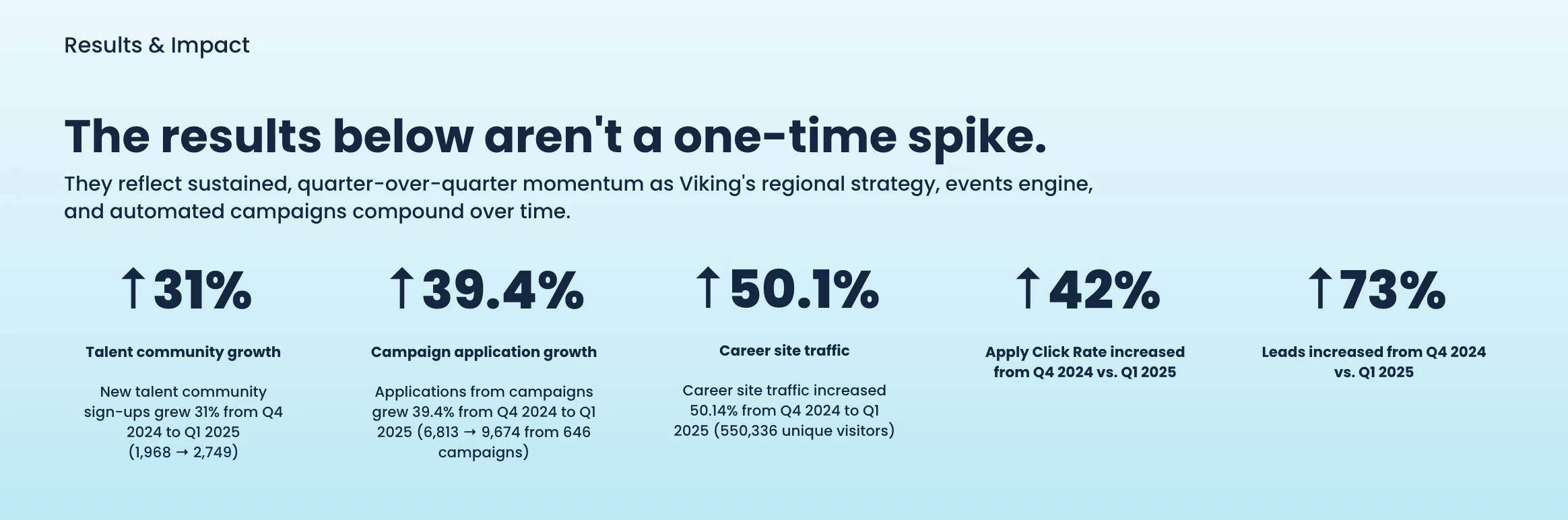
That philosophy shows up clearly in the numbers, not as a one-time spike, but as consistent, quarter-over-quarter momentum:
31% increase in talent community growth
39% increase in campaign-driven applications
50% increase in career site traffic
42% increase in apply click rates
73% increase in leads
What's Next for Viking's Global Talent Strategy?
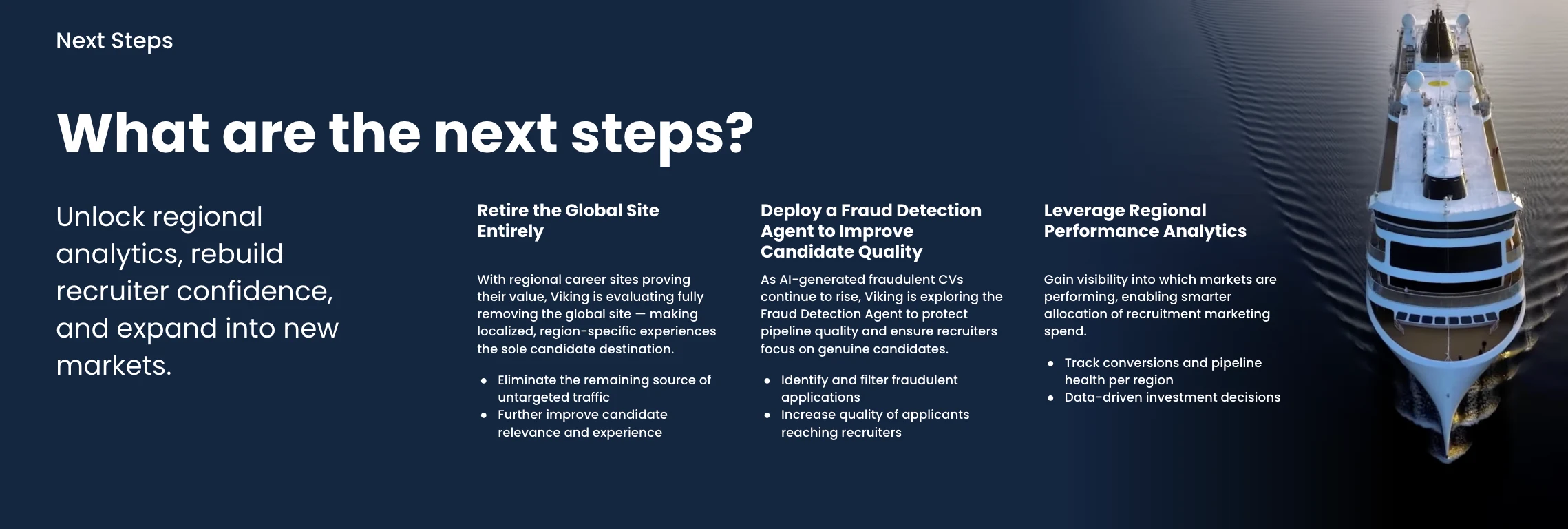
The next priority is moving away from the global site entirely, giving each region its own standalone presence rather than maintaining a global hub candidates can still stumble into. Alongside that, Viking plans to deploy Phenom Fraud detection Agent as fraudulent AI-generated applications continue to grow across high-volume international markets. Subtenant-level performance analytics is also on the roadmap, which will let the team break down traffic and conversion by region rather than aggregating everything into a single global view.
Related: Candidate Fraud Detection in the Age of AI: How to Catch What Traditional Hiring Can't
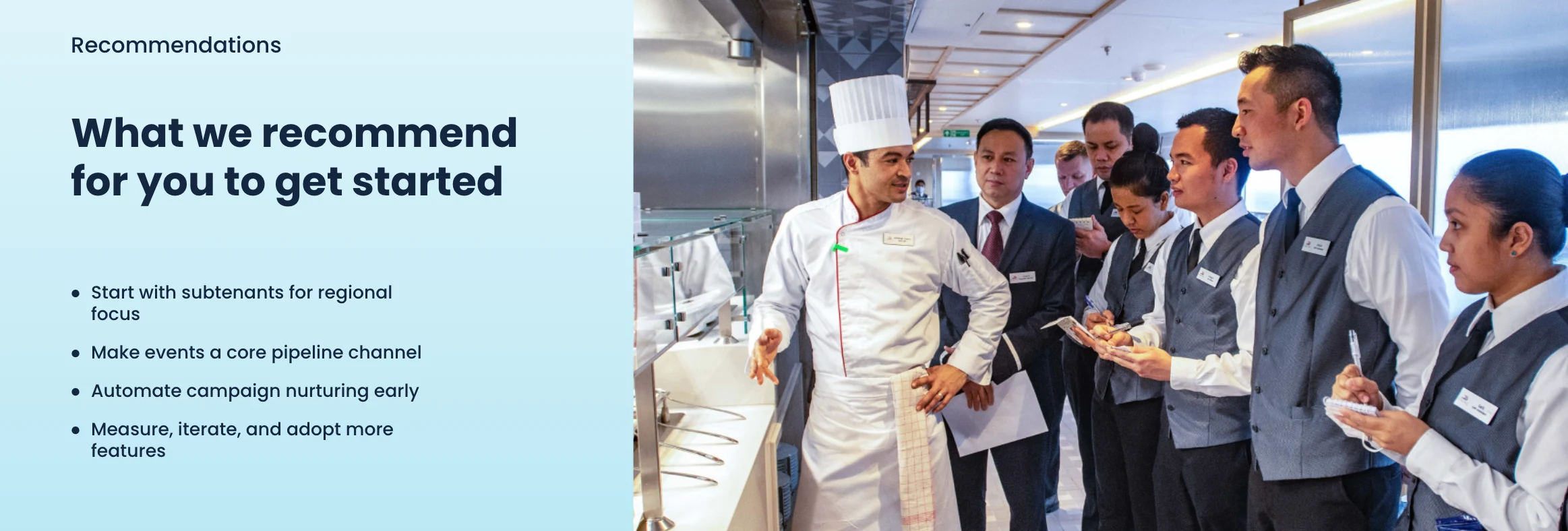
Horváth's advice for organizations with global reach is straightforward. Start with sub-tenants if your roles have different eligibility requirements by region. Treat events as a core pipeline channel, not a supplement. And measure event performance by location. Viking discontinues events anywhere response rates fall below 10%, which is what keeps the strategy efficient rather than just busy.
Level-up your talent marketing with AI. Check out The Ultimate Guide to Recruitment Campaigns

Gautami is a Product Marketing Manager at Phenom. She loves twisted thriller movies and is passionate about bringing creativity to life through crafting.


Get the latest talent experience insights delivered to your inbox.
Sign up to the Phenom email list for weekly updates!


