


Rural Healthcare Recruiting Is a Different Game. Here’s How Cheyenne Regional Changed How They Play It
In a rural healthcare market, recruiting isn’t a funnel optimization problem. It’s a story problem. Cheyenne Regional Medical Center competes for the same clinical talent as large urban health systems but with a fraction of the applicant pool and none of the brand recognition that comes with being in a major metro. The organization has been anchoring healthcare in Wyoming for nearly 160 years, dating back to when the West was being settled, but that story wasn’t showing up anywhere in its recruiting process.
Grant Clifton, HR Manager at Cheyenne Regional, joined us at IAMPHENOM 2026 to walk through how the team overhauled its talent strategy from the ground up — and what two months of results looked like after going live.
Watch the full session here, or explore the highlights below.
What Are the Challenges Of Recruiting In Rural Healthcare?
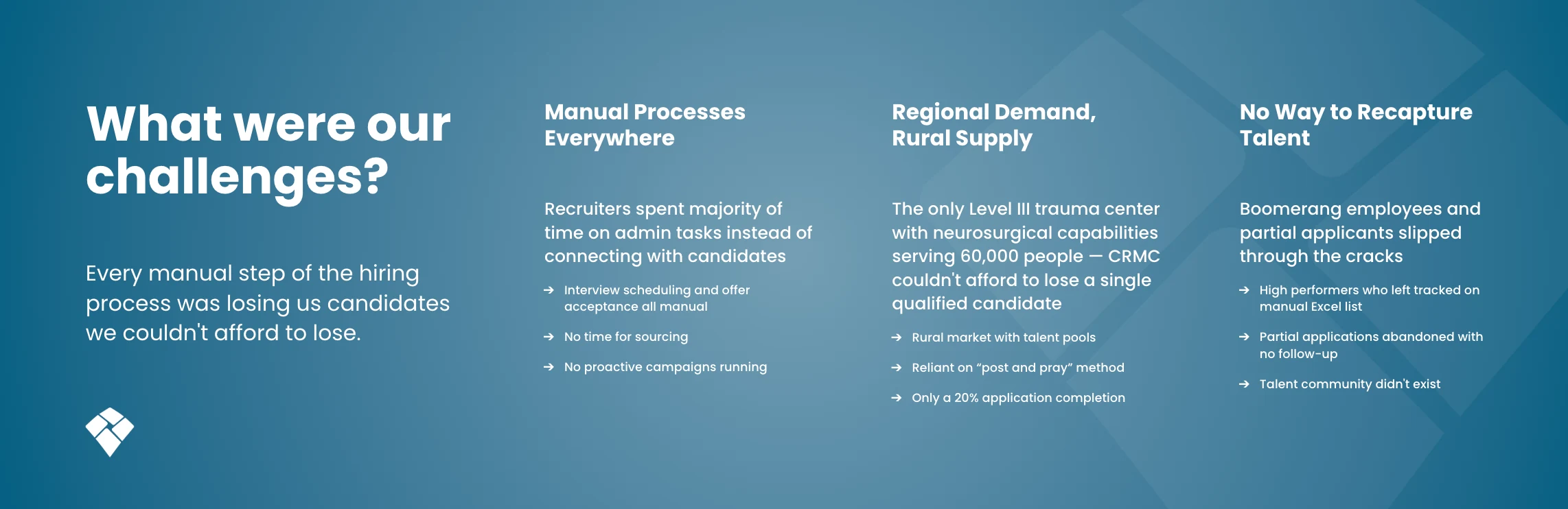
Cheyenne Regional is the only Level 3 trauma center with neurosurgical capabilities across Wyoming, Northern Colorado, and Western Nebraska. Every unfilled role directly impacts the communities it serves. And yet, the talent acquisition (TA) function was operating almost entirely on manual workflows. Scheduling, follow-ups, and re-engagement were all done by hand. There was no automation, no proactive outreach, and no infrastructure to nurture passive candidates.
The data made the problem visible: only 20% of applicants were completing their applications. The other 80% dropped off somewhere in the process, and the team had no way to identify who they were, where they left, or how to reach them again. Boomerang and alumni employees existed in spreadsheets that collected dust. “We relied heavily on the post and pray method,” Clifton said. “You post a job and you pray applications come, which doesn’t work when applicant volume is limited.”
The narrative gap compounded the operational one. Cheyenne Regional has a genuinely compelling employer value proposition: world-class fly fishing, proximity to Fort Collins and Denver, affordability, a family-oriented culture, and the stability of being a regional healthcare anchor. None of that was reflected in how the organization presented itself to prospective candidates. Instead of telling this story, its career site was simply posting jobs.
How Can Rural Healthcare Teams Recruit Proactively?
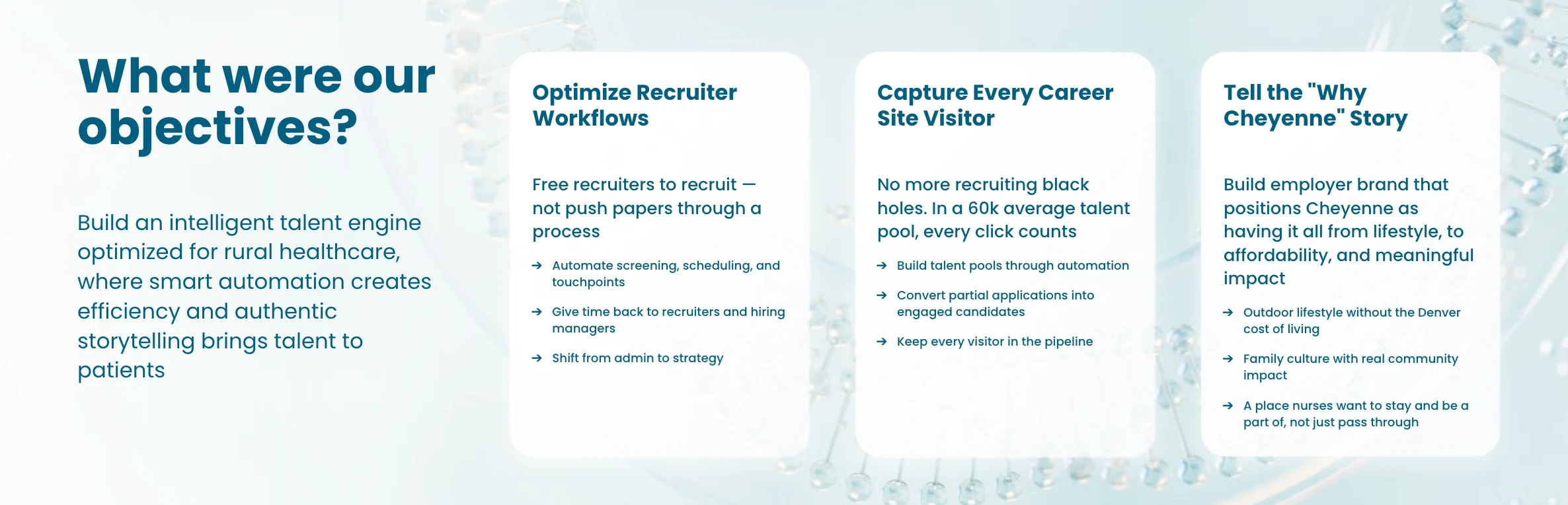
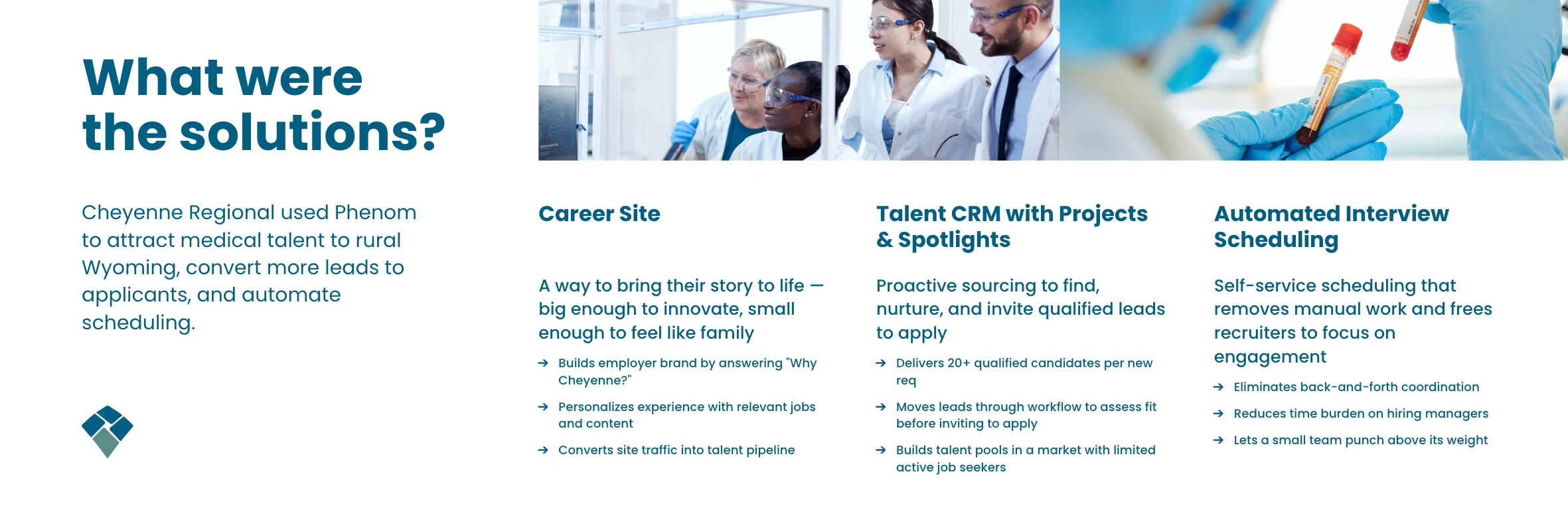
Phenom Applied AI gave Cheyenne Regional something it had never had: a hiring process built from the first click to the offer. A new career site was designed to lead with Cheyenne Regional’s story — the lifestyle, the mission, the community — and make it immediately clear why someone would choose Cheyenne over a larger system in Denver or Colorado Springs. It came out so well that Phenom’s Jennifer Roberts, Associate Solutions Consultant, described the site as one she demos regularly to healthcare prospects because of how clearly it leads with the employer value proposition.
On the sourcing side, their talent CRM introduced a proactive model that helps the team build and engage talent pipelines while identifying top candidates using AI insights and fit scoring. Phenom AI Discovery pulled historical applicants and surfaced external profiles the moment a job requisition opened, delivering 20 candidates per job that the team didn’t have to go find. Spotlights allowed recruiters to segment talent by geography so they could nurture candidates who might as easily commute to Cheyenne as to Denver. Pipeline-building campaigns went out before roles were even posted.
In addition, Automated Interview Scheduling turned a three-day back-and-forth into a self-service process, with reminders handled automatically. At go-live, the team launched 30 additional automations covering file reviews, talent community invitations, and job tag campaigns. Clifton's framing of the shift was direct: "More time for people and less time for fighting the process. And isn't HR about the people?"
Related Resource: Healthcare HR Product Evaluation Checklist
What Improvements Can Applied AI Bring to Healthcare Hiring?
Cheyenne Regional went live roughly two months before this session. For an organization that had been operating on manual processes, the early numbers reflect how much has changed.
A jump in apply rate from 20% to 33% came primarily from the career site redesign. Clifton credited the aesthetic and experience changes with keeping candidates engaged long enough to complete the process. “Making it visually appealing and making … the chatbot front and center, you have to engage,” he said.
However, the metric Clifton was most proud of didn’t appear on a slide. It was the number of proactive candidate outreach emails going from zero to over 500. For an organization that had been entirely reactive, this represented a structural shift in how recruiting worked. Within weeks of going live, the team filled one of the hardest-to-place positions in healthcare — a cardiovascular tech with specific certifications, which Clifton called out as a direct reflection of the new approach.
Moving forward, the team is projecting the following results:
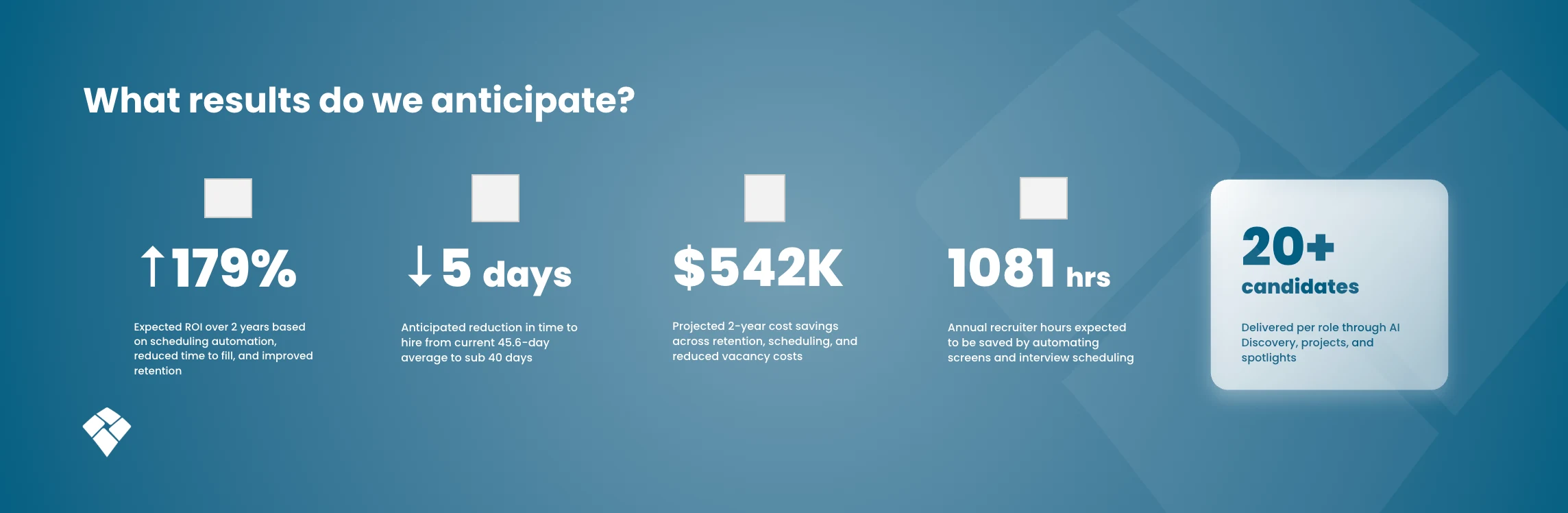
179% — Expected ROI over 2 years based on scheduling automation, reduced time to fill, and improved retention
5 days — Anticipated reduction in time to hire from the current 45.6-day average to sub 40 days
$542K — Projected 2-year cost savings across retention, scheduling, and reduced vacancy costs
1081 hrs — Annual recruiter hours expected to be saved by automating screens and interview scheduling
20+ candidates — Delivered per role through AI Discovery, projects, and spotlights
What Is Cheyenne Regional Building Toward Next?
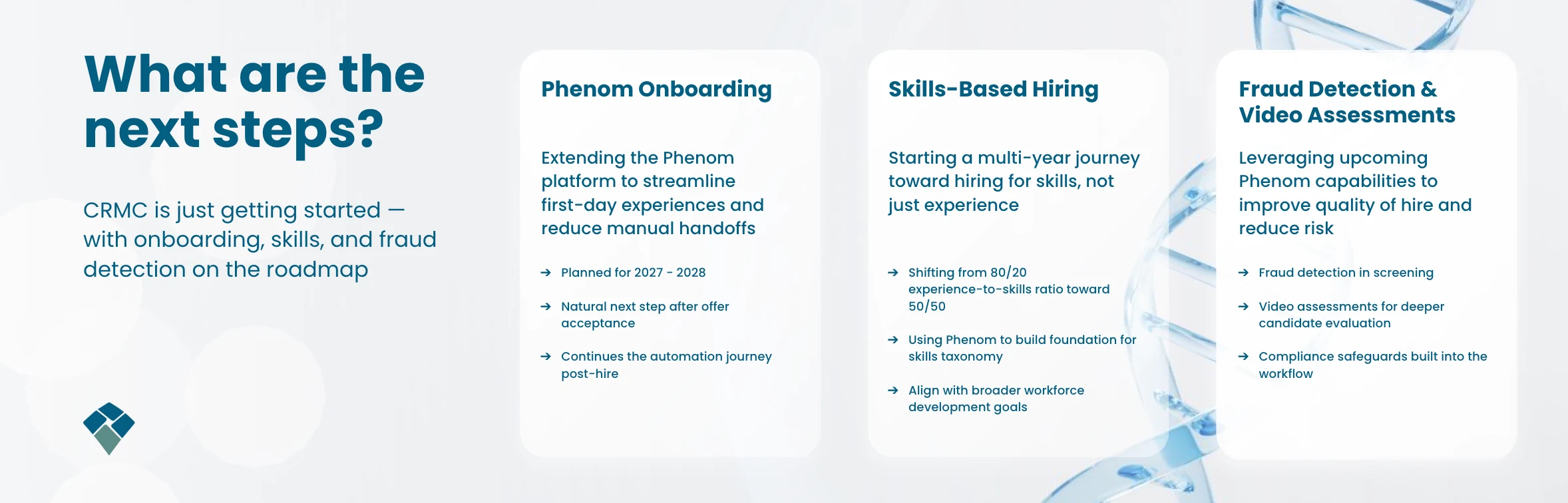
The team's next Phenom initiative is onboarding, connecting what's been built on the recruiting side to a smoother experience on day one. Skills-based hiring is a longer-horizon initiative, tied to compensation trends Clifton tracks closely: the market is increasingly paying for skills over credentials, and rural healthcare is no exception.
Video assessments and fraud detection round out the roadmap. Both stem from a simple but real problem. As screening volume grows, it gets harder to remember the people behind the applications. Video introductions keep the human element visible without slowing the process down. In a rural market where candidate trust is hard-won, that balance is no longer just a nice-to-have. "Embrace technology not as a replacement for human connection," Clifton said, "but as a way to create more time for human connection.
Need Help With Healthcare Recruiting?
Download our Buyer’s Guide for Talent Acquisition in Healthcare


Get the latest talent experience insights delivered to your inbox.
Sign up to the Phenom email list for weekly updates!


