

One System, One Process: How UMMS Streamlined Healthcare Onboarding
Building a new hire onboarding experience from scratch is no small undertaking, especially when you’re bringing talent acquisition (TA) fully in-house after years of Recruitment Process Outsourcing (RPO) reliance. But for the University of Maryland Medical System (UMMS), a statewide health network with 10 hospitals, more than 150 care locations, and roughly 700 to 800 new team members joining every month, this step became the natural path forward.
At IAMPHENOM 2026, Bobbi Hicks, Director of Talent Acquisition at UMMS, shared her experience just 3.5 weeks after going live with Phenom Onboarding — part of a full end-to-end applied AI platform they implemented from the ground up. Her session focused on the reasoning behind the decision, how the team managed change across a newly assembled group, and what the first weeks in the system actually looked like.
Catch the key insights below!
What Were UMMS's Onboarding Challenges Before Phenom?
Before Phenom, UMMS coordinators logged into four to five separate platforms daily to complete onboarding activities. These included a background check system, an I-9 portal, an employee health system, and others that had no real-time connection to one another. Every new hire required moving step by step across each one, manually tracking status, and relying on email threads to keep it all together.
For a health system processing hundreds of new hires every month, that kind of fragmentation adds up quickly. The team wanted clearances tracked and accounted for at every step, not chased down through unanswered email threads. The onboarding experience itself, the moment a candidate becomes an employee, felt less like a welcome and more like a paperwork audit.
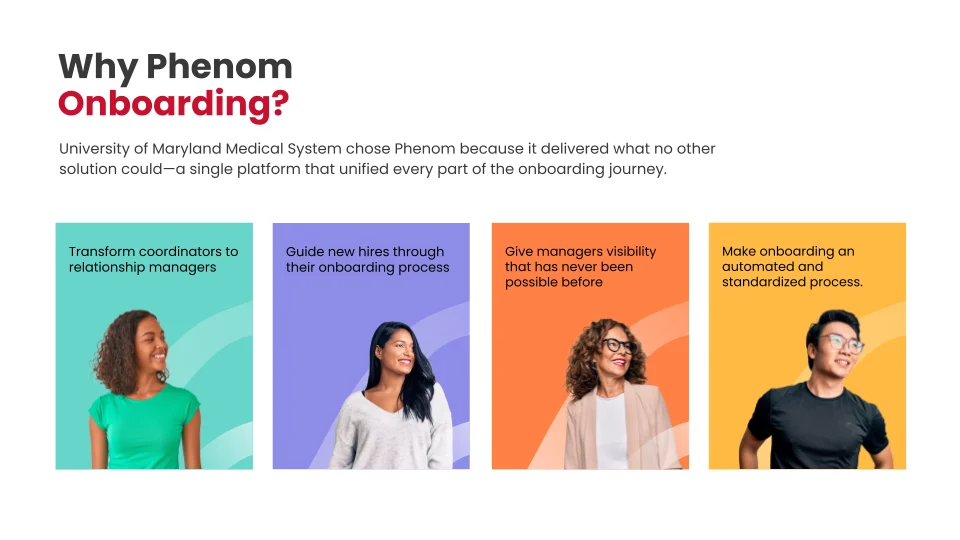
The team wanted something different: an experience structured and visible enough for new hires to track their own progress instead of disappearing into a back-office workflow. As Hicks put it, "We need to do both, stay compliant and make the journey feel personal. We want new hires to feel a warm hug from our organization from day one."
There was also the data infrastructure challenge. UMMS was still running on flat files, with batched transfers between systems that sometimes synced once and sometimes three or four times a day, but never in real time. If a candidate signed their offer letter on a Friday evening, they would not enter pre-employment onboarding until Monday morning. That single gap represented 48-72 hours lost before the process even started.
What Does Phenom Onboarding Actually Solve for Healthcare?
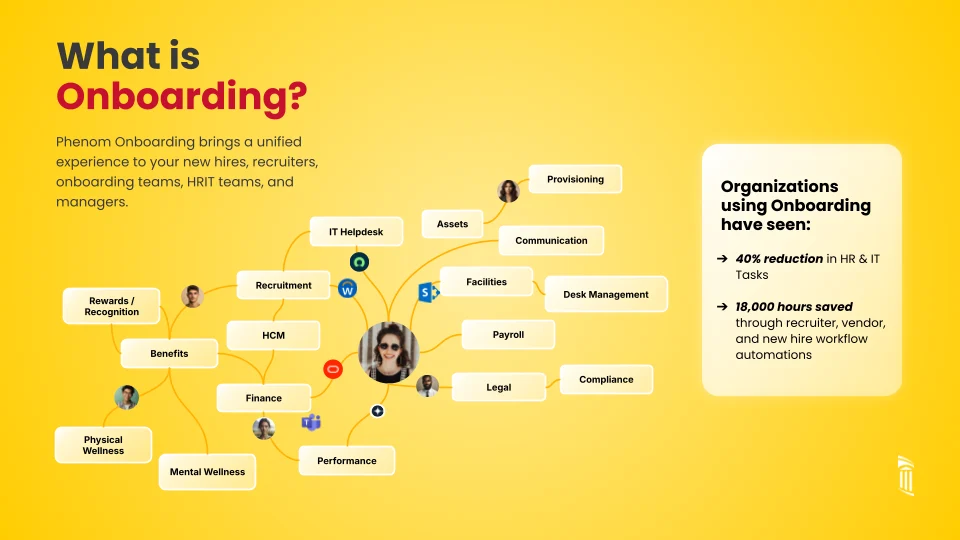
Phenom Onboarding brought every onboarding touchpoint into a single workflow, lowering compliance risk and giving stakeholders a clear, real-time view of where each new hire stood in the process. For healthcare organizations, where all of that has to come together before someone can step onto a unit, that kind of visibility matters.
Instead of waiting for spreadsheet updates or sending emails to find out where a candidate stood, managers could open a unified dashboard showing who was in pre-hire, where bottlenecks were forming, and when each person was expected to start. Insights that previously required manual aggregation were now available instantly.
Organizations using Phenom Onboarding have reported a 40 percent reduction in HR and IT tasks and 18,000 hours saved through workflow automations. For a system moving 700 to 800 people per month through pre-employment onboarding, those numbers quickly translate into additional capacity and reduced reliance on external agencies.
Why Did They Rebuild Their HR Tech Stack All at Once?
What made UMMS's rollout particularly notable was the scope. They weren’t upgrading a system in isolation. Rather, they were launching an entirely new in-house TA function built on Phenom's applied AI platform, including a career site, talent communities, talent CRM, ATS, high-volume hiring, and onboarding, all at the same time.
Coming out of an RPO model meant there was no legacy technology stack to carry over. That reality created both a limitation and a rare opening. "It was a beautiful spot in time," Hicks said. "It meant we could build from the ground up exactly what we wanted it to be." The team built their employer value proposition (EVP) from scratch, ran focus groups across the organization, and used the technology to bring that EVP to market from day one.
Remarkably, they met every deadline: ten hospitals, a brand-new in-house team, and a full technology ecosystem, all live on the same day. Any TA leader who has managed a similar implementation knows exactly how much that means.
Related Read: Onboarding 101: A Complete Guide to the Employee Onboarding Process
How Do You Manage Change Management During a Large-Scale Onboarding Rollout?
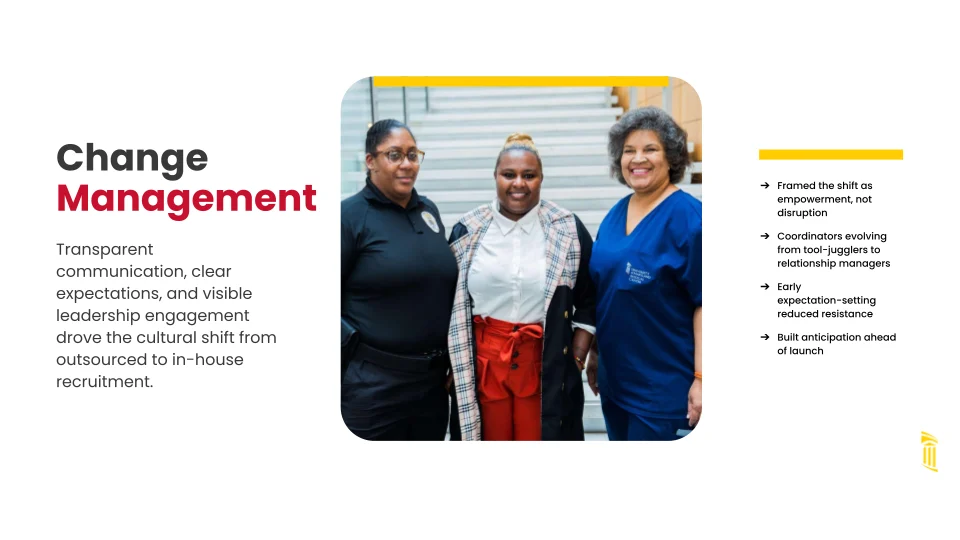
UMMS didn't treat change management as a checkbox. Three moves defined how they brought the team along on a major people, process, and technology shift.
Shared vision from day one: Everyone who would touch the system was brought into the same room, including IT leadership, for a walkthrough of the vision before a single configuration was finalized. UMMS's VP of IT became one of the most vocal advocates for onboarding as a celebration — a framing that carried through every downstream conversation.
Champions selected with purpose: The criteria went beyond enthusiasm. Champions were high performers who knew the process cold, weren't afraid to share hard feedback, and were early adopters of new technology. Their endorsement built peer trust and accelerated adoption ahead of go-live.
Skeptics brought in, not sidelined: Hicks made a deliberate choice to pull the most resistant voices in early. "When you buy those people into the process and hear what they have to say and get them excited, it's really hard for everybody else to be negative." When the harder-to-convince team members got on board, the rest followed.
Training ran in two phases:
Virtual champion training: The first phase gave champions deep system fluency, enough to spot gaps before they reached the broader team and position themselves as trusted resources for their peers.
Three-day on-site user training: This was also the first time the entire in-house TA team had ever been in the same room together. The energy was contagious — team members were answering each other's questions mid-session, and a few walked up to the Phenom team afterward to thank them for building the product.
Office hours continued post-launch, not as a support line but as a working session for ongoing refinement. The team used that time to identify where additional automations could reduce friction further, turning the go-live into a starting point rather than a finish line.
Learn more about our AI Bootcamps here
What Should HR Teams Know About Vendor Integrations Before Go-Live?
One of the most candid moments in the session came when Hicks discussed vendor integration. The vision centered on a fully candidate-focused experience, where new hires could complete background checks and employee health paperwork without leaving the Phenom environment.
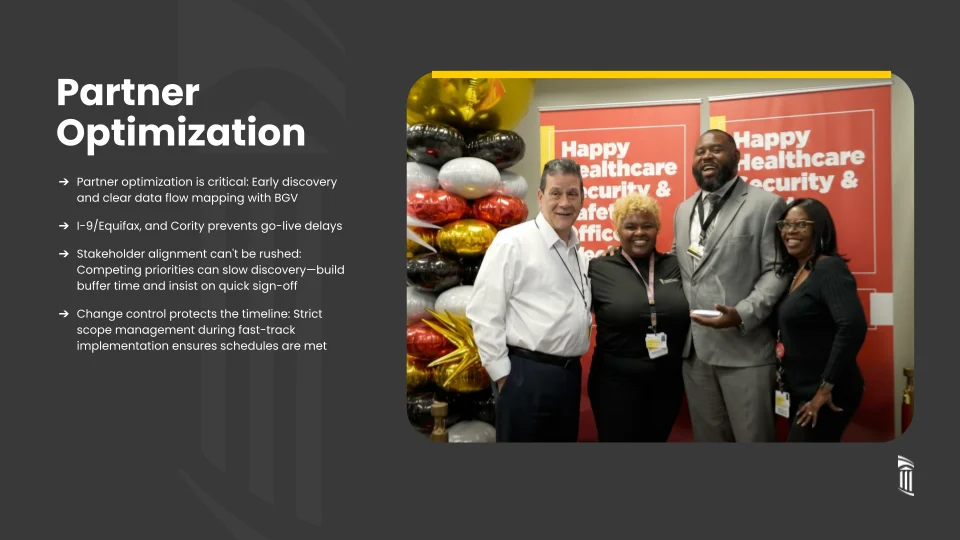
"Not every one of our vendor partners was excited about that change with us," confided Hicks. Rather than compromise on the experience, UMMS issued a request for proposal and selected partners who had already built Phenom integrations or were willing to do so. Her takeaway? Start those conversations earlier. API integrations that sound like a two-week project can take longer once vendor timelines, legal reviews, and competing priorities come into play. Building buffer time into that phase of any implementation isn’t pessimism; it’s practical planning.
What Can HR Teams Expect After Implementing a Unified Onboarding System?
Just weeks after go-live, UMMS’s day-to-day onboarding workflow changed in meaningful ways. Five systems became one. Spreadsheet-based status tracking gave way to a single dashboard with real-time visibility across every candidate in the pipeline. And bottlenecks that previously required manual data pulls to identify were now surfaced automatically.
For a team that moved from spreadsheets to modern tools in a matter of weeks, the reaction spoke volumes. Work that once buried people in compliance administration now leaves room for what technology cannot replicate, which is a genuine human connection that turns a good onboarding process into a memorable start.
UMMS still has work ahead, including additional automations to introduce, partner integrations to complete, and a new team continuing to build rhythm together. But the foundation is in place, and the direction is clear: One system, one process, one consistent experience for every new hire across the entire health system.
Watch this webinar on demand to discover how Phenom takes new hires from preboarding to peak productivity.

Gautami is a Product Marketing Manager at Phenom. She loves twisted thriller movies and is passionate about bringing creativity to life through crafting.


Get the latest talent experience insights delivered to your inbox.
Sign up to the Phenom email list for weekly updates!


