

Phenom Ontologies Transform the Candidate Experience from Keywords to Context
A registered nurse types “RN” into a career site search bar. Nothing comes up. They try “registered nurse” instead. This time, 200 results appear: many for specialties they aren’t qualified for, while relevant roles sit hidden under different titles.
That moment plays out at scale every day. Qualified candidates arrive with intent and experience, then lose momentum when search results feel noisy, incomplete, or misaligned. Transferable skills go unseen, while recruiters are left wondering why strong roles attract the wrong applicants.
The issue isn’t a shortage of jobs or talent. Most career sites still rely on exact keyword matching, not accounting for related roles and skills, because the applicant tracking system is limited by exact match phrasing. When systems fail to understand context, candidates are forced to guess, and hiring teams miss people who could succeed in the role. This article looks at how ontologies change that dynamic, shaping job discovery, personalization, and talent decisions by helping hiring systems understand skills, roles, and career paths the way humans do.
Why Traditional Talent Technology Breaks Down
Many talent platforms still rely on archaic architectures, then layer AI capabilities on top. Recommendation engines, chatbots, and search enhancements are added incrementally, while the underlying systems remain unchanged. As a result, intelligence is fragmented. Each layer sees only part of the picture, which leads to inconsistent and often confusing experiences.
A bolted-on recommendation engine might surface roles based on a recent search, but it cannot connect application behavior, skill development, career progression, and shifting business needs in a meaningful way. Without shared context, these systems respond to isolated signals rather than understanding the person behind them. The output may look personalized, but it lacks continuity and memory.
Phenom took a different approach by using Applied AI as a platform foundation that creates a shared structure carrying context across roles, skills, and career stages.
Related: Types of AI Agents Explained: A Practical Framework for HR Innovation
How Ontologies Power Intelligence at Scale
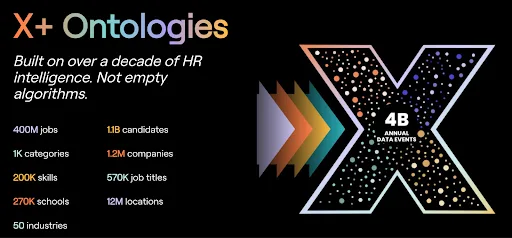
This is where Phenom X+ Ontologies come into play. X+ Ontologies provide the structure that allows talent data to be interpreted consistently across roles, skills, and career stages. Instead of relying on surface-level signals, the platform can understand how different pieces of information relate to one another and apply that understanding at scale.
How Ontologies Match Skills, Roles, Careers, and More
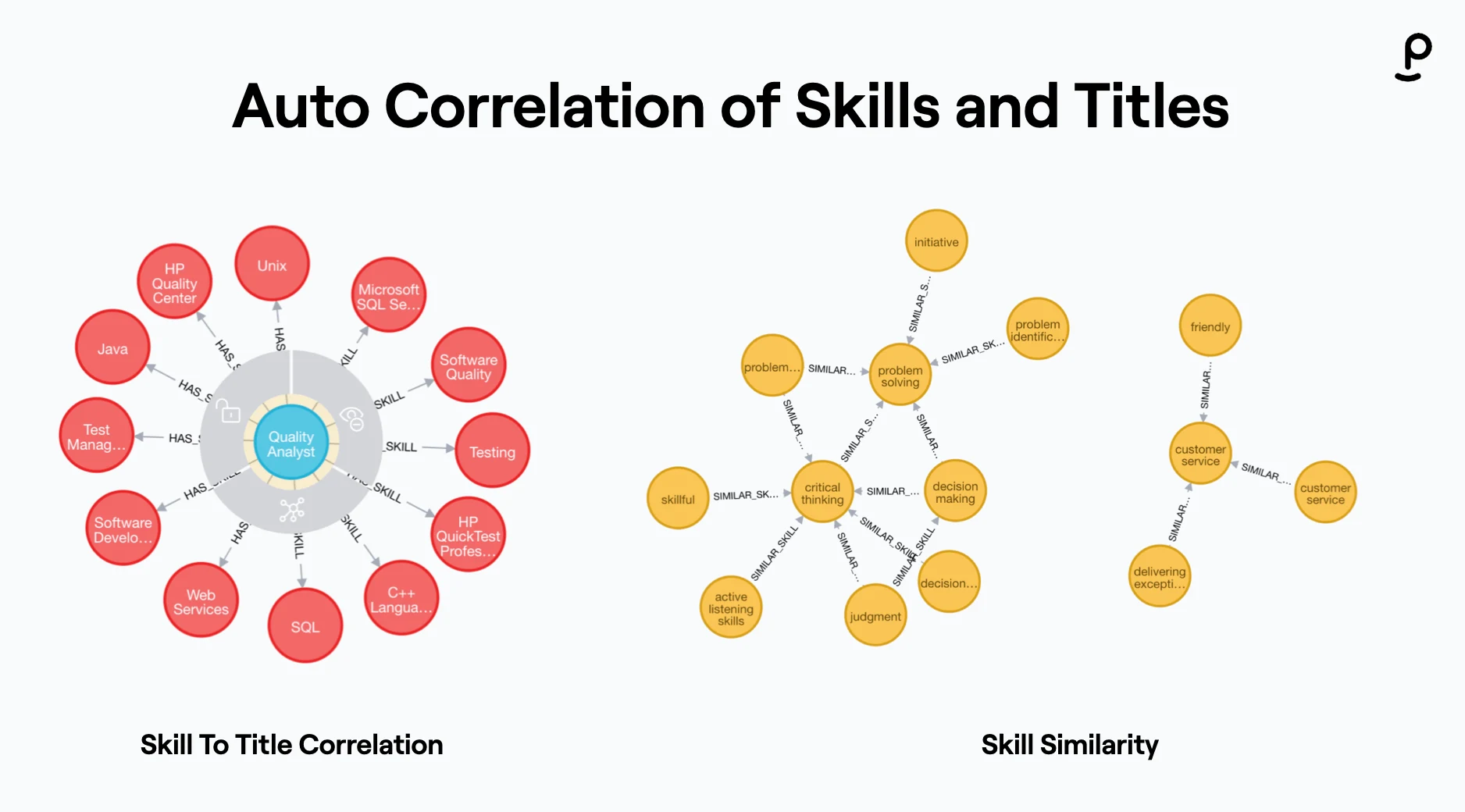
An ontology works like a living map of how the professional world connects. Someone searching for “data science” roles isn’t only looking for that exact title. They’re also open to opportunities that reference machine learning, statistical analysis, or Python, because those skills often travel together. A recruiter understands these connections instinctively; ontologies give candidate experience systems that same awareness.
Phenom's knowledge graph catalogs professional entities — skills, job titles, companies, educational institutions, fields of study, locations — and maps the intelligent relationships between them. This allows the platform to recognize meaning rather than just matching words. When a candidate types “RN,” the system understands they mean registered nurse. When they search for "bank" on a financial services career site versus an environmental conservation site, it understands the context matters.
That understanding is built through models trained on millions of resumes and job descriptions, learning which skills reinforce one another and how careers progress in real environments. As candidates interact with the site, the ontology continues to adapt, capturing emerging skills while human curation maintains accuracy and relevance.
Related: How Skills Technology Drives Talent Acquisition Excellence
Intelligence Built Into the Foundation
Phenom’s knowledge graph is not a feature that was added later in the Phenom Intelligent Talent Experience Platform. It sits at the core of the platform and informs every interaction. For more than twelve years, hundreds of millions of data points across all industries have been captured and structured across the full talent lifecycle in a consistent data structure.
The data captured is not divided between candidate systems and employee systems. This continuity allows the same person to be understood over time. This person is analyzed as a visitor exploring roles, an applicant moving through hiring, an employee developing skills, and a candidate for internal mobility. Each stage builds on the last, creating continuity rather than disconnected snapshots.
Every interaction contributes to that shared understanding. Applications, role changes, and career progression feed back into the platform, allowing intelligence to improve steadily and support more informed decisions.
Related: 4 Steps to Becoming a Skills-First Organization
How Unified Talent Data Compounds Over Time
When a candidate applies for a role, ontologies do more than align skills with requirements. They surface patterns in how careers evolve, which transitions tend to succeed, and which adjacent opportunities are realistic based on real outcomes. That learning carries forward and shapes every role posted afterward.
Over time, unified talent data improves how opportunities are surfaced and decisions are made:
Transferable skills are recognized earlier, reducing reliance on exact titles or phrasing
Relevant roles are surfaced proactively, even when candidates would not think to search for them
Internal mobility and development paths reflect real progression patterns, not assumptions
This compounding effect depends on continuity across the platform. While many solutions focus on a single moment, such as recruiting or learning, Phenom connects them. The system sees how people move from applicant to employee to contributor to leader, and uses those patterns to inform recommendations across the talent journey. As this intelligence accumulates, it becomes a durable advantage.
Related: AI and Skills Ontologies: Transforming Talent Management Across Industries
What Personalization Actually Looks Like
Personalization in hiring is often described as a better interface or smarter recommendations. In practice, it shows up as relevance that builds over time. Candidates see roles that make sense for where they are now, while hiring teams gain clearer signals about intent, capability, and fit without relying on guesswork.
Relevant Opportunities From the First Interaction
When a candidate lands on a Phenom career site, the system begins forming context immediately. Signals such as location, device, and referral source help establish intent before the first search even happens. The experience does not depend on perfect keywords to get started.
Once a search begins, results extend beyond exact title matches. Someone looking for a data analyst role may see business intelligence, analytics consultant, or related roles based on required skills. Recommendations also adjust based on inferred experience level, so entry-level candidates and experienced professionals do not see the same results for the same query.
This early relevance reduces friction. Candidates spend less time refining searches and more time exploring roles that align with their background. For recruiters, it means applications are better suited to the roles they are trying to fill.
Revealing Undiscovered Opportunities Beyond Job Titles
As candidates engage, the system begins recognizing transferable skills they may not think to highlight. A retail manager exploring new roles is not limited to other retail positions. Experience in inventory planning, team leadership, and customer operations can surface roles in operations, client success, or team leadership in other industries.
These connections are not based on assumptions. They reflect patterns observed across real career transitions, where similar skill combinations have led to success in adjacent roles. The more candidates interact, the clearer those connections become.
Behavior also shapes what is emphasized. Candidates who spend time reviewing culture or benefits see that information surfaced more prominently. Others who move quickly to requirements and applications signal a different intent. The experience adjusts without requiring explicit input.
Related: How Phenom Talent Companion Elevates the Candidate Discovery
Creating Fairer Access to Roles and Mobility
Traditional search systems tend to reward familiarity with job language and linear career paths. When systems rely on keywords alone, candidates who gained skills through nontraditional routes are often overlooked. Semantic understanding changes that dynamic.
Skills acquired through bootcamps, military service, or cross-functional work are recognized alongside formal experience. A veteran with logistics leadership experience can surface for civilian operations roles even without a matching title. Career changers with blended backgrounds are evaluated on capability rather than trajectory.
The same logic applies internally. Employees do not need to actively browse job boards to be considered for new opportunities. When their skills and experience align with open roles, recommendations surface naturally. This broadens access to advancement and helps teams identify potential earlier, based on evidence rather than visibility.
Related: Listen Up: How Employee Feedback Drove Improved Career Mobility at BAE Systems
How Applied AI Intelligence Improves Hiring Outcomes
When candidates feel understood, they behave differently. They spend time on roles that align with their skills, interests, and experience level, which leads to higher application completion and fewer drop-offs during the process.
For hiring teams, those shifts show up in concrete ways:
More completed applications from qualified candidates, because role discovery filters out poor matches early rather than later
Shorter hiring cycles, as recruiters review fewer misaligned applications and move faster with candidates who meet role expectations
Stronger applicant pools, shaped by relevance and skill alignment instead of keyword optimization
Better AI intelligence also changes how the quality of hire is assessed. Matching is no longer based on job titles or years of experience alone. It accounts for whether prior work reflects the skills the role actually requires, whether industry context aligns, and whether the scope of responsibility matches expectations.
Candidate satisfaction moves with it. There is a clear difference between being processed by a system and feeling recognized by one. When job seekers discover roles that genuinely interest them rather than settling for close alternatives, engagement deepens, and employer perception improves long before an offer is made.
Why Architecture Shapes AI Outcomes
Ontology architecture determines whether AI-powered intelligence compounds or stalls. When AI is layered onto older systems, progress tends to stay localized. Improvements appear in isolated features, while the rest of the experience remains disconnected.
When AI-powered intelligence is embedded into the structure of the platform, the outcomes look different:
Improvements apply across the experience, not just within a single feature, because all capabilities draw from the same underlying context
New AI capabilities build on existing intelligence, rather than starting from scratch with each addition
Adaptation happens faster as new roles, skills, and career paths emerge, since the system already understands how these elements relate
Behavior stays consistent across touchpoints, reducing disconnects between search, recommendations, and downstream decisions
Insights remain reliable over time, because they reflect how talent actually moves rather than isolated snapshots
Together, these outcomes shape how dependable AI becomes as complexity grows, not just what it can do at a given moment.
From Talent Data to Talent Decisions
Candidate experience is the most visible outcome of AI-powered intelligence at work. The larger value shows up when HR leaders need to make decisions under pressure, often with incomplete or conflicting information. Questions about hiring priorities, workforce readiness, and internal mobility rarely wait for perfect data.
Traditional HR systems collect information but leave interpretation to people. Leaders rely on instinct, anecdotes, or reports that arrive weeks later. When talent data is structured through ontologies, those questions become easier to answer because relationships between skills, roles, locations, and progression are already understood.
With that context in place, decision-making shifts from reactive to informed:
Hiring strategies adjust faster, because leaders can see where roles stall, which skills are scarce in specific regions, and why certain requisitions remain open
Build versus buy decisions improve, as internal capability is evaluated against role requirements and realistic development timelines
Workforce risks surface earlier, including stalled growth, overlooked internal candidates, or patterns that signal retention concerns
This AI-powered intelligence also changes the pace of planning. Leaders don’t need to wait for analysis to be compiled or reconciled across systems. They can ask questions in real time and receive answers grounded in how talent has actually moved and succeeded within the business.
Over time, this reduces guesswork. Decisions about hiring, development, and mobility are based on patterns that reflect real outcomes rather than assumptions. Talent data stops being something teams report on and becomes a reasoning tool leaders can use to accelerate the business.
Related: State of Candidate Experience: 2025 Benchmarks Report
Where Humans and AI Reason Together
As talent decisions grow more complex, the role of AI becomes supportive rather than directive. The goal is not to replace human judgment, but to provide a clearer context so leaders can make informed choices at scale with confidence.
For recruiters, this means guidance grounded in real hiring outcomes rather than static rules. When questions arise about expanding a search, adjusting requirements, or prioritizing candidates, the system can point to patterns that have worked before. It highlights where flexibility is realistic and where it introduces risk.
For hiring managers and HR leaders, transparency matters. AI agents can explain why a candidate with a nontraditional background may be a strong option or why a role is attracting fewer qualified applicants. The reasoning is visible and open to review, allowing humans to apply judgment, values, and accountability where it matters most.
From Questions to Strategy
Most HR teams are not short on data. They are short on time to turn questions into direction. When talent information is connected and contextualized, everyday questions start informing longer-term planning.
With shared context in place, leaders can move more quickly from uncertainty to action:
Where skill shortages are emerging, and why certain roles remain open longer than expected
Whether internal development or external hiring is the right path, based on readiness timelines and adjacent capabilities
Which teams or roles show early signals of risk or opportunity, informed by patterns in mobility, progression, and retention
This shift also changes the pace of planning. Workforce conversations become more focused because insight is already structured and accessible. Teams spend less time validating information and more time acting on it.
Building Talent Systems That Understand People
Talent technology works best when it helps people find opportunities that fit who they are and where they want to go. For candidates, that means discovering roles that reflect their skills and aspirations. For employers, it means understanding talent clearly enough to make decisions they can stand behind.
What distinguishes Phenom’s approach is how intelligence is applied. AI is used to deepen understanding rather than simply optimize for speed or volume. Each refinement to the knowledge graph and every improvement to our models is guided by a single question: does this help people discover opportunities that genuinely fit their skills, experience, and goals?
Organizations that lead in applied AI will be defined less by what they showcase and more by how seamlessly intelligence works in practice. When applied AI is built into the foundation, it improves through real outcomes and real decisions without drawing attention to itself.
At its best, technology fades into the background. People notice that roles make sense, opportunities feel relevant, and exploring careers feels less like searching and more like discovering. That is what it looks like when systems are designed to understand people first.
See how Phenom applies ontology-driven intelligence to the candidate experience. Request a demo to learn more.

Branka’s a marketer with flair, a teacher turned Phenom player. She loves products that shine, making candidates’ paths fine and turns job hunts into a winner.


Get the latest talent experience insights delivered to your inbox.
Sign up to the Phenom email list for weekly updates!


