

Why athenahealth Turned to an AI Agent To Close Sourcing Gaps
athenahealth was built around the idea that healthcare organizations deserve better tools and simpler operations. Inside the company's own talent acquisition team, that same mindset applies — and lately, it's been focused on a sourcing challenge most TA leaders know well.
With nearly 8,000 employees globally and over 1,000 new hires each year (many in the competitive tech markets of Boston and Austin, Texas), the TA team can't afford candidates slipping out of the pipeline between outreach and follow-up.
At AI Day, Lacey Cumming, Director of Talent Acquisition Operations at athenahealth, shared why the team turned to Phenom Sourcing Agent and what the first two weeks using it looked like.
Watch the full session here, or explore the highlights below.
Where Was the Sourcing Process Breaking Down?
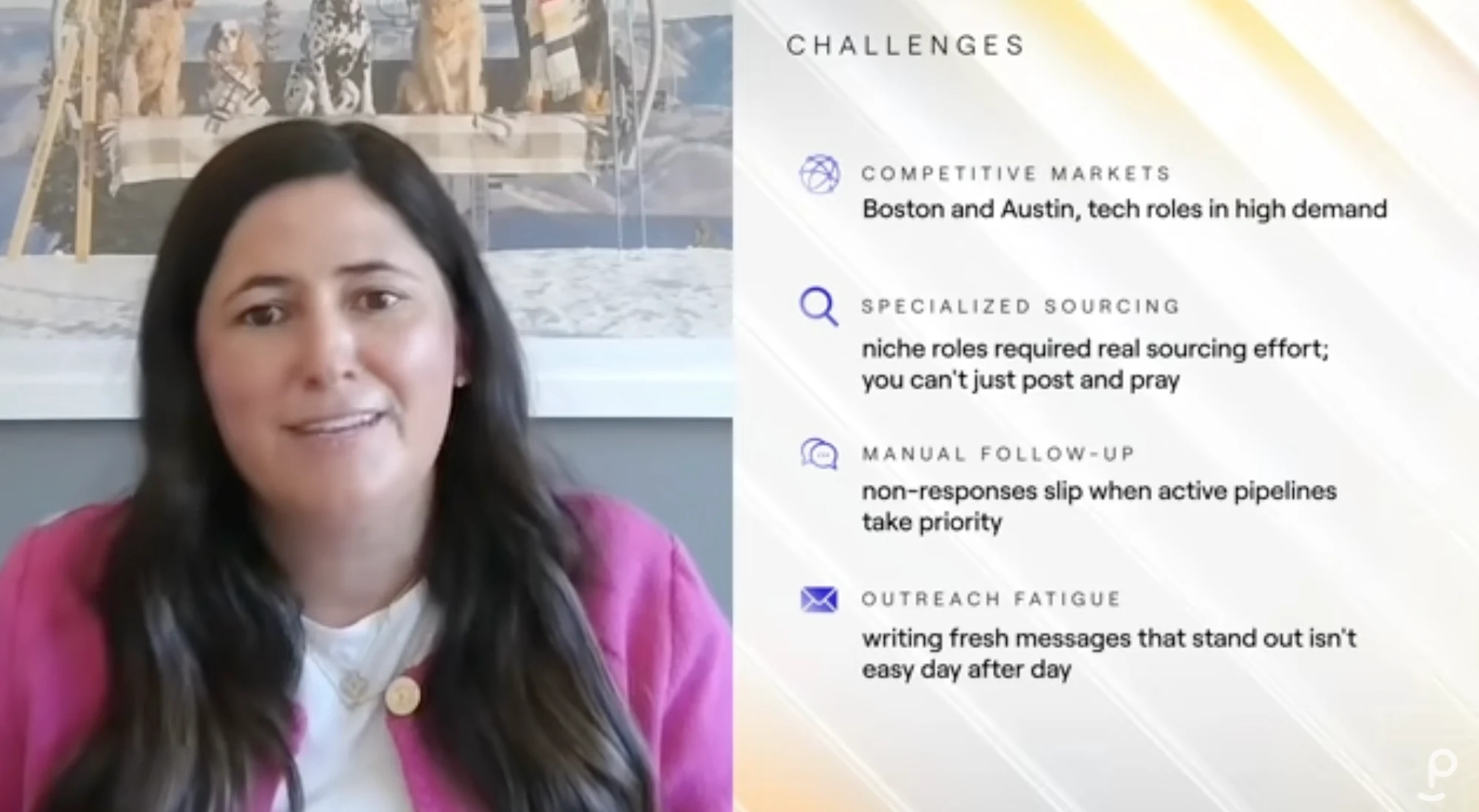
Because athenahealth's applicant tracking system doesn't have built-in sourcing, recruiters were splitting their time across tools. For years, they were sourcing in one system, managing candidates in Phenom, and handling follow-up manually in between.
That split is where things broke down. "If a candidate doesn't respond to that first message, the ball gets dropped — not because our recruiters aren't great, but because they're juggling a lot," Cumming said. With active pipelines to manage, circling back on a non-responsive sourced candidate rarely made it to the top of the list.
Outreach quality added its own pressure. "After a long day, sitting down to write a fresh outreach message that doesn't sound like every other recruiter in someone's inbox isn't easy," Cumming said.
athenahealth's VP of Talent Acquisition made the direction clear when he joined three years ago and led the original Phenom CRM implementation. He wanted recruiters working inside one system as much as possible, because every tool-switch costs time, consistency, and focus. When Phenom released its Sourcing Agent, it caught the team's attention immediately.
How Did Phenom Sourcing Agent Close the Gap?
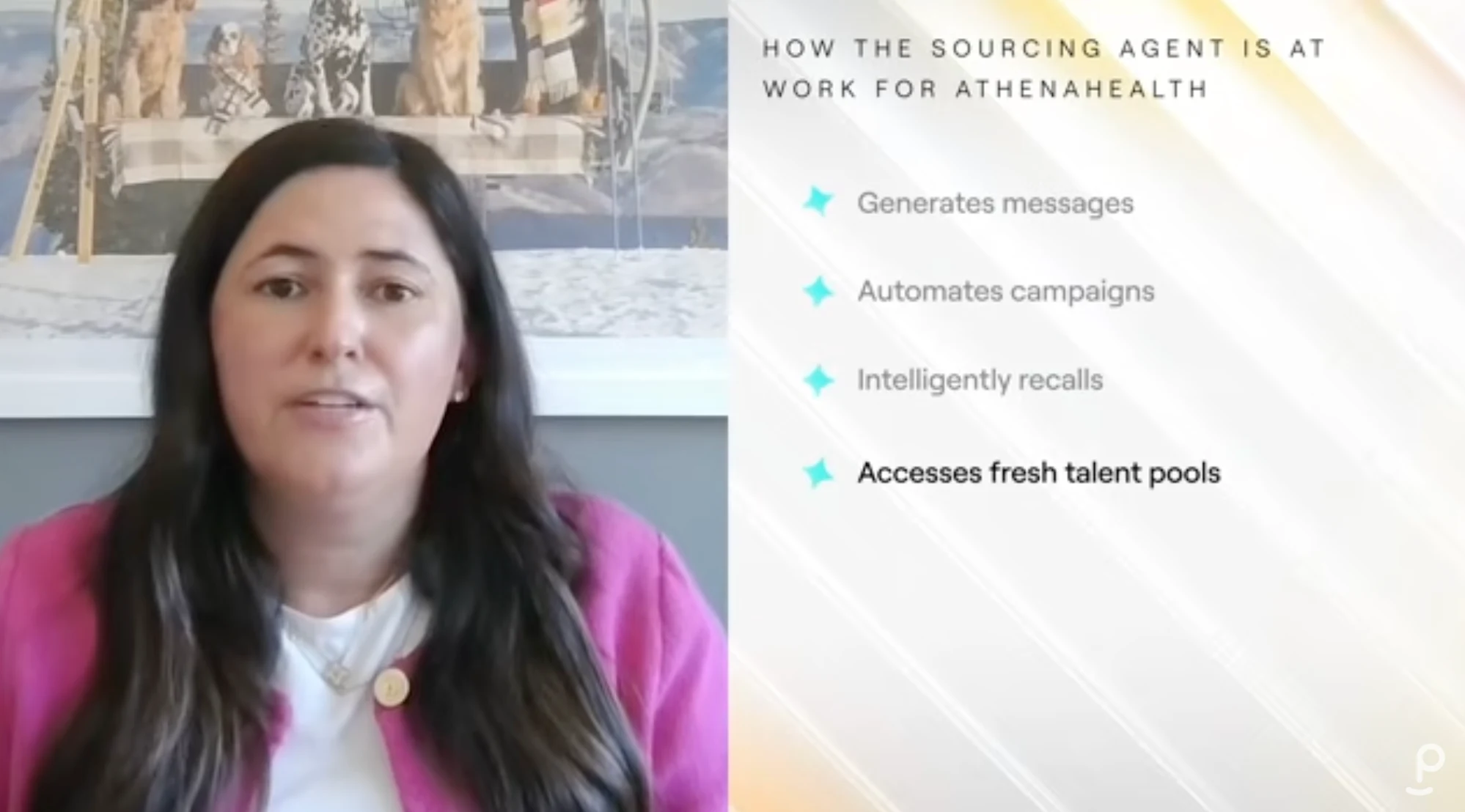
Sourcing Agent searches the team's existing Phenom Talent CRM, which already holds over 300,000 candidates, alongside Phenom's external talent network, organizing results into candidate segments with a plain-language explanation of why each group fits the role. It then drafts personalized outreach for recruiters to review before anything goes out. Once approved, it runs an automated email and SMS follow-up cadence in the background, stopping automatically when a candidate applies or replies, so recruiters don't have to manually track or remember to return.
"That combination in one place inside a platform our team is already using every day is exactly what [our VP] had been pushing toward," Cumming noted.
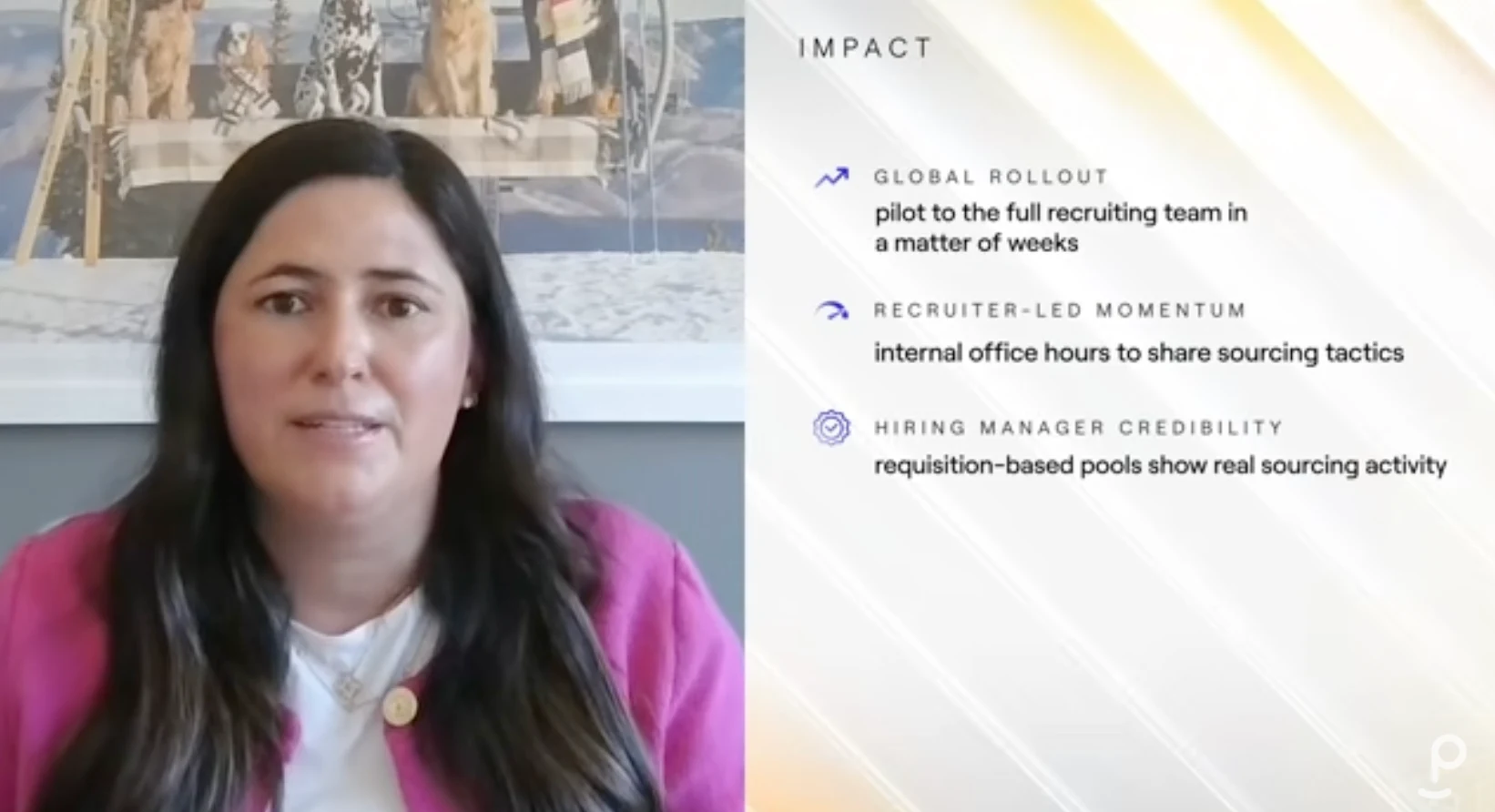
After a small testing group spent several weeks evaluating the tool, athenahealth rolled it out globally to the full recruiting team just weeks before AI Day.
Related: How AI Sourcing Agents Are Changing Healthcare Recruiting
What Early Use Is Already Proving
While only two weeks in, a few signals stood out.
One recruiter organized a voluntary internal office hours session after his first week with the tool to show colleagues how he'd been using it. He's been running requisition-based searches to build candidate pools quickly and give hiring managers a real-time view of sourcing activity. For a team that regularly needs to demonstrate its work to the business, that kind of visibility matters.
A second shift has been cultural. Sourcing tends to be something recruiters either lean into or quietly avoid, and Cumming didn't step around it. "I always joke that I became a recruiter because I loved building relationships, not because I loved running Boolean strings," she joked.
When strong applicant flow made sourcing optional, it wasn't a skill many had to develop. When that flow thinned, it became a source of stress. “Having AI-generated search criteria as a starting point — something you can refine rather than build from nothing — lowers the barrier significantly,” said Cumming. “It would have saved me a lot of stress, and I know it's doing that for people on my team right now.
Where Are They Taking Sourcing Agent Next?
"We're still early, and I want to be honest about that,” admitted Cumming. “We don't have a year of data to point to, but based on what we're seeing so far, we're optimistic about where this can go and see it as an important part of our sourcing strategy moving forward.”
Going forward, the focus is on getting recruiters to use the tool the way it's designed. This means leaning into the full communication cadence, testing message variations across the same role, and experimenting with reaching the same candidate through multiple channels to find where engagement happens.
The larger point Cumming kept returning to was where returned recruiter attention is now free to go. When AI handles the consistency and follow-through that slips when teams are stretched thin, recruiters can focus on what requires a person: building relationships, reading hiring managers, and making judgment calls on candidates.
That reallocation of energy is what athenahealth leadership has been after all along. For Cumming, it's also personal. "I genuinely wish I had a tool like this back then.”
See a quick product tour to watch Phenom Sourcing Agent in action



Get the latest applied AI insights delivered to your inbox.
Sign up to stay up-to-date on the latest original content from Phenom, including new podcast episodes, events, and more.


