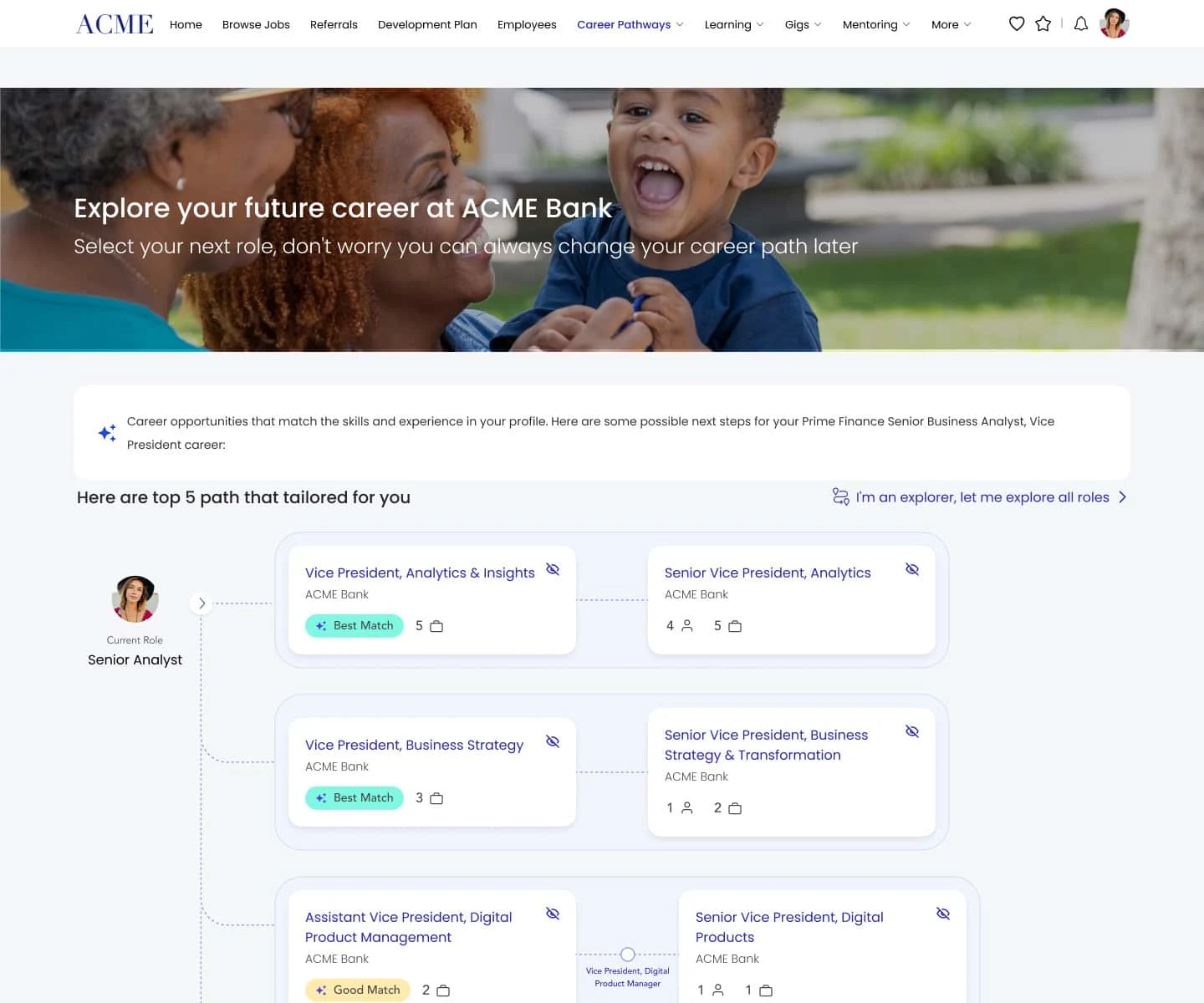
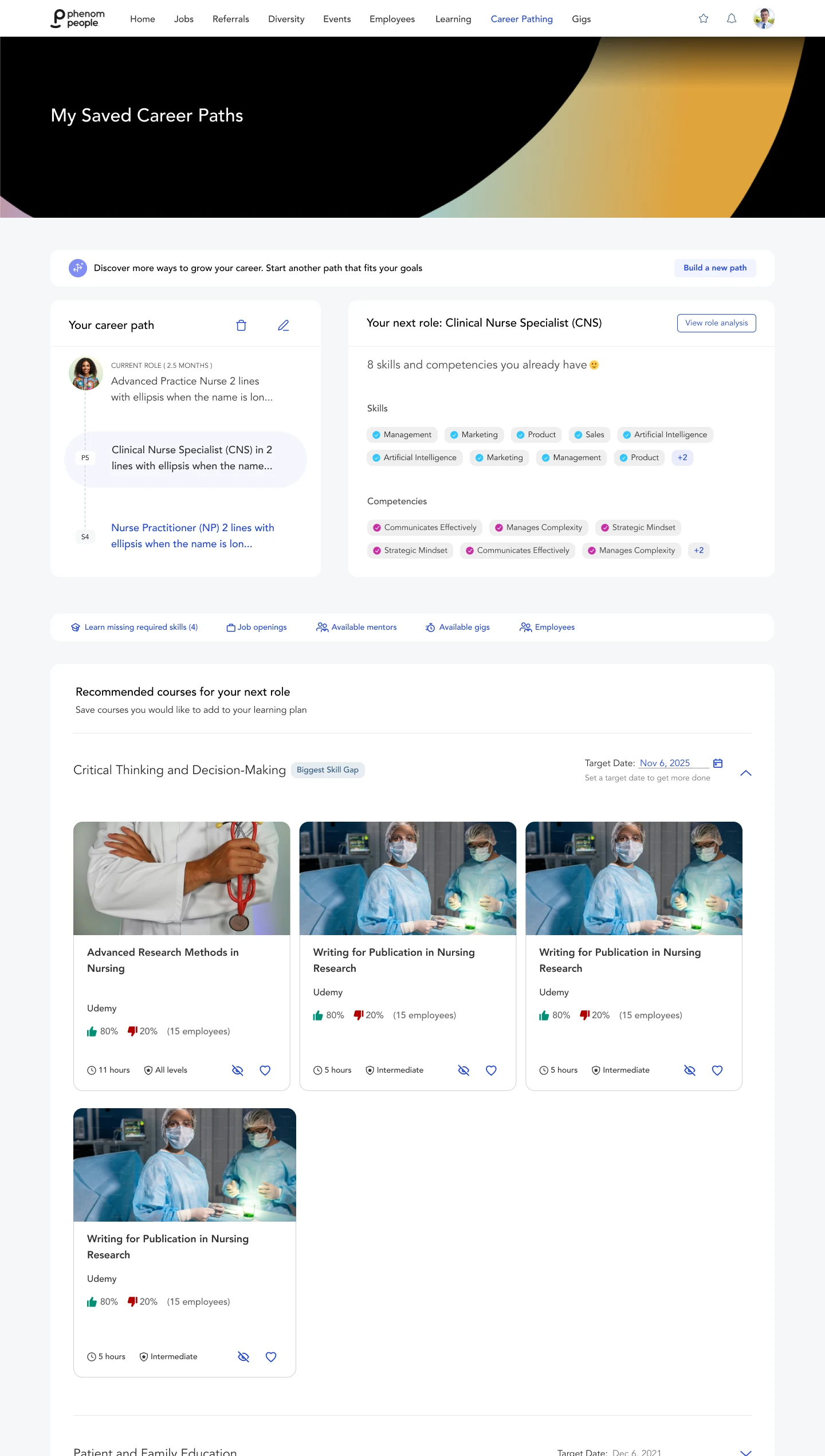
Conventional career pathing hands you an empty structure: define the job architecture, map the skills, then it works. Career Pathing starts at the other end, drafting paths from data you have, so your team edits instead of builds. That decides how fast you launch and whether the map stays true.
The career module you already own.
It starts empty and stays empty until someone hand-builds the framework behind it, which is why owning one and using one differ. Career Pathing arrives with paths already drafted from your roles and skills, so the first visit finds something worth seeing.
The architecture-first project.
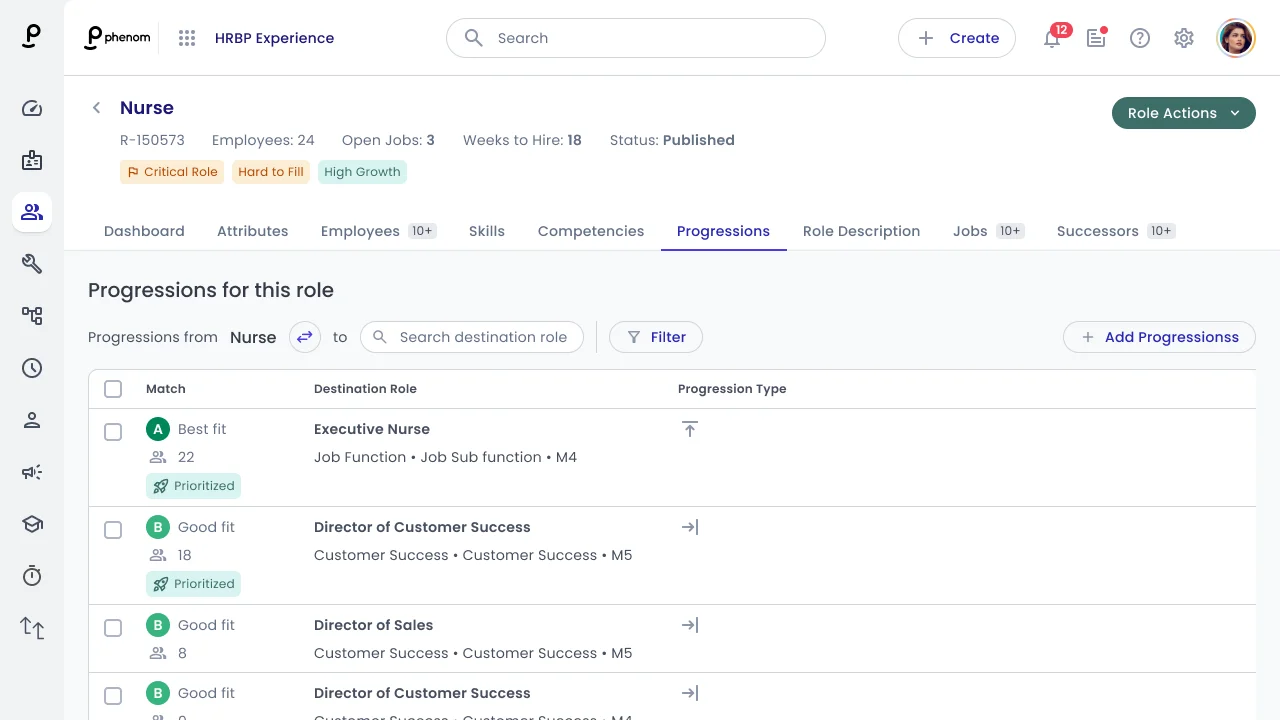
Standard advice: finish your job architecture and map skills before a pathing tool works, which is why it keeps slipping to next year. Phenom reverses it: AI drafts paths from today's data, the architecture forms as your team edits, and you launch in weeks.
The paths in the deck.
A deck path was accurate the day it was written; the org has reorganized since. Career Pathing keeps the map in the same system as your live roles and skills, so when roles change, your team redraws paths where employees look. Keeping it true is an edit, not a project.