AI Infrastructure
Phenom's Ontologies tie a skills gap directly to the development content that closes it, so a named successor's plan is specific to what they're missing, not a generic course assigned to everyone on the list.
The answer to who's ready for your critical roles lives in a few leaders' heads, and it goes stale the day after the talent review. Phenom builds your succession plan from skills data across the whole company, so readiness is something you look up, not something you remember.

The talent review takes weeks of leadership time and produces a deck. Then nothing happens until next year. When a critical role opens, no one on the plan is ready, so you hire from outside and pay a premium. Phenom ensures you know who’s ready now by keeping succession planning current between reviews: suggested leaders, readiness backed by data, and gaps you can spot early.
Succession that covers the whole company and stays current.
Most succession slates are built from the people a leader already knows, so the strongest candidate two departments over never comes up. Phenom suggests successors from across the company, matched on skills, experience, and aspirations. Then it rates how ready each person is, and shows the evidence behind the rating.
Suggested successors Phenom looks across every function and location.
Readiness on the record Ready now or ready in a few years, with the evidence behind each call.
Aspirations included Plans reflect who actually wants the move.
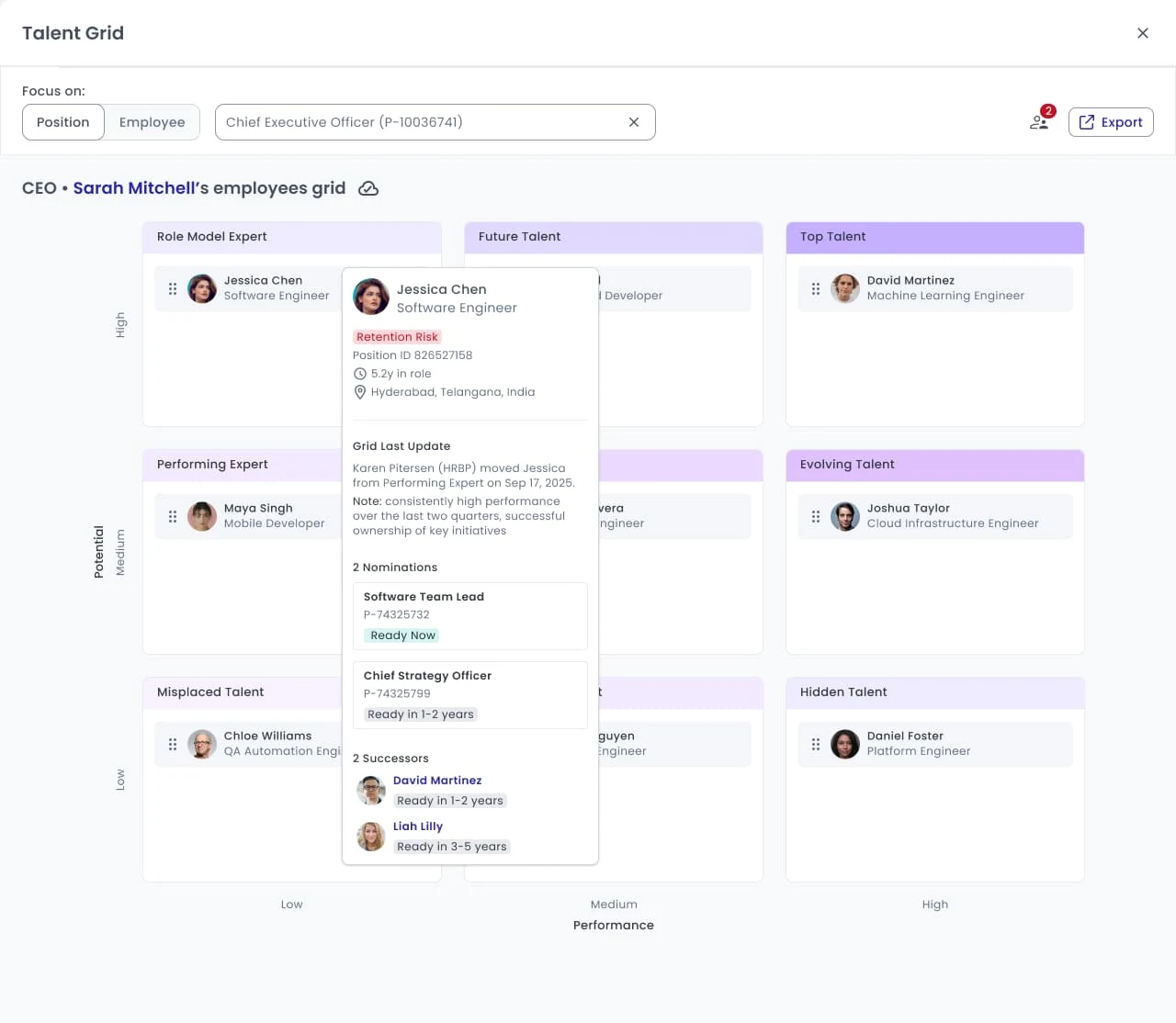
Leaders meet to rate readiness and name successors. Then the grid lives on a slide, the notes on paper, and someone re-types it all. Run that review in Phenom instead: changes save as you discuss them, decisions land as you make them, and the succession plan is still accurate months later when someone needs it.
The review runs in Phenom Decisions land in the plan as they're made.
Nothing to re-enter What you decide in the meeting is recorded in the meeting.
Current between cycles The plan reflects today, not last year's review.
The hardest roles to fill are often the ones where the people in them are closest to retiring. Phenom shows you which roles are critical and how deep the bench is under each one, then puts named successors on a development path while there's still time.
Critical roles defined See which roles in each department would hurt most to lose.
Depth you can measure Bench strength stops being a feeling in the room.
Development attached Every named successor gets a plan built around what they still need.
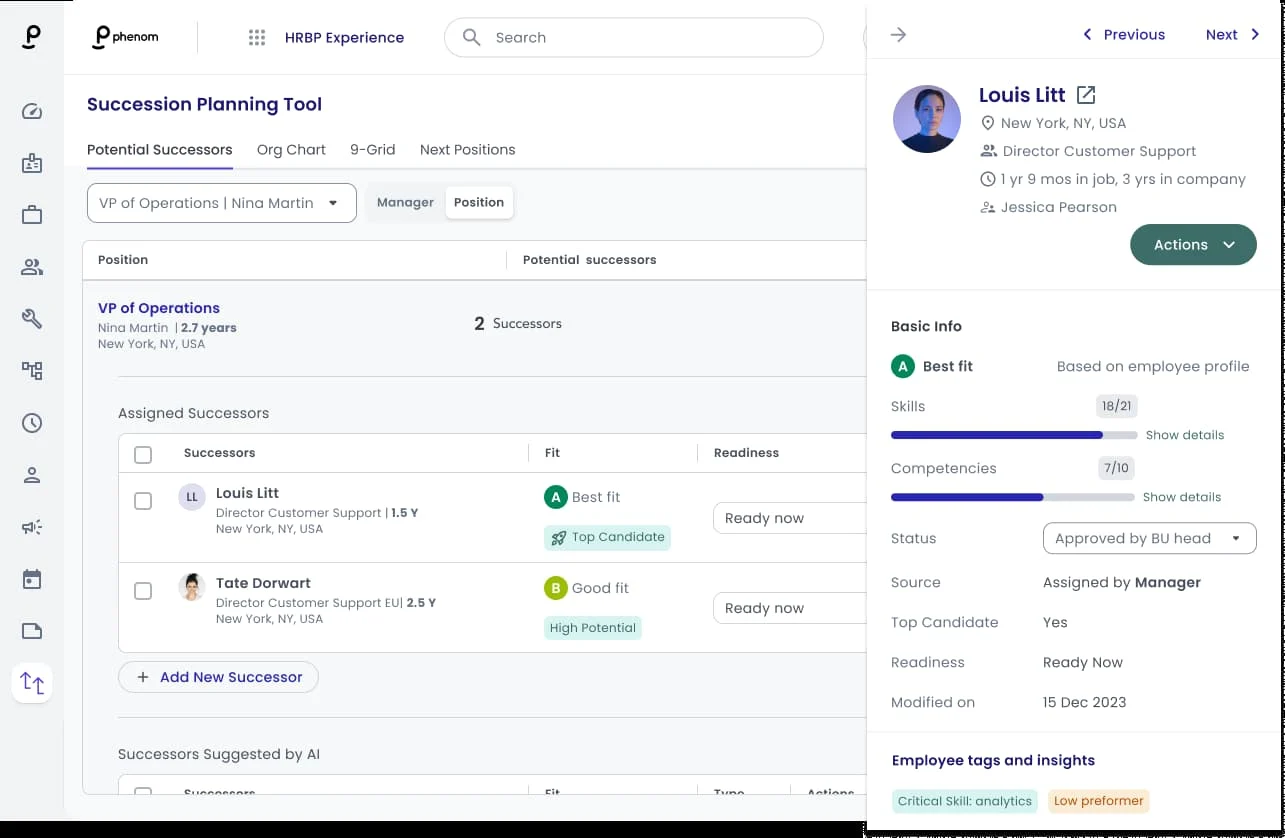
Development plans tied to the specific gap identified, integration with the systems already tracking performance, and slates visible only to the leaders named to see them.
Phenom's Ontologies tie a skills gap directly to the development content that closes it, so a named successor's plan is specific to what they're missing, not a generic course assigned to everyone on the list.
Phenom connects to your HRIS and performance management systems, so a succession plan reflects real performance history, not a rating entered once a year.
Phenom is SOC 2 Type II certified and GDPR and CCPA compliant, with AES-256 encryption. Succession slates are visible only to the leaders named to see them, not the broader organization.
15k
active succession plans
30k
employees with potential ratings
300+
talent reviews conducted in the past year
I think this is a really different view than what you get in a lot of HRMS models. You can get 'succession planning' really anywhere, but what you miss is having a snapshot view of an organization.
Give us the roles that are most important for business success, and we’ll show you the skills that are necessary to make sure you backfill appropriately.
© 2026 Phenom People, Inc. All Rights Reserved.


