

A Comprehensive Guide to Employee Resource Groups (ERGs): Enhancing Workplace Culture and Diversity
In today's diverse workplace, organizations face persistent challenges in creating truly inclusive environments, bridging cultural gaps, and ensuring all employees have equal opportunities for growth and advancement. Employee Resource Groups (ERGs) have emerged as vital instruments for addressing these complex workplace dynamics, fostering inclusion, driving professional development, and catalyzing organizational growth.
More than just social networks, ERGs serve as strategic assets that help companies tackle employee retention issues, strengthen diversity initiatives, and create authentic spaces where underrepresented employees can find support and mentorship.
This comprehensive guide explores what ERGs are, their measurable benefits, and how organizations can effectively implement and manage them to transform workplace culture from within.
In This Article
What Are ERGs?
ERGs are voluntary, employee-led groups that foster a diverse, inclusive workplace aligned with organizational mission, values, goals, business practices, and objectives. What are ERGs beyond simple networking groups? They serve as powerful platforms for employee advocacy, professional development, and cultural awareness.
Why ERGs Matter in the Workplace
The benefits of ERGs extend far beyond basic community building. ERGs in the workplace significantly impact:
Employee engagement and retention: 66% of employees believe that their ERG is effective at fostering a sense of community, which often leads to them being more engaged at work and staying with their organization longer. This directly impacts the company's bottom line through reduced turnover costs.
Professional development opportunities: ERGs provide unique leadership experiences and skill-building platforms through organizing events, managing budgets, and leading initiatives — offering valuable experience that might not be available in an employee's day-to-day role.
Cultural awareness and sensitivity: Through educational programs, cultural celebrations, and open dialogues, ERGs help break down barriers and foster understanding across different groups, leading to more inclusive decision-making and reduced workplace conflicts.
Innovation through diverse perspectives: When ERGs are involved in product development and business strategies, they bring unique insights from different demographic groups, helping companies better serve diverse market segments and identify new business opportunities.
Talent recruitment and development: ERGs often participate in recruitment events and career fairs, helping attract diverse candidates and creating mentorship programs that develop internal talent pipelines for leadership positions.
For companies, ERGs offer valuable insights into diverse perspectives, help identify and develop emerging leaders, and can even contribute to tackling company-wide challenges.
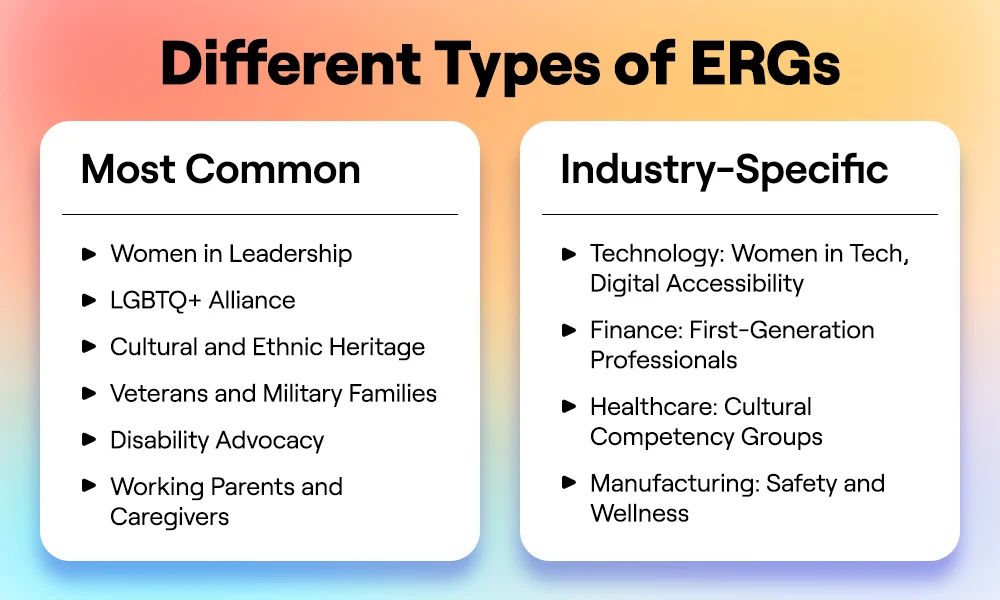
Types of Employee Resource Groups
There are endless ERG types, but we’ve broken them into the most common and industry-specific groups. Check out the charter below:
How to Start an ERG in Your Organization
Starting an ERG requires careful planning and organizational support. Here are six key steps for how to start an ERG:
Identify common interests and needs within your workforce. You can do this through surveys, focus groups, and informal discussions. This data-driven approach ensures the ERG addresses real organizational gaps and employee desires.
Secure executive sponsorship. This involves identifying senior leaders who are passionate about the ERG's mission and can advocate for resources and visibility.
Develop a clear mission statement and objectives. Outline the group's mission, leadership roles, membership criteria, and operational guidelines. When creating a powerful mission statement and setting goals for ERGs, it's essential to align them with the organization's overall diversity and inclusion strategy. Objectives should be SMART — Specific, Measurable, Achievable, Relevant, and Time-bound — to ensure effectiveness and accountability. Make sure this information is easy to find as you begin implementation to help support adoption.
Establish a leadership structure and timeline. This includes key personnel, milestones, launch events, and initial programming that will help create a successful rollout.
Create a communication plan. Think regular newsletters, collaboration platforms, and meeting cadences to keep members engaged and informed.
Establish your digital infrastructure by implementing technology solutions that will support your ERG's operations. This might include Slack or Microsoft Teams for regular communication, event management tools for organizing meetings and activities, or knowledge-sharing platforms to maintain resources and documentation.
Launch and promote the ERG! Keep employees informed through internal communication, and create channels or host meetings for employees to come and learn more. Make sure you have a post-launch plan to ensure adoption and participation.
Once you’ve successfully launched your ERGs, define success metrics by combining quantitative and qualitative measures across areas like:
Membership engagement (e.g., active membership growth, event attendance rates)
Program effectiveness (e.g., participant satisfaction scores, mentorship program completion rates)
Organizational impact (e.g., improved retention rates among group members, number of cultural awareness initiatives implemented, internal mobility of members)
Leveraging Technology for ERG Success
Modern ERGs increasingly rely on digital tools to enhance their reach and impact. Key technology considerations include:
Virtual engagement platforms: Enable global participation and connection across different time zones and locations
Analytics dashboards: Track membership, engagement, and impact metrics in real-time
Mobile apps: Facilitate easy access to ERG resources and events on-the-go
Content management systems: Organize and share ERG documentation, best practices, and success stories
Automated communication tools: Schedule and distribute newsletters, event reminders, and updates efficiently
Best Practices for Managing ERGs
Successfully managing an ERG doesn’t have to be hard, but it’s important to ensure everything is running smoothly. Consider the following best practices for managing ERGs:
Provide leadership opportunities within ERGs to foster professional development: Encourage members to take on leadership roles within the group, such as chairing committees or organizing events, to build their skills and confidence.
Secure adequate funding and resources for ERG activities: Work with organizational leaders to allocate a dedicated budget for ERG initiatives, ensuring they have the necessary support to execute their plans and activities successfully.
Embrace digital solutions for efficient ERG management: Implement project management tools to track initiatives and deadlines, use digital surveys and feedback platforms to gather member input, and create digital resource libraries for easy access to ERG materials.
Encourage cross-ERG collaboration to promote inclusivity: Facilitate joint events and projects between different ERGs to foster understanding and cooperation among diverse groups, enhancing the overall inclusivity of the organization.
Regularly assess and measure the impact of ERGs: Implement tools and processes to track ERG activities, participation rates, and outcomes, using this data to refine strategies and demonstrate their value to the organization.
Ensure ERGs remain open and inclusive to all employees, including allies: Develop clear guidelines that welcome participation from all interested employees, emphasizing the importance of allyship and diverse perspectives within each group.
To maintain an inclusive and open environment within ERGs, it's essential to establish a culture of respect and acceptance from the outset. This can be achieved by setting clear expectations around diversity and inclusion in the group's mission statement and activities. Encourage active participation from allies and individuals from various backgrounds to enrich discussions and broaden perspectives.
Regular training on unconscious bias and inclusive practices can help members become more aware of potential exclusionary behaviors. Additionally, solicit feedback from members regularly to identify any barriers to participation or areas for improvement. By fostering a welcoming atmosphere where everyone feels valued and heard, ERGs can effectively contribute to a more inclusive workplace culture.
The Role of ERGs in Promoting Diversity and Inclusion
ERGs play a vital role in supporting Diversity, Equity, and Inclusion (DEI) initiatives. They serve as a bridge between employees and leadership, providing valuable insights into the experiences of diverse groups within the organization. This connection is crucial for developing effective DEI strategies that address real issues and create meaningful change.
CAI, a global technology company, is a real-world success story of how to effectively implement ERGs in the workplace. A few years ago, they became aware of a preconceived notion about the ethnic makeup of their workforce, so set out to discover what was behind it and ways to counteract that assumption.
Derek Herman, Executive Director of Communications at CAI, created an internal podcast called “Ally in the Room” that would celebrate diversity by exploring employee stories, as well as hot topics in the industry.
But that’s not all they have operating at CAI. The company also hosts:
Annual Diversity Days in June to celebrate DE&I
Courageous Conversations, a live Zoom session hosted quarterly, which functions as an open forum for employees to raise concerns and share stories
“Power Hours” focusing on diversity-related topics and ways for employees to share their individualism
Check out how CAI educates job seekers about their ERGs here
The connection between ERGs and corporate DEI strategies is multifaceted and impactful:
Informing DEI policies: ERGs can provide firsthand feedback on existing policies and suggest improvements, ensuring that DEI initiatives are relevant and effective. For example, an LGBTQ+ ERG might offer insights on creating more inclusive benefits packages or updating non-discrimination policies.
Talent pipeline development: ERGs often play a crucial role in the recruitment, retention, and promotion of diverse talent. They can help identify potential candidates from underrepresented groups and provide mentorship opportunities, directly supporting the organization's diversity goals.
Cultural competence: ERGs can educate the broader workforce about different cultures, experiences, and perspectives, fostering a more inclusive environment. This aligns with DEI objectives of creating a workplace where all employees feel valued and understood.
Leadership development: Many organizations use ERGs as a platform to identify and nurture diverse leadership talent, supporting DEI goals of increasing representation at higher levels of the company.
Business innovation: ERGs can provide valuable market insights, helping companies develop products and services that appeal to diverse customer bases. This aligns DEI efforts with business objectives, demonstrating the tangible value of diversity.
Measuring impact: ERGs can help track the progress of DEI initiatives by providing qualitative feedback and helping to interpret quantitative data on diversity metrics.
Crisis response: In times of social unrest or global events affecting specific communities, ERGs can guide company responses and support affected employees, ensuring that DEI efforts remain responsive to current events.
By aligning ERG activities with broader DEI strategies, organizations can create a more cohesive and effective approach to fostering an inclusive workplace culture. This alignment ensures that ERGs are not operating in isolation but are integral to the company's overall DEI efforts, driving meaningful change throughout the organization.
Why Every Organization Should Invest in ERGs
The benefits of ERGs in the workplace are clear and multifaceted. They enhance employee engagement, foster a more inclusive culture, and contribute to the organization's success. By supporting ERGs, companies demonstrate their commitment to diversity and inclusion, which can lead to improved talent attraction and retention, enhanced innovation, and better business outcomes.
For HR professionals and organizational leaders, investing in ERGs is not just a nice to have; it's a strategic imperative in today's diverse and dynamic workplace.
Whether you're looking to start new ERGs or improve existing ones, the time to act is now. Embrace the power of Employee Resource Groups and unlock the full potential of your diverse workforce.
Frequently Asked Questions
Employee Resource Groups are voluntary, employee-led groups that foster a diverse, inclusive workplace aligned with organizational mission, values, goals, business practices, and objectives. They serve as powerful platforms for employee advocacy, professional development, and cultural awareness. They go well beyond simple networking groups to act as strategic assets that help companies tackle retention, strengthen diversity initiatives, and create authentic spaces where underrepresented employees find support and mentorship.
Employee Resource Groups (ERGs) have measurable retention impact: 66% of employees believe their ERG effectively fosters a sense of community, which leads to higher engagement and longer tenure. By creating a sense of belonging and offering leadership experiences not available in day-to-day roles like organizing events, managing budgets, and leading initiatives, ERGs directly impact the bottom line through reduced turnover costs while developing internal talent pipelines for leadership positions.
There are seven steps to starting Employee Resource Groups: (1) identify common interests and needs through surveys, focus groups, and informal discussions; (2) secure executive sponsorship from senior leaders who can advocate for resources and visibility; (3) develop a clear mission statement and SMART objectives (Specific, Measurable, Achievable, Relevant, Time-bound) aligned with the company's DEI strategy; (4) establish leadership structure and timeline; (5) create a communication plan; (6) establish digital infrastructure using Slack, Teams, or event management tools; and (7) launch and promote with a plan for adoption.
Combine quantitative and qualitative measures across three areas: membership engagement (active membership growth, event attendance rates); program effectiveness (participant satisfaction scores, mentorship program completion rates); and organizational impact (improved retention rates among group members, number of cultural awareness initiatives implemented, internal mobility of members). These metrics demonstrate the program value to leadership and inform continuous improvement.
Employee Resource Groups are employee-led groups focused on specific identities or interests that are typically formed around shared experiences, but open to all employees, including allies. Diversity councils are leadership-driven and focus on organization-wide DEI strategies. Employee Resource Groups bring grassroots perspective and authentic feedback to inform DEI policies, while diversity councils set top-down direction and resource allocation.
Employee Resource Groups rely on digital tools to extend reach across hybrid and remote workforces: virtual engagement platforms enable global participation across time zones; analytics dashboards track membership, engagement, and impact metrics in real-time; mobile apps facilitate on-the-go access to resources and events; content management systems organize Employee Resource Group documentation and success stories; and automated communication tools schedule newsletters, event reminders, and updates efficiently.

Maggie is a writer at Phenom, bringing you information on all things talent experience. In addition to writing, she enjoys traveling, painting, cooking, and spending time with her family and friends.



Get the latest talent experience insights delivered to your inbox.
Sign up to the Phenom email list for weekly updates!


