AI Infrastructure
Phenom's Ontologies preserve what a rating actually means when it moves between systems, so a 4 out of 5 on one scale and an 'exceeds' on another aren't flattened into the same number by accident
The interview verdict lives in an email. The review lives in a spreadsheet. Phenom captures each evaluation where it happens, then connects that evaluation to the decisions it should shape: who to hire, who to grow, who to move into a new role.
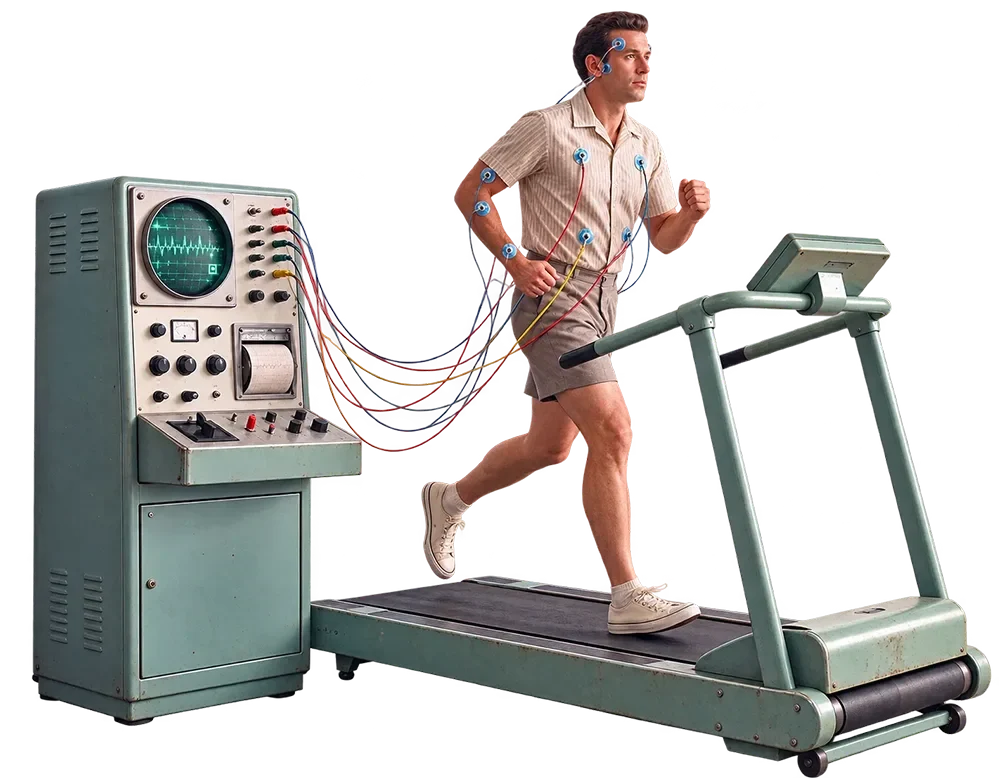
A year after a hiring push, time-to-fill and cost-per-hire are the only defensible numbers. Feedback, reviews, and ratings sit in three systems that never talk, so quality has no case. Phenom builds a consolidated view from interview to review, so you can see exactly where a hire's performance fell apart.

One connected record of how someone performs, starting at the interview.
Ask three interviewers about one candidate and you get an email, a chat message, and a memory. Phenom puts a shared scorecard and a shared interview guide in front of every interviewer during the interview itself, so everyone assesses the same things and the reasoning behind the hiring decision stays on the record.
One shared scorecard. Every interviewer writes their assessment in the same place.
Consistent by design. Interviewers work from the same guide, whoever is hiring, in any team or location.
No chasing feedback by email. Interviewers write their feedback during the interview, not from memory afterward.
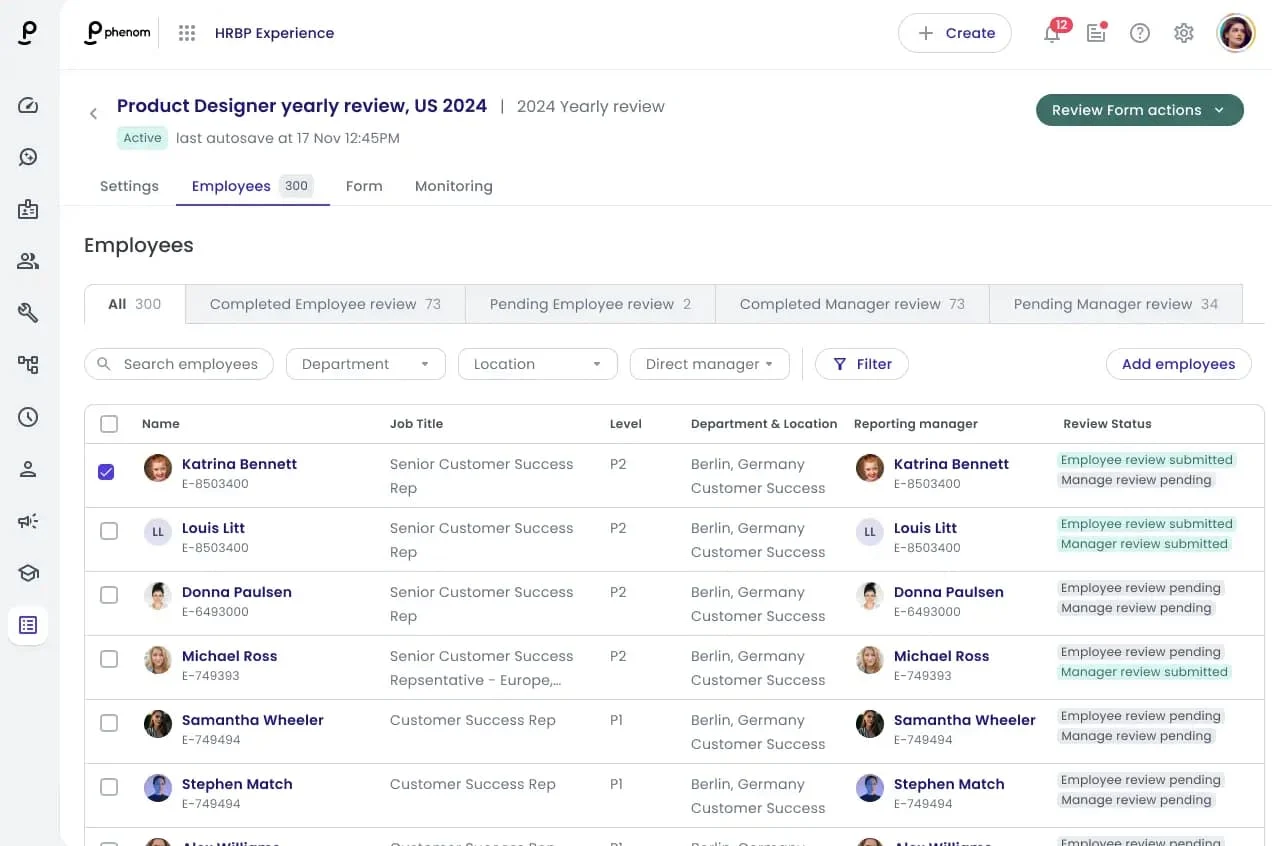
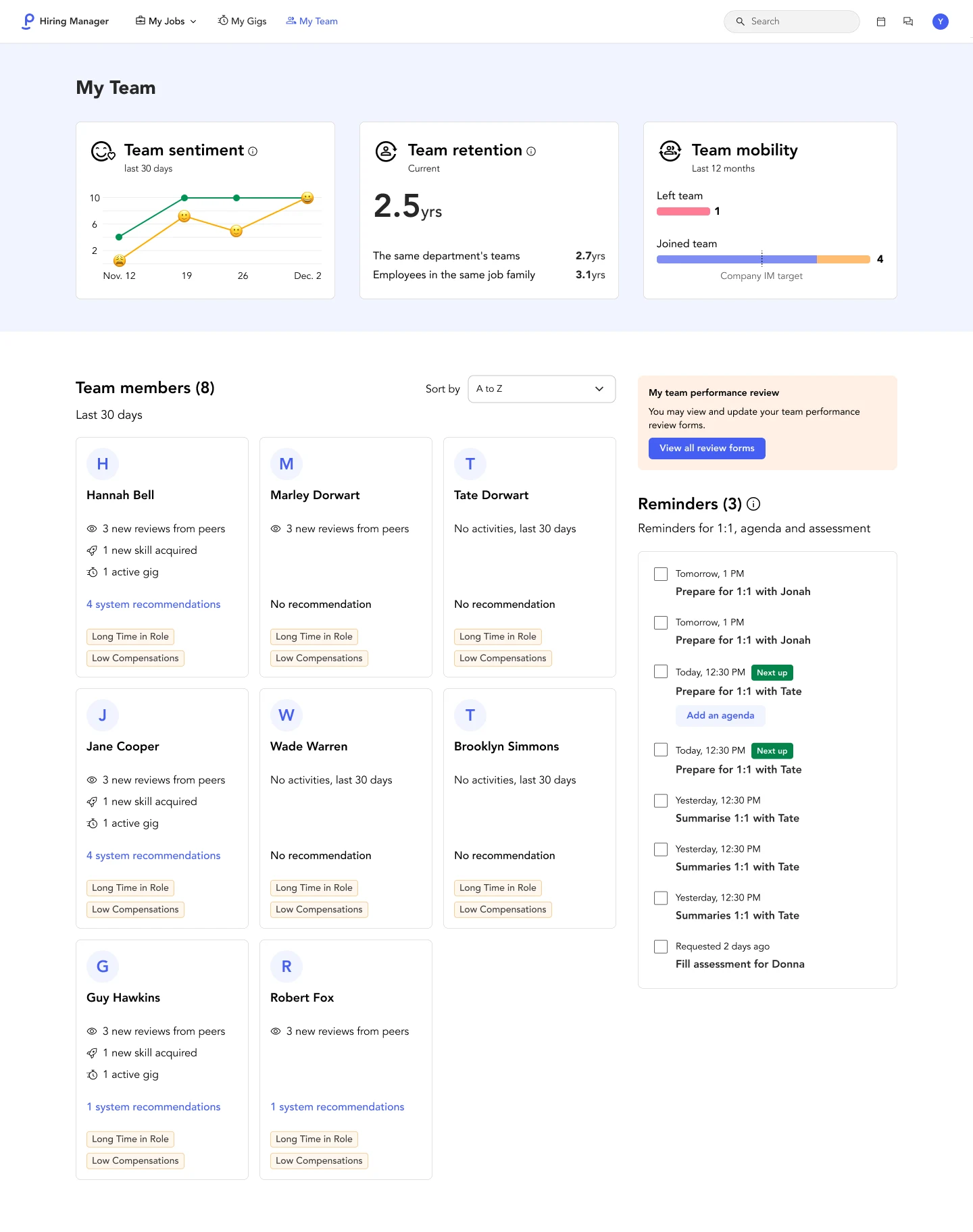
The annual review lands months after the moments it describes. Between cycles, managers have nothing to work from, so HR ends up scripting the conversations for them. Phenom People Manager gives every manager a steady routine of one-on-ones with prep and follow-through, plus signals that show up early enough to act on.
Ongoing, not annual. Managers and employees talk all year, and each conversation goes on the record right away.
Managers arrive ready. They get prompts and talking points before the conversation starts.
Signals between reviews. Engagement and goal progress stay visible to managers between reviews.
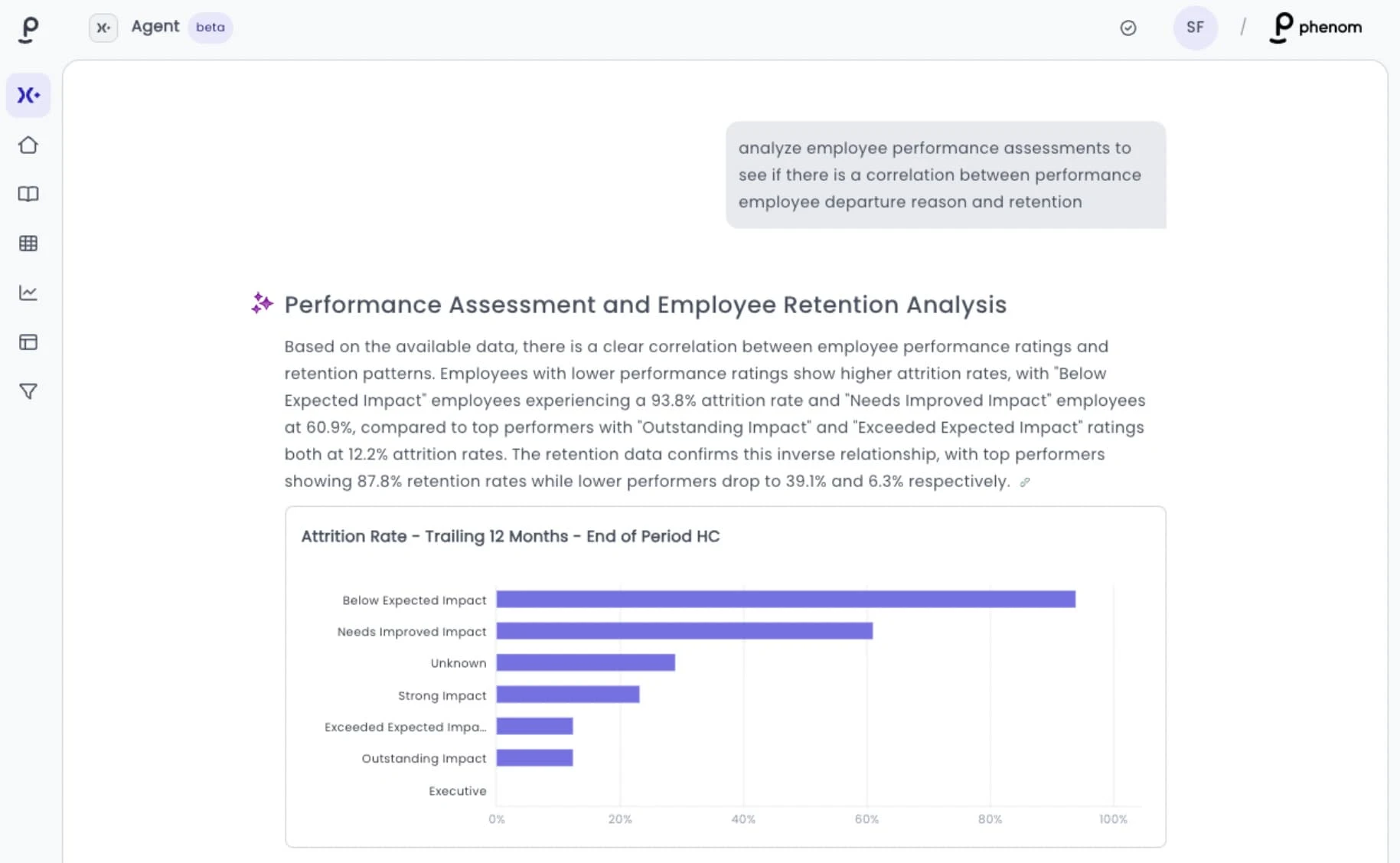
Performance ratings live in your HRIS. Hiring lives in another system. But with Phenom, hiring and performance run on one shared data model, not on an integration between two systems. So last quarter's review can surface someone for an internal opening, and performance on the job traces back to the hiring decision.
Quality of hire, answered. Performance on the job connects back to how you hired.
Your scale carries over. Ratings sync from your system of record and keep their meaning.
Ask, don't export. Type your question in plain language and get back an analysis you can present.
Employee profiles that standardize performance indicators, integration with the HRIS already running reviews, and data governed under one consistent policy.
Phenom's Ontologies preserve what a rating actually means when it moves between systems, so a 4 out of 5 on one scale and an 'exceeds' on another aren't flattened into the same number by accident
Phenom connects to your HRIS and performance management systems, so a rating entered during a review updates the same record an interview scorecard started.
Phenom is SOC 2 Type II certified and GDPR and CCPA compliant, with AES-256 encryption. Performance data follows the same retention and access rules as your HRIS, not a separate policy bolted on for hiring data.
8k
estimated hiring manager hours saved
86%
of hires came from top assessment match tiers
10%
retention improvement by surfacing shift type and schedule details
From a compliance perspective, it's much more in line because everyone's getting the same question and evaluation.
See how you can apply intelligence and automation to give managers a holistic view of performance and potential.
Analyzing employee performance well starts with having every evaluation of a person in one place, from their interview scorecard to their latest review and ongoing manager check-ins. Phenom connects those evaluations on a single record, so you can analyze employee performance across the whole employee lifecycle and tie it back to the decisions that matter: who to hire, who to develop and who to move into a new role.
Quality of hire is measured by comparing how candidates scored during hiring with how they perform and how long they stay. Because Phenom analyzes employee performance on the same record as interview scorecards and assessment results, you can see which screening criteria predict success and change the ones that don't. Phenom also learns from top performers to sharpen what a strong profile looks like for each role, while you stay in control of the criteria.
Yes. Phenom syncs employee performance ratings from your HRIS onto each employee's profile, where they inform career pathing, internal mobility matches and succession planning. Your HRIS stays the system of record for the review cycle, and your rating scale keeps its meaning, so a five-point rating isn't flattened into something else. Employees get one place to go instead of a second system to learn.
Phenom's employee performance analytics break results down by job category, job title and location, so HR teams can see which roles and sites are underperforming. Instead of exporting data and building reports, you can ask a question in plain language and get the breakdown back as a finished analysis.
Phenom builds each employee's skills profile from several sources, including skills employees add themselves, manager endorsements, work history, assessments, learning activity and HRIS data. Phenom's AI Ontologies combine these into one shared vocabulary of skills and roles and infer the skills nobody entered, so your performance and skills analysis doesn't depend on every manager completing every review.
© 2026 Phenom People, Inc. All Rights Reserved.


