

How Self-Service Scheduling Automation Saves Truist Days of Work
Banking runs on precision. Every process, handoff, and decision moves through layers of governance, compliance, and review.
For Truist, one of the top 10 commercial banks in the U.S., that operating reality shapes everything, including how they hire. Interview scheduling was once a two-day, manually coordinated effort. With Phenom, most interviews are now booked in under an hour.
Truist’s Cynde Stansberry, SVP – HR Digital Experience and Optimization Leader, shared how they got there.
Explore the highlights below!
Why Automated Interview Scheduling?
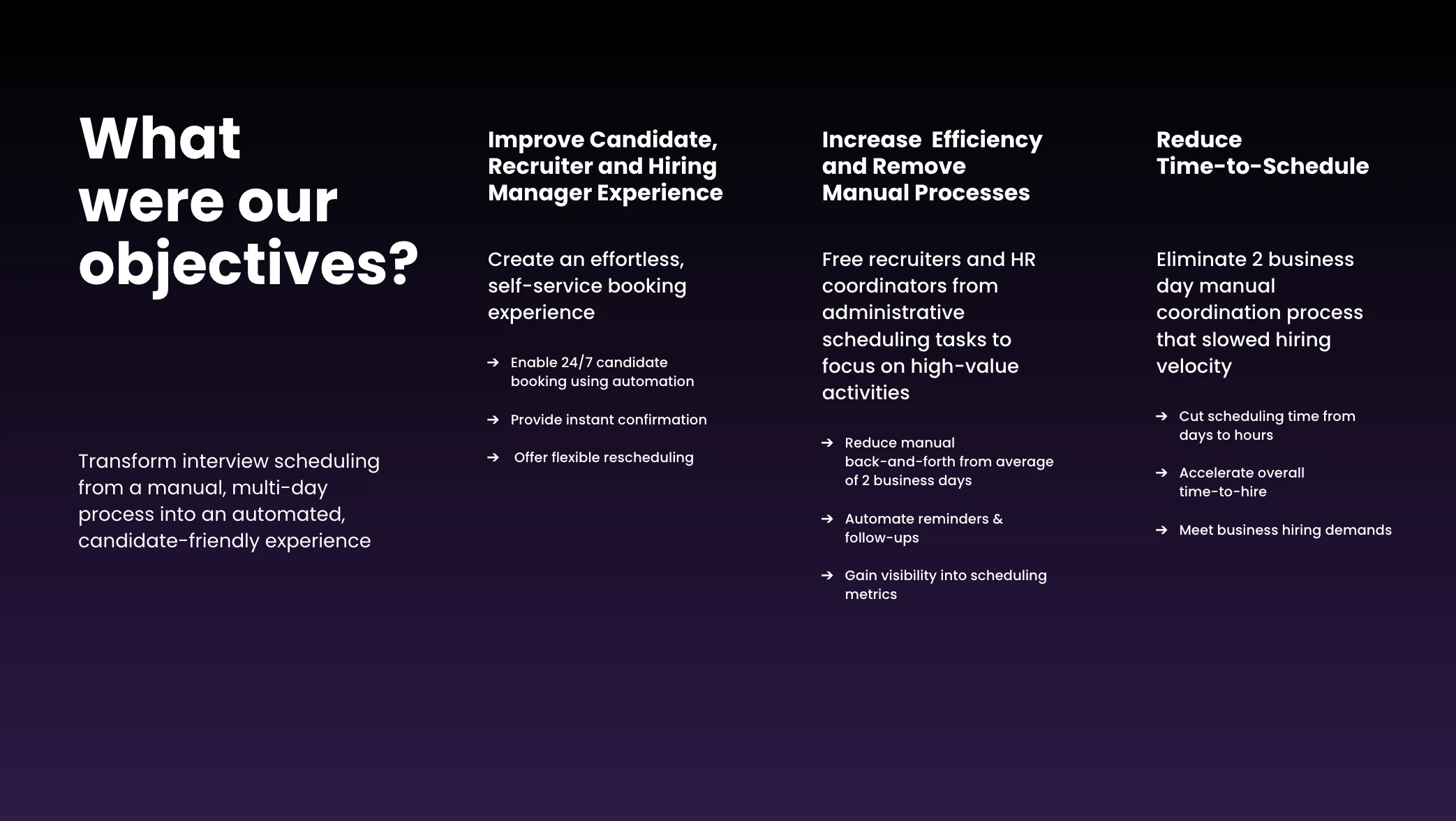
Before automation, Truist relied on a team of 13 HR coordinators dedicated almost entirely to scheduling interviews for lateral hires. They were skilled at it, but even at their best, the process averaged two business days per interview, and those delays compounded at every stage of the funnel.
"The longer it takes to get them scheduled, the longer it takes to get them interviewed, the longer it takes to get to an offer," Stansberry, said. "Think about all those vacancies impacting the work of everybody else covering for that."
Candidates, recruiters, and hiring managers were caught in the same cycle of back-and-forth phone calls and emails. Truist wanted a solution that met candidates where they were: available 24/7, in real-time, and as simple as booking any personal appointment. Ultimately, the goal was to eliminate the two-business-day coordination process that had been slowing hiring velocity so they could keep pace with the demands of the business.
What About Regulation and Compliance Requirements?
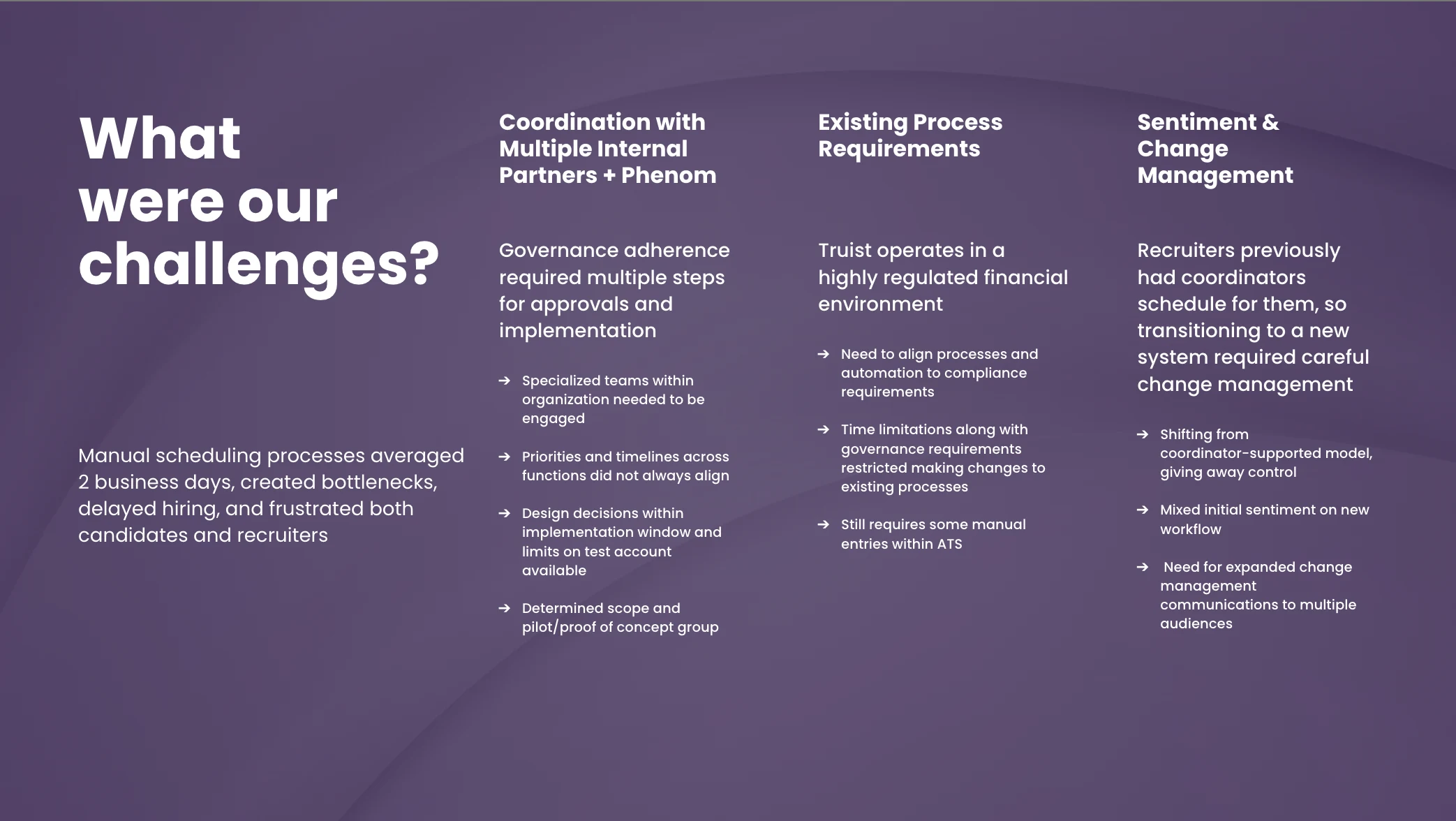
Implementing Phenom Automated Interview Scheduling required sign-off from IT, Legal, Privacy, Corporate Communications, and a dedicated internal Microsoft Office team. "We are conservative by nature and we are regulated," Stansberry said. "There’s a lot of governance that comes into all of that."
That kind of governance isn’t unusual for a bank of Truist’s size. So instead of treating compliance as a barrier, the team built their implementation strategy by making configuration decisions with governance baked in from the start and engaging stakeholders early.
Those decisions showed up directly in how the tool was configured. Truist built guardrails into the system itself, blocking interviews before 9 am, requiring at least 24 hours of advance notice, and allowing self-service rescheduling only when an interview was 24 or more hours out. These parameters kept the automated process inside the bank's established controls while protecting candidates and interviewers from bookings landing without time to prepare.
As Stansberry put it, the team was "very focused on how are we configuring this to work for Truist, so that we stayed within our processes and within our governance."
The team also launched a focused pilot among Enterprise Technology and HR groups, collected feedback, adjusted communications and training, and expanded from there.
Change management proved equally critical. Some recruiters were reluctant to let go of manual control, and administrative assistants who managed executives’ calendars raised legitimate concerns about calendar visibility and coordination.
Stansberry’s approach with resistant stakeholders was direct: give the system a week. One particularly skeptical colleague agreed, and the result surprised her. "She became a champion for it," Stansberry recalled, "and would go out to others and say, ‘Hey, if you do this, it really will work.’"
That stakeholder enthusiasm carried the adoption forward more effectively than any top-down mandate could have.
Related: How Dutch Bros Cut Time to Fill by More Than 50% with Hiring Automation
What Results Have They Experienced?
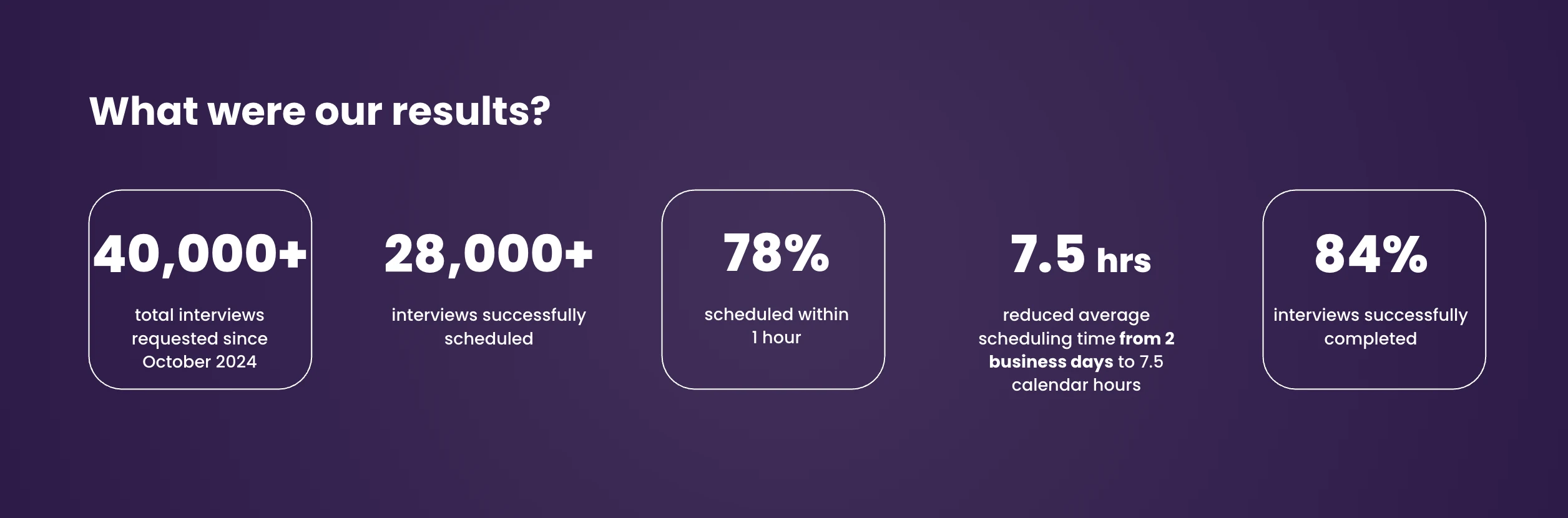
Automated Interview Scheduling has processed more than 40,000 interview requests for Truist, with over 28,000 successfully scheduled and 84% of those interviews completed. Nearly four in five candidates now book within a single hour, and the system handles the full range of formats, including phone, virtual, and in-person interviews across branch locations.
"We’ve gone from two business days to an average of seven and a half calendar hours," Stansberry said. "When you think about how quickly we are turning these things around, this is huge."
For the coordination team, the shift created more bandwidth. Time that once went entirely to calendar management has been redirected toward compliance-related tasks and process work that better matches their skills.
Related: How United Airlines and Phenom Redesigned Interview Scheduling Together
What Are They Focusing on Next?
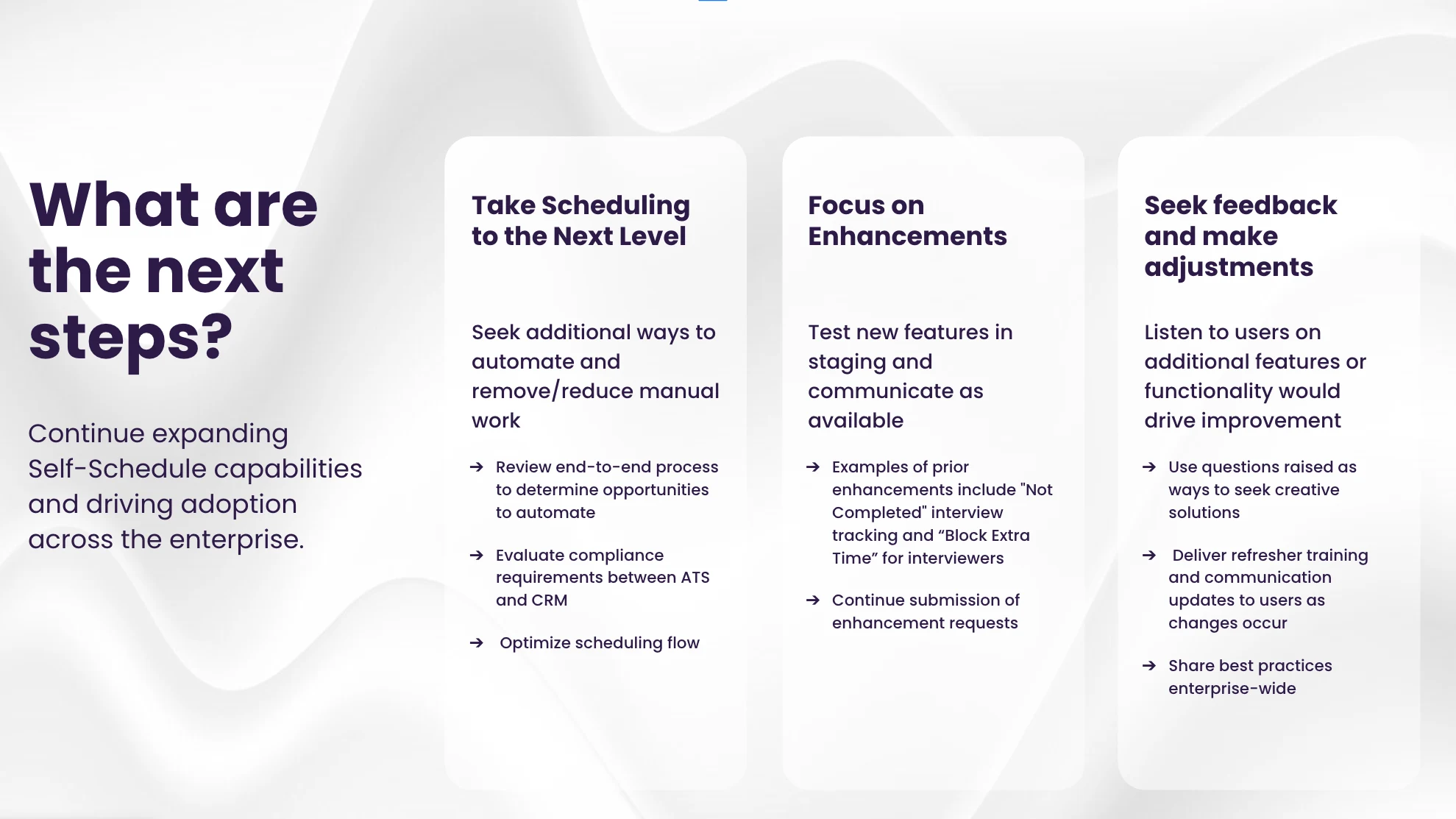
Truist's Phenom journey began in 2022 and includes Phenom Talent CRM, Career Site, Chatbot and Automated Interview Scheduling. Now, with a year and a half of scheduling data in hand, the team is revisiting the processes they initially worked around, evaluating whether their original exclusions such as executive-level candidates and travel-involved interviews, still make sense. Their longer-term target is routing approximately 80% of all interviews through Phenom.
Stansberry knows what it takes to implement big changes through a complex organization. And her advice for teams just beginning the journey is to understand their own capabilities.
"If Phenom tells you they can set it up in six weeks, they probably can from their side," she said. "For us, that meant doubling or tripling the time. Know your own internal processes."
For an organization where every change touches compliance, risk, and regulatory oversight, that measured approach didn’t slow Truist down. Rather, it helped build the foundation they needed to scale. Now they’re focused on how far they can take it.
Learn how scheduling transforms interview coordination

Gautami is a Product Marketing Manager at Phenom. She loves twisted thriller movies and is passionate about bringing creativity to life through crafting.


Get the latest talent experience insights delivered to your inbox.
Sign up to the Phenom email list for weekly updates!


