

Turning 40,000 Employee Profiles Into a Skills Inventory for Business Planning
When a manager at a defense contractor needs a team of engineers for a new contract in a specific location, how long does it take them to find out whether qualified people already work for the company? At most organizations, the honest answer is that it doesn't happen.
One global aerospace and defense organization set out to change that using Applied AI to power an internal career center. The initial goal was to give 40,000 employees visibility into internal opportunities and confidence to navigate their own careers. What emerged was an invaluable enterprise-wide skills inventory that leaders are now using to plan work, align talent, and reduce reliance on external hiring.
The organization's VP of Talent recently shared how the organization's skills data is evolving and driving business planning, and where the strategy is headed.
Explore the highlights below!
What Problem Were They Trying to Solve With a Skills-Based Approach?
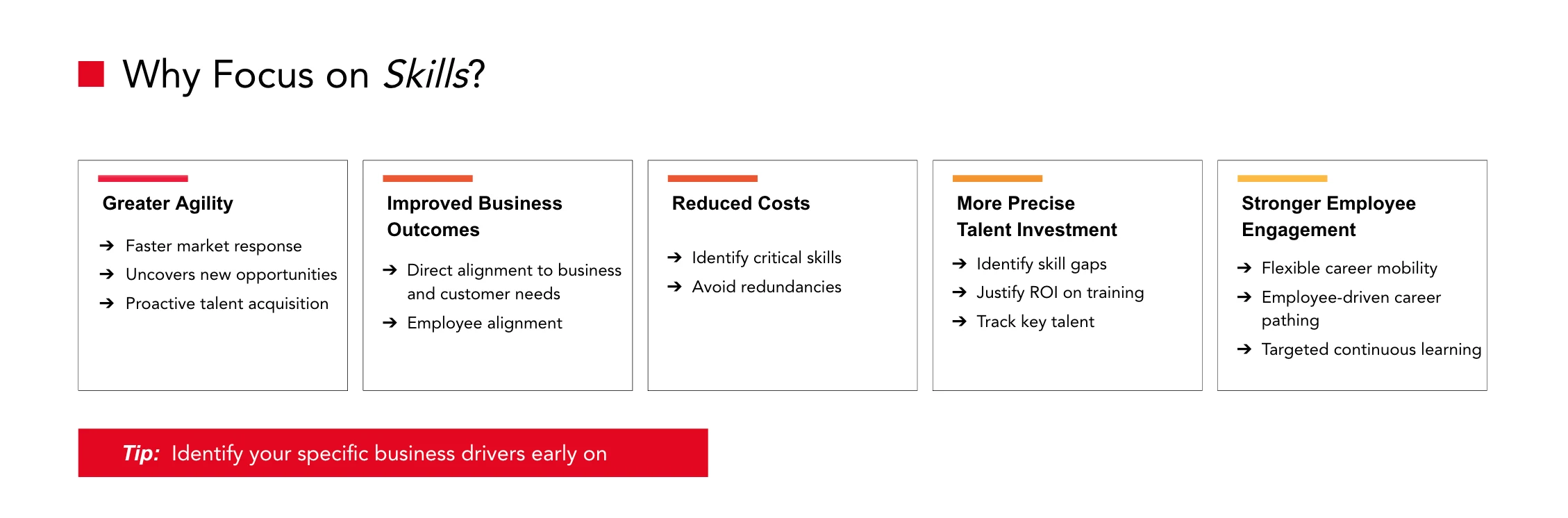
The business case for their internal career center using Phenom Talent Marketplace started with employee feedback. People didn't know how to advance within the organization. They didn't know where to apply, how to interview well, or what skills they were missing for the role they wanted.
The internal career hub was built to solve that, and it did. But as profiles accumulated, the organization's talent team started looking at the data and asking a different question: What if this wasn't just for employees? What if the skills inventory in these profiles was the most accurate picture the business had ever had of what its workforce could actually do?
For a top-10 government contractor where customer needs shift with contracts, and where the difference between winning and losing a project can come down to whether you have the right technical skills in-house, that data has strategic value. The alternative — running external searches, relying on managers' memories of their team's capabilities, waiting weeks for headcount approval — was how things had worked before. "If you curate your own internal talent pipeline and you have your external talent pipeline, you decide where you go when you need talent," the talent leader said.
Related: How Excellus BlueCross BlueShield Solved Career Visibility with a Skills-First Approach
How Does an Internal Talent Marketplace Differ From a Job Board?
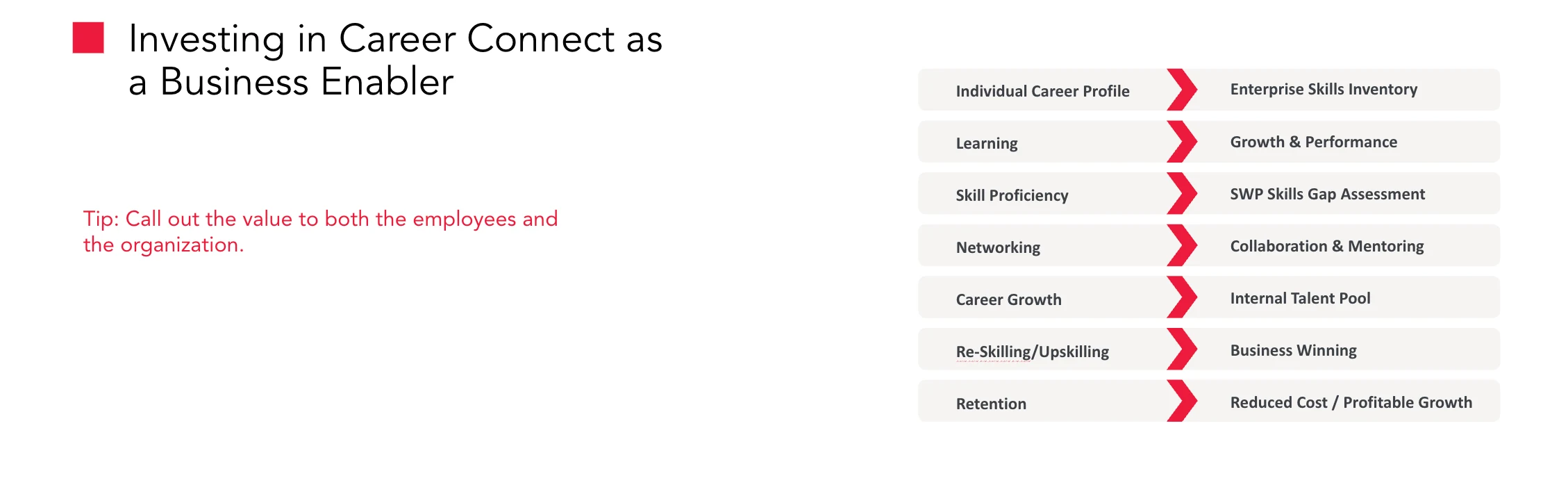
The company’s internal talent marketplace was designed as a complete virtual career center, not just a list of open roles. They wanted it to include everything an employee would need to invest in their own growth, including:
Getting-started guides
Quick micro-learning videos on navigating career conversations and answering difficult interview questions
Real career path examples from current employees
Interview prep resources organized by role type
Colleague search functionality that lets employees find peers in similar roles for informal networking and mentorship.
The intent was to give employees every reason to fill out their profile and keep it current. To foster profile completion, the team sent targeted messages by persona. Engineers received a message about peer benchmarking and how 6,000 of their colleagues had already contributed their data. Tenured employees who said they weren't looking for a job got a different message — “You can mentor thousands of people with the click of a button.” Business ambassadors in each sector fed back what employees were struggling with and what additional content was needed.
In this way, skills are now the internal application. Any employee can apply for an internal role using their profile without submitting a separate resume. That single change tied the profile directly to utility, not just aspiration.
Related: The ROI on This Fortune 500 Company's Skills-Forward, Employee-First Business Model
What Impact Have They Experienced?
As profile data grew, the team extended its reach beyond the internal talent marketplace. Through an HRIS integration, managers can now access their team's full skills data directly from their existing system without navigating to a separate platform. Those profiles also anchor mid-year coaching conversations, shifting the focus from vague questions about five-year plans to specific, actionable development goals.
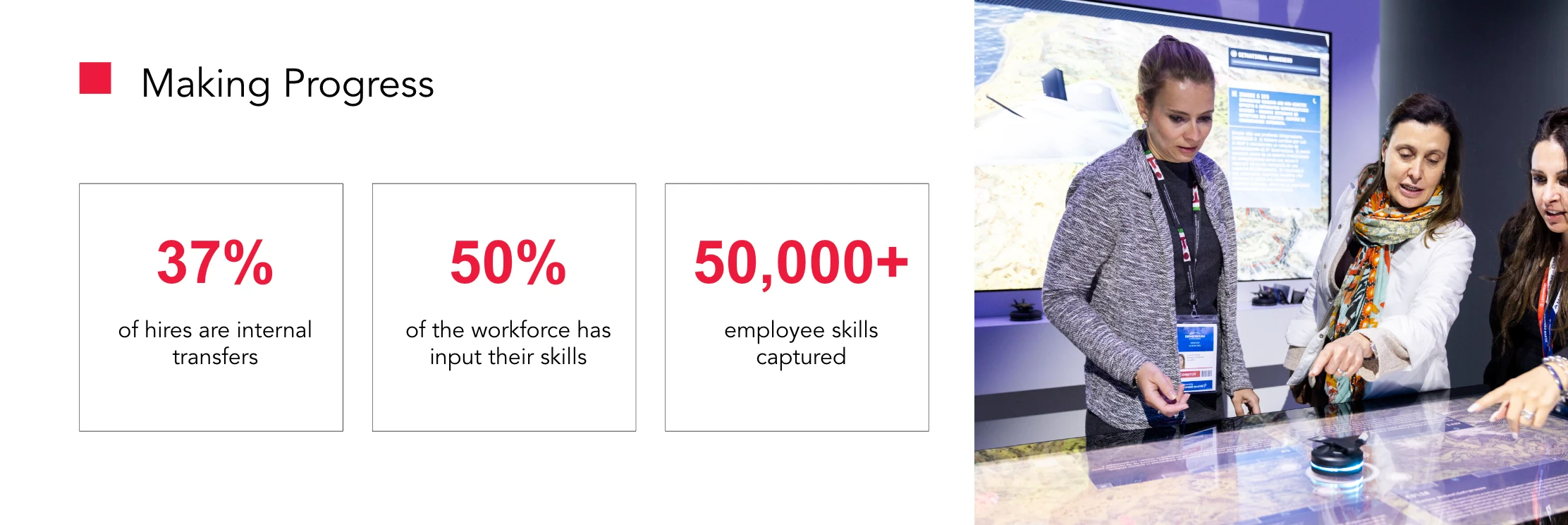
37% of hires are internal transfers
50%+ profile completion in 8-9 months, representing more than 20,000 employees
50,000+ employee skills captured
90%+ of employees are now in the system
"The business is starting to say, 'Wait a minute, you've got a gold mine there,' because we have people's certifications. We have the languages our people speak. We have patents. We have military experience," said their VP of talent.
The 50% figure understates the shift. "That's over 20,000 people in eight, nine months. That's a big deal. We've never gotten that before," she said. The push now is depth by encouraging people already in the system to add the data points that make profiles useful not just for job matching, but for surfacing expertise the business didn't know it had.
How Will Their Skills Strategy Continue To Evolve?
Phenom Onboarding launches next, and the talent leader described it as the moment the loop fully closes. New employees will complete their career profile as one of their first tasks, with application data pre-populating so they're updating rather than starting from scratch. That means the skills inventory grows from day one of employment, not just after employees discover the platform organically.
Using Phenom Succession Planning is also on the roadmap. Combined with Phenom’s report-building functionality, a business leader preparing a proposal for a new contract could go into the system, define the skills required for the project team, and immediately see which employees in which locations already have those skills. That capability — business-side self-service for talent intelligence, without needing to route through HR or TA — is the destination she's building toward.
For teams still early in the process, she put it plainly. "We could have said we're going to build this giant skills taxonomy for our company. I'm telling you, it'd be 2035 and we'd still be arguing over what skills should go where," she noted. Start with what you have, let people tell you their skills, and iterate from there.
Looking to build a more skills-powered workforce? Download the Comprehensive AI & Automation Toolkit for Talent Management

John is a Sr. Director of Product Marketing at Phenom. He enjoys horror novels and running — mostly from age.


Get the latest talent experience insights delivered to your inbox.
Sign up to the Phenom email list for weekly updates!


