

From Paper Sign-Ins to Tracked Leads: Baylor Scott & White Health’s Recruitment Events ROI
Ask any recruiter who has worked a hiring event, and you'll hear the same story: the stack of resumes from the booth goes back to the office, gets set down somewhere, and then… maybe half of those people hear from someone. Maybe fewer.
For a health system with 53 hospitals and more than 59,000 employees, that kind of drop-off isn’t scalable.
Whitney Wallace, TA Marketing & Sourcing Manager at Baylor Scott & White Health (BSWH), walked through how their team went from inefficient post-COVID recruitment events to a centralized, data-informed events operation.
Watch the full session here, or explore the highlights below.
What Was Missing from Baylor Scott & White’s Events Strategy Before Phenom?
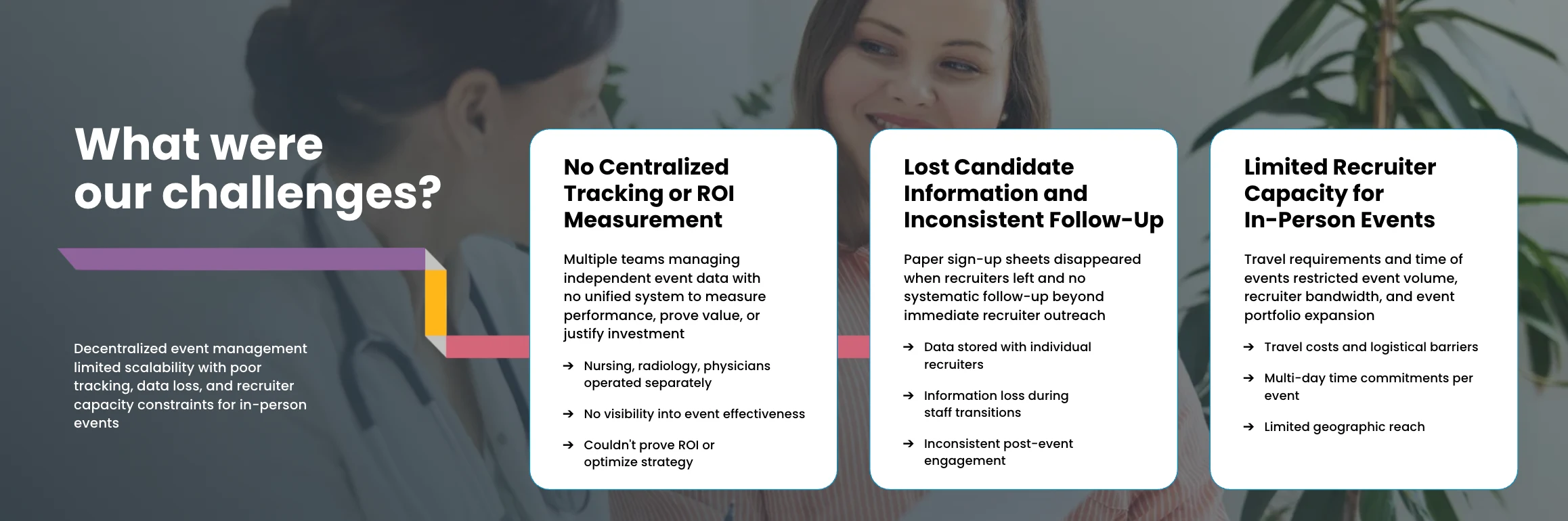
Before Phenom, BSW was working the way most organizations work at hiring events: paper sign-in sheets, Excel spreadsheets, and stacks of resumes. Some leads made it into the system. Most didn’t. When the question came up a year later, “Should we go back to this event?”, there was no data to answer it. “Who has that spreadsheet? Did we hire anybody from those events?” Wallace said. Nobody could say for certain.
The challenge compounded after COVID. The events team had shifted to other roles during the hiatus. When BSW started running events again, they were starting from scratch with no baseline or tracking infrastructure, and recruiters coming back from conferences with contact lists that had no path into their talent CRM. For a healthcare organization that attends events to pipeline hard-to-fill specialties like radiology, respiratory therapy, and nursing, the cost of that lost connection wasn’t sustainable.
Related Resource: How to Make Recruitment Events Work for Your Talent Acquisition Strategy
How Did They Turn Recruitment Events into a Structured Pipeline?
Phenom Recruitment Events is built around the full recruitment event lifecycle — from simplified event creation and role-specific lead capture forms to post-event automation and an analytics dashboard that tracks candidates from first scan to hire. Phenom Talent Community gives recruitment marketing teams a connected path from event contact to active candidate, with automated follow-ups that go out before recruiters even leave the booth.
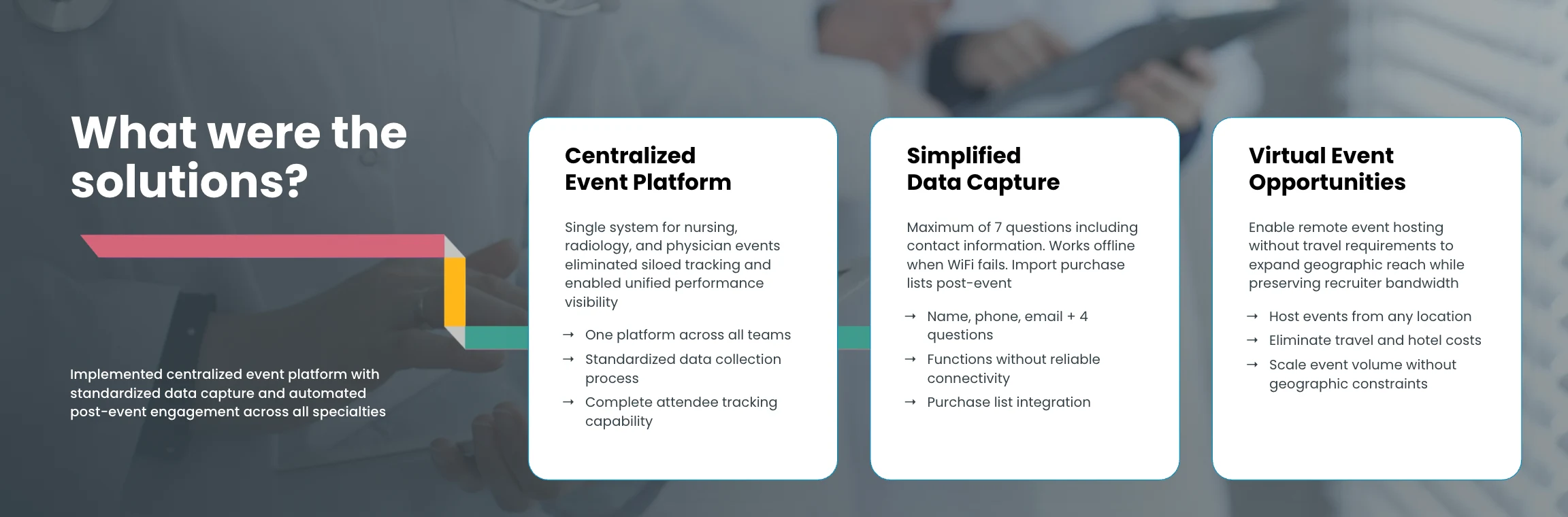
The solution started with the process. BSW designated a single events coordinator responsible for logistics, event setup in Phenom, recruiter communication, and pre-event QR code distribution. Recruiters arrive with everything they need: the QR code is ready, the lead form is configured, and the follow-up automation is already set to go out the same day. Capturing leads is the only thing recruiters have to do at the booth.
The lead form itself is deliberately lean with no more than seven questions for most events, and sometimes as few as name, email, and phone number. For specialty-targeted events, the form might include current role, modality, or location preferences. Regardless of field count, everyone scanned into an event automatically receives a follow-up email before the recruiter is even back in the office. Badge scan lists from conferences can be bulk-imported directly into the CRM. The result? Every person at every event has a record, a connection, and a next step.
What Were Their Results?
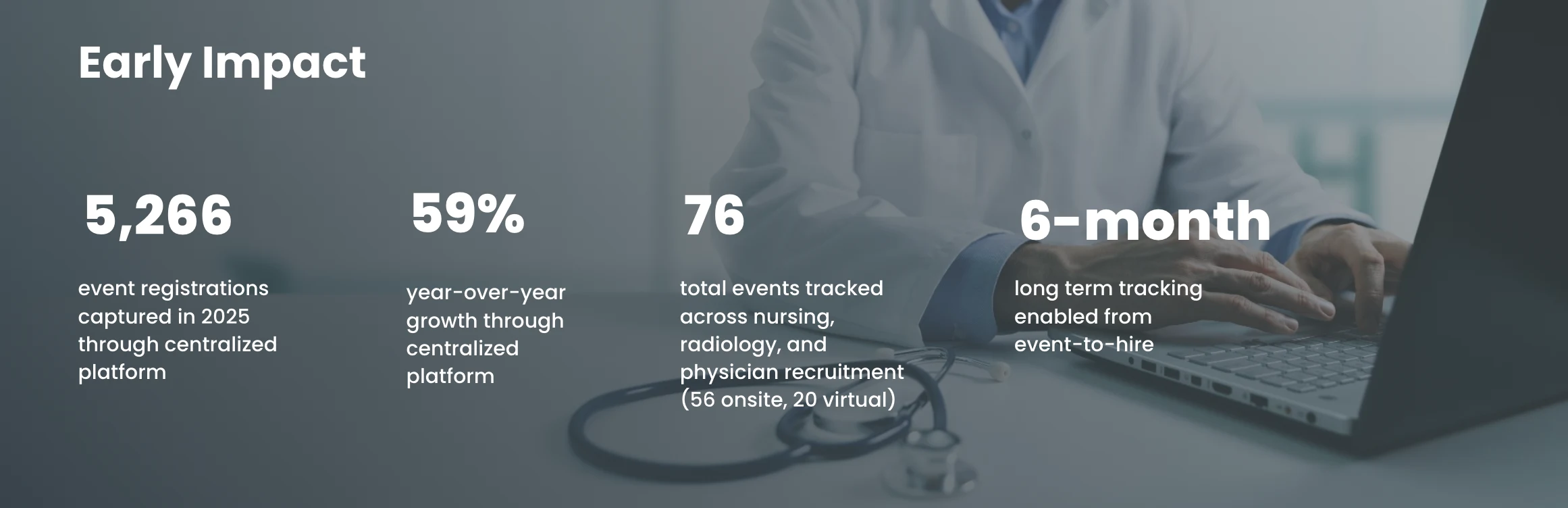
The year-over-year numbers show what structured lead capture looks like at scale.
76 events tracked (56 onsite, 20 virtual)
5,200+ candidates captured
59% YoY growth
6-month long-term tracking enabled from event-to-hire
"That's 5,200 people that we're reaching out to and have connections with where we didn't have that before... We're able to go back and look at how many hires are coming from each one." — Whitney Wallace, TA Marketing & Sourcing Manager, Baylor Scott & White Health
Beyond the metrics, the platform streamlined how BSW managed recruitment events. Automated post-event outreach reached candidates before recruiters returned to the office, while conference badge scan lists were bulk imported into the Phenom Talent CRM, reducing manual work and ensuring every event lead entered the recruiting workflow.
The 59% growth reflects two things: more events tracked, and better capture rates at the events they were already attending. Long-term tracking now connects each event back to actual hires, giving regional TA managers (RTMs) a clear line from booth conversation to candidate outcome. Automated post-event outreach goes out before recruiters are back in the office, and badge scan lists from conferences import directly into their Phenom Talent CRM so no contact falls through.
The data visibility is what changed the operational conversation. RTMs can now look at an event and see whether it produced applicants who moved through the process, what candidate populations showed up, and whether the cost of attendance justified the outcome. "Use data to tell your story," Wallace said. "Be data-informed and make decisions."
Related Resource: How Tech Care Leader Asurion Scaled Hiring with Unified Event Management
What Are the Best Practices for Getting Started with Hiring Events?
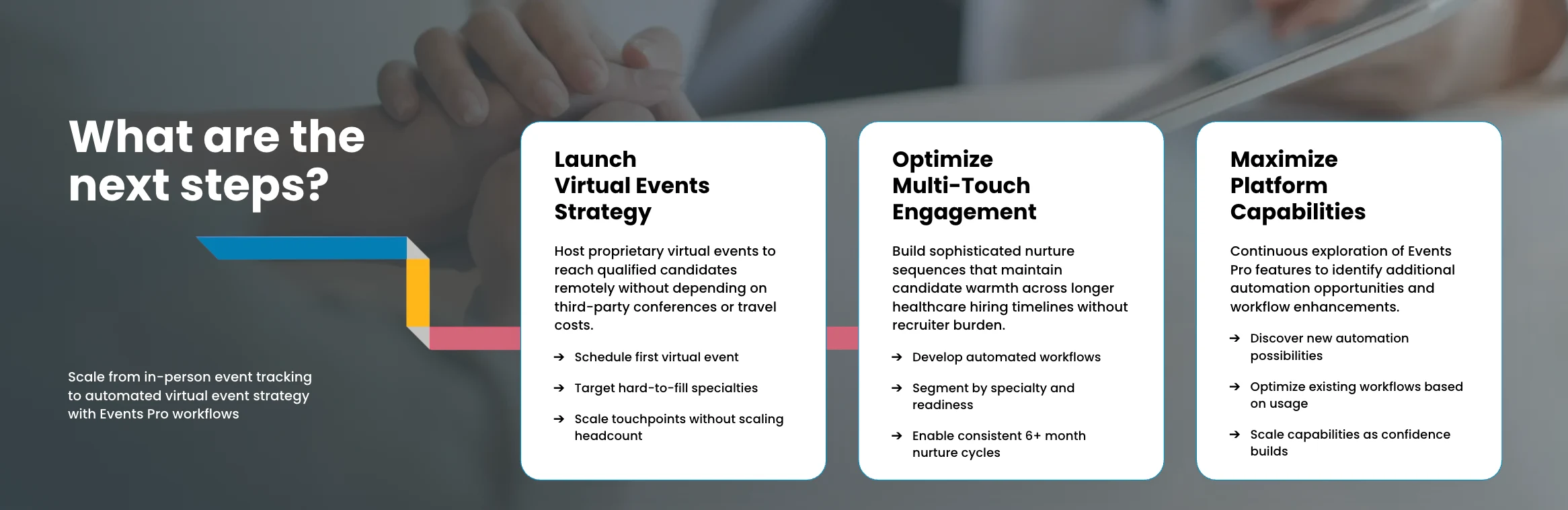
With those results as a foundation, BSW is now upgrading to Phenom Events Pro — starting with a virtual events for their graduate nurse (GN) cohort. The GN team already runs a well-established quarterly program preparing new grads on what to expect and how to apply. The virtual format lets the team segment conversations by specialty and location in a way that in-person events can't, and BSW plans to extend virtual office hours to keep accepted candidates engaged between offer and start date.
"We can't just get them there. We need to get them all the way through into the door," Wallace said.
From there, Events Pro opens additional capabilities the team is actively planning: personalized recruitment workflows with tailored questions and assessments by role or specialty, disposition logic that moves candidates to the next stage based on event conversation outcomes, and multi-touch post-event nurturing that can sequence follow-ups at 30, 60, or 90 days. The goal is moving from a single follow-up email to a sustained engagement track that keeps event contacts warm through their decision window.
Where Should You Start?
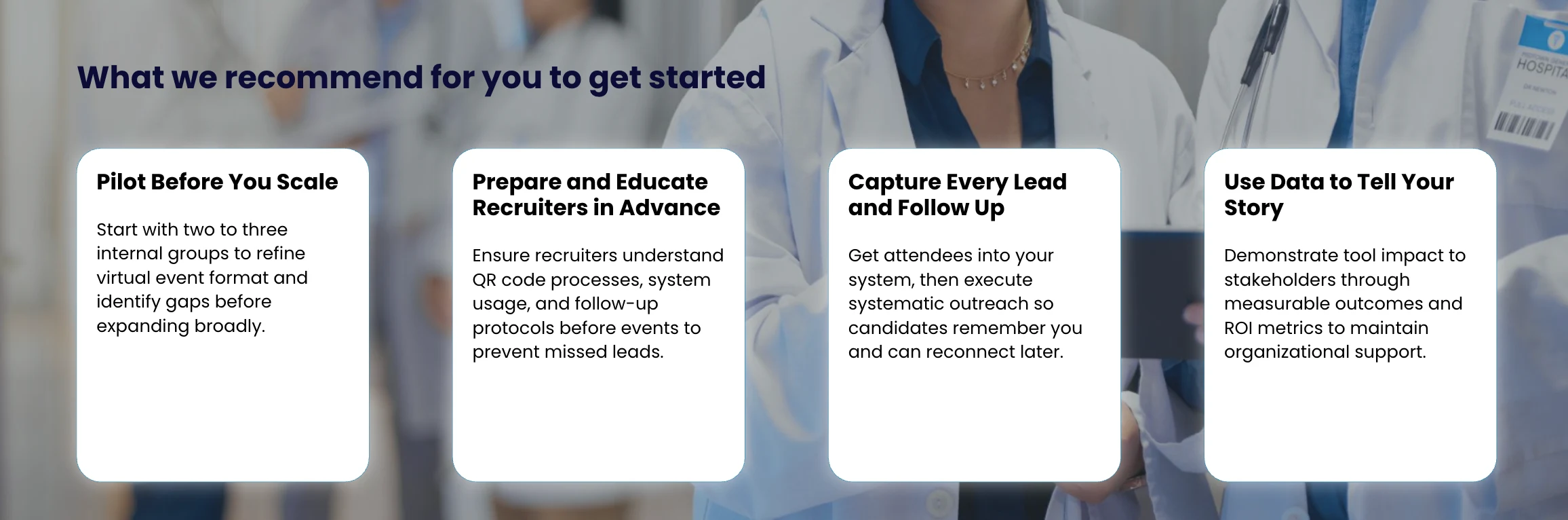
For teams who need to start automating aspects of their own recruitment events, Wallace’s advice is to start small and pilot before scaling. Get one team and one event type right before expanding. Prepare recruiters in advance, make the capture process as simple as possible, and let the data do the rest.
"If you think back to the sole purpose of recruiters, they're connecting people with work and people with their jobs. This gives recruiters the opportunity to have that people connection at events, whether it's in person or virtual," Wallace said.

Raghu is a Product Marketing Manager at Phenom. Outside work, he experiments in the kitchen and unwinds with a good thriller.


Get the latest talent experience insights delivered to your inbox.
Sign up to the Phenom email list for weekly updates!


