

The Question That Changed How Excellus BlueCross BlueShield Invests in Its People
In 2022, Excellus BlueCross BlueShield began a methodical journey mapping exercise to understand what the experience of working there actually looked like. They saw strong culture scores. They won awards. But one question kept surfacing and kept going unanswered: “What’s next for me here?” It came up most often around the two-year mark, from capable employees with real skills who had no way to see where those skills could take them inside the organization. The best answer available was a job description.
That question became the starting point for a three-year transformation in how Excellus approaches career development — one built around skills, visibility, and giving employees tools to navigate their own path. Tim Lippincott, VP of People Strategy at Excellus, walked through that journey, and explained how Phenom Applied AI helped get them where they are today.
Watch the full session here, or explore the highlights below.
Why Did "What's Next for Me Here?" Have No Answer?
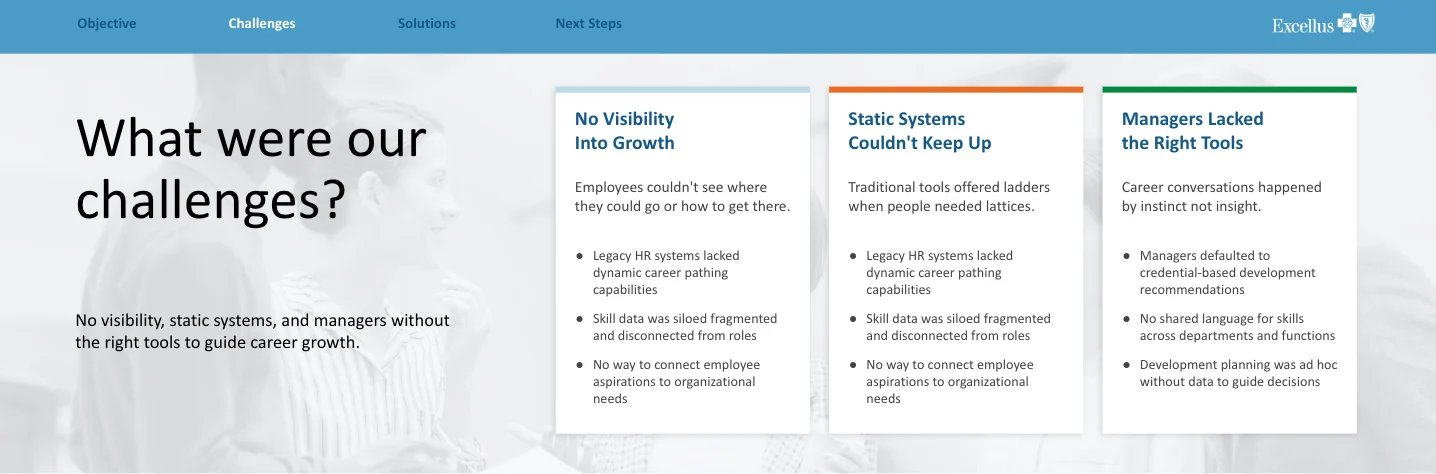
Before this dedicated effort, career development at Excellus was fragmented at best. Some managers were having strong development conversations with their teams. Others weren’t having them at all. With 19 divisions and 5,000+ employees, there was no consistent framework, shared visibility, or infrastructure that put employees in a position to see opportunities across the organization. Internal mobility existed mostly through informal networks. If an employee wanted to know about an opening in a different division, they had to know someone there.
The gap mattered for reasons beyond retention. As Excellus continued to grow (including an acquisition that added roughly 2,000 employees overnight), the organization needed to understand its own skills inventory. Without that foundation, workforce planning, succession planning, and nine-box assessments were all operating without a clear picture of what talent actually existed inside the company.
“If we can understand what skills we don’t have inside of our organization, then we can build or go buy that talent,” Lippincott said. That framing shaped everything that followed. "I want you to have limitless careers here. I want you to job hop — I just want them all to happen inside of these four walls,” he explained.
Getting there meant moving slowly enough for a risk-averse insurance culture to absorb the change. They spent six months focused entirely on talent profile adoption before moving on to skills and career pathing. Rushing the process would have undermined the data quality everything else depended on.
Related: Why Alight Stopped Waiting for Perfect and Built Skills-First Career Paths Instead
How Did Excellus Build a Career Pathing Program Employees Used?
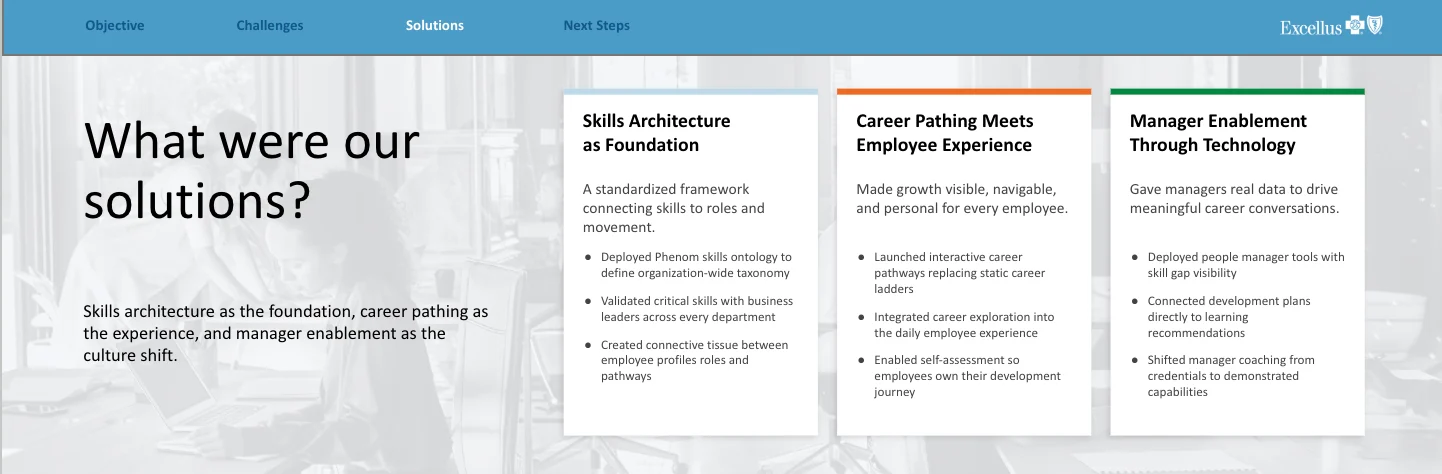
Building it started with Phenom Career Pathing and Phenom’s skills library as a foundation. A cross-functional team made up of HR, HRBPs, recruiters, compensation, and subject matter experts across the business validated and refined the skills mapped to each job profile. Phenom’s starting point was accurate 80–90% of the time, which significantly reduced the manual effort required to get to something usable. Skills language then became a shared framework across hiring and development.
Once the skills ontology was in place, “Career Pathways” as their team called it went live. What made it different from the job descriptions that had previously served as career guidance was the experience. Now, interactive paths driven by the employee’s own talent profile showed not just what role they could move into but what the three-to-five year trajectory could look like, including what skills they’d need to develop, and what learning resources, mentors, or short-term projects could help get them there.
“It wasn’t career ladders printed on a page,” Lippincott shared. “It was an interactive tool for our employees to see where they are” and navigate from there.
When employees identified a skill gap, Phenom surfaced relevant Workday Learning coursework directly in context with no separate search required. For succession planning, identified employees could pinpoint target roles inside their Career Pathing profile and build toward them year over year.
How can AI-powered career pathing boost employee retention and streamline talent development?
What Results Can Skills-Based Career Pathing Deliver?
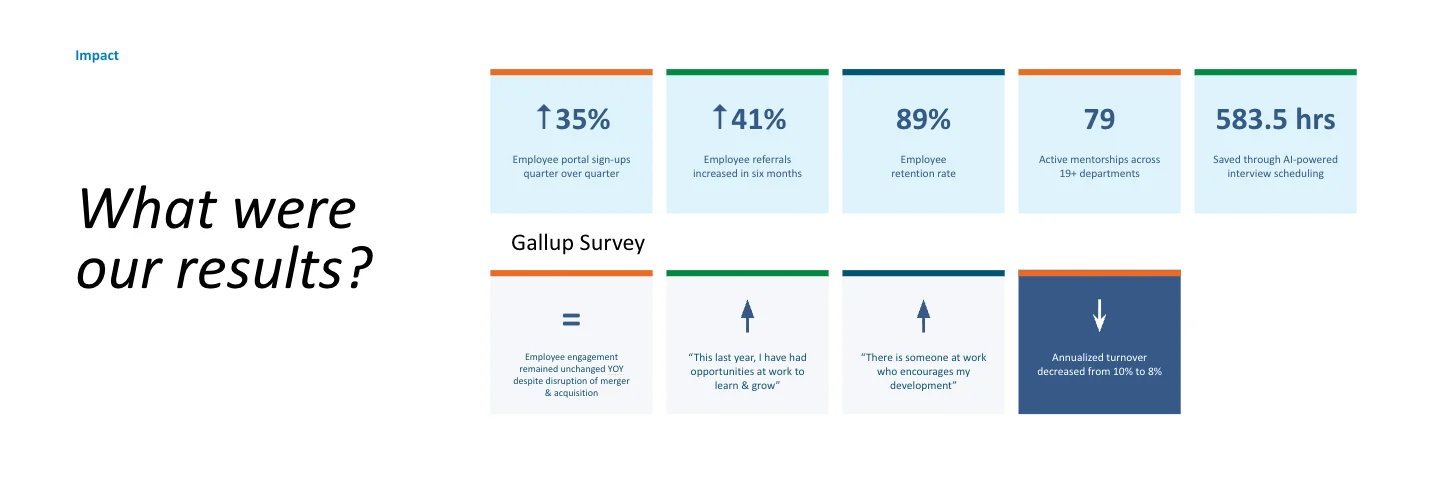
Three years in, the numbers from Excellus tell a clear story:
89% employee retention rate
Annualized turnover dropped from 10% to 8%
41% increase in employee referrals in six months
79 active mentorships across 19+ departments
Employee portal sign-ups rose 35% quarter over quarter
583.5 hours saved through AI Interview Scheduling
Excellus tracks employee engagement through Gallup's Q12 survey, and the results through a major acquisition told their own story. At a moment when engagement typically dips, scores held steady. Two questions in particular moved in a strongly positive direction: employees affirming they'd had opportunities to learn and grow in the past year, and that someone at work encouraged their development.
"We started to see these two questions really pop up very positively for our employees," he said. "I tie those directly back to the tools that we have in place," said Lippincott.
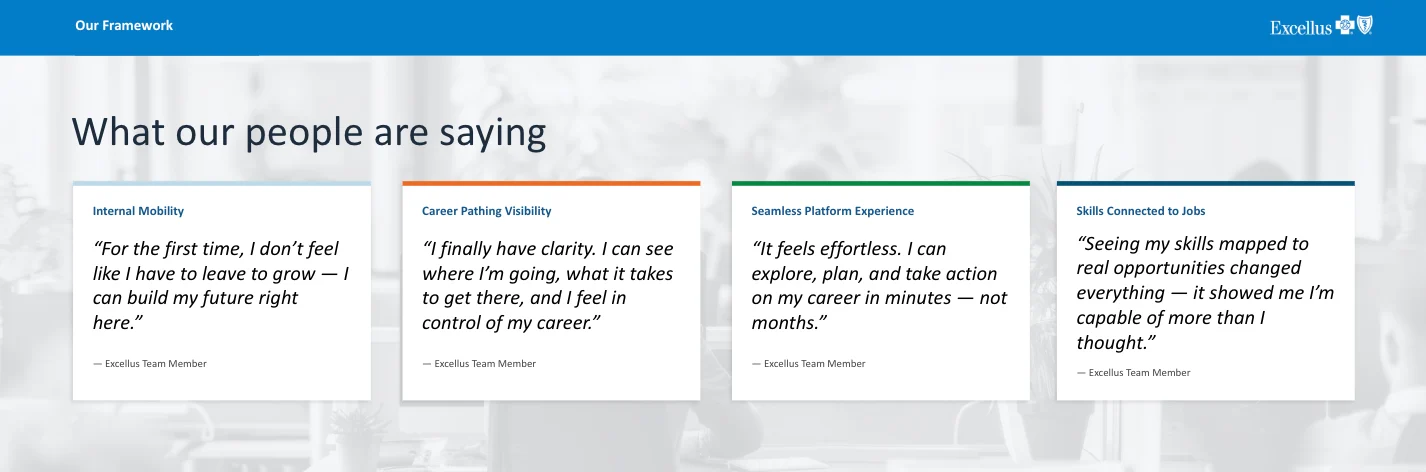
Perhaps the most telling moment came during the acquisition itself. When Excellus brought roughly 2,000 new employees on board, deploying Career Pathways was one of the first things the team did. Those employees suddenly had visibility into thousands of roles across a much larger organization. Employee focus groups captured the reaction as "effortless," and "showed me more than I thought I was capable of."
Where Is Excellus Taking Its Career Development Strategy Next?
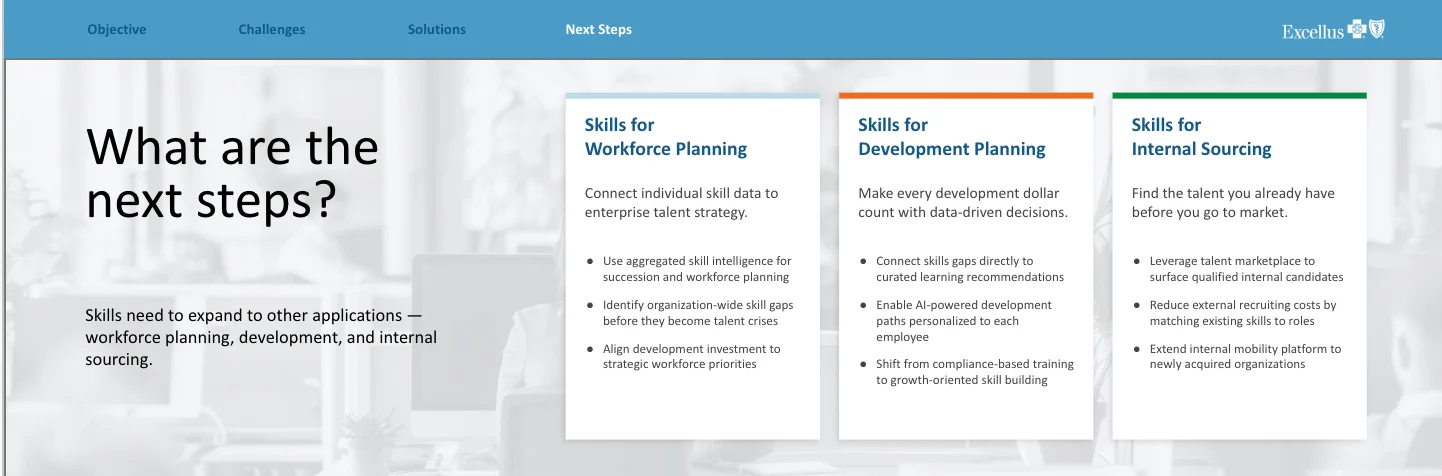
The next phase expands skills into three areas the team is only beginning to use: workforce planning, development planning, and internal sourcing.
On the workforce planning side, the goal is connecting individual skill data to enterprise talent strategy. That means using aggregated skills intelligence to identify organization-wide gaps before they become talent crises, and aligning development investment to where the business is headed.
For development planning, the upcoming rollout of Phenom People Manager shifts the manager's role from gatekeeper to coach. With real-time visibility into what each team member is working toward, the development conversation moves from an annual check-in to an ongoing, skills-grounded dialogue. "We need to prepare them for how to have a skills-based development conversation in order to make this thing truly come to life for us," Lippincott said. The aim is also to shift away from compliance-based training toward growth-oriented skill building. Closing a gap means pursuing a relationship, a mentor, or a stretch project, not just completing a required course.
Internal sourcing is the third frontier. The TA team is beginning to use skills visibility to proactively identify passive internal candidates who might be a strong fit for a role they weren't actively seeking.
For Excellus, the answer to “What’s next for me here?” is no longer a job description. It’s a personalized, skills-driven career path with a plan attached to it and a system that keeps that plan in motion.
Preview your organization’s roles, skills and progressions — Get a skills snapshot now



Get the latest applied AI insights delivered to your inbox.
Sign up to stay up-to-date on the latest original content from Phenom, including new podcast episodes, events, and more.


