

Why Alight Stopped Waiting for Perfect and Built Skills-First Career Paths Instead
People don't quit companies. They quit the feeling of being stuck.
For Alight Solutions, a cloud-based HR and benefits partner that serves roughly 70% of the Fortune 100, that reality was showing up in colleague surveys year after year. Colleagues weren't seeing the opportunities in front of them, and a fully defined job architecture had stalled multiple times.
"Our people are not just part of the business. They are the business," said Astraea Lilley, Director of Talent Management at Alight Solutions. So Alight found a different way forward.
Watch the full session here, or explore the highlights below!
What Kept Getting in the Way of Career Pathing at Alight?
Every time Alight tried to launch career pathing, something blocked the path. Budget constraints competed with compensation adjustments. A major acquisition added thousands of employees to the organization. A subsequent divestiture reset progress again. At the center of it all was an incomplete job architecture that had never been fully built out in their Workday HRIS.
Some departments had well-documented progressions. Others had no consistent documentation at all and no shared platform for managers to work from.
When the team stepped back and examined the full picture, three problems came into focus:
Employees couldn't see their own opportunities
Managers had no shared language to support career conversations
HR couldn't scale because knowledge about paths and skills was scattered across the organization
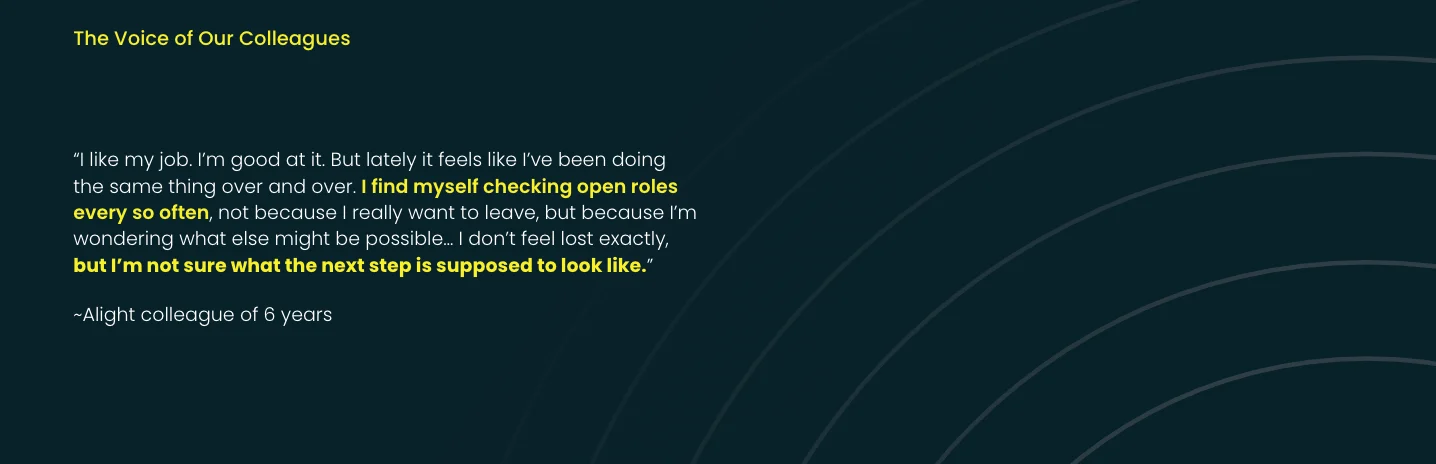
The annual colleague survey captured it accurately. One respondent said they enjoyed their job and were good at it, but kept checking outside postings. "I'm not sure what the next step is supposed to look like," they wrote.
How Did They Launch Career Pathing Without a Finished Job Architecture?
Alight had been using Phenom for talent acquisition and mentoring for years, so the platform was already embedded in how the organization operated. Colleague skills data existed too, but it was scattered across systems and spreadsheets — present, but not actionable. What had been missing was the structure to connect it. Phenom X+ Ontologies provided that layer. Built on relationships across more than 200,000 skills and 570,000 job titles, they go beyond keyword matching to map how skills connect, which roles they lead to and what gaps a colleague would need to close to get there. For Alight, it meant the signals they already had could be organized into navigable career paths without waiting for a complete job architecture first.
Conventional thinking in HR said you couldn't do career pathing without a clean job architecture in your HRIS. Lilley disagreed and had to convince senior HR partners of that. With Phenom Career Pathing and its built-in skills ontology, the team found a path forward that didn't require waiting for Workday to be picture-perfect first. "We can't wait forever for job architecture to get worked out," Lilley said. "We had enough data to get started. Let's not wait for perfect in order to get started."
They committed to launching what they called a "101" version and improving from there, letting real usage patterns shape the architecture over time. They gave the Phenom Career Pathing experience an internal name, Career Compass, and built a navigation-themed communications push around it. Once inside, colleagues see personalized path suggestions built from their skills, experience and role, with skills gaps mapped directly to available coursework so next steps are concrete rather than theoretical.
Getting awareness off the ground required embedding the new language of skills into every channel they had: newsletters, the company intranet, team meetings and manager conversations. Lilley described it as a "desire paths" approach, a concept from urban planning where you pave the trails people are already walking rather than mapping a route and hoping they follow it. A skills-first rollout let real employee interests and movement inform the framework as it grew.
Related: Workforce Intelligence Guide — A Skills-Based Deployment and Adoption Plan
What Results Have They Seen?
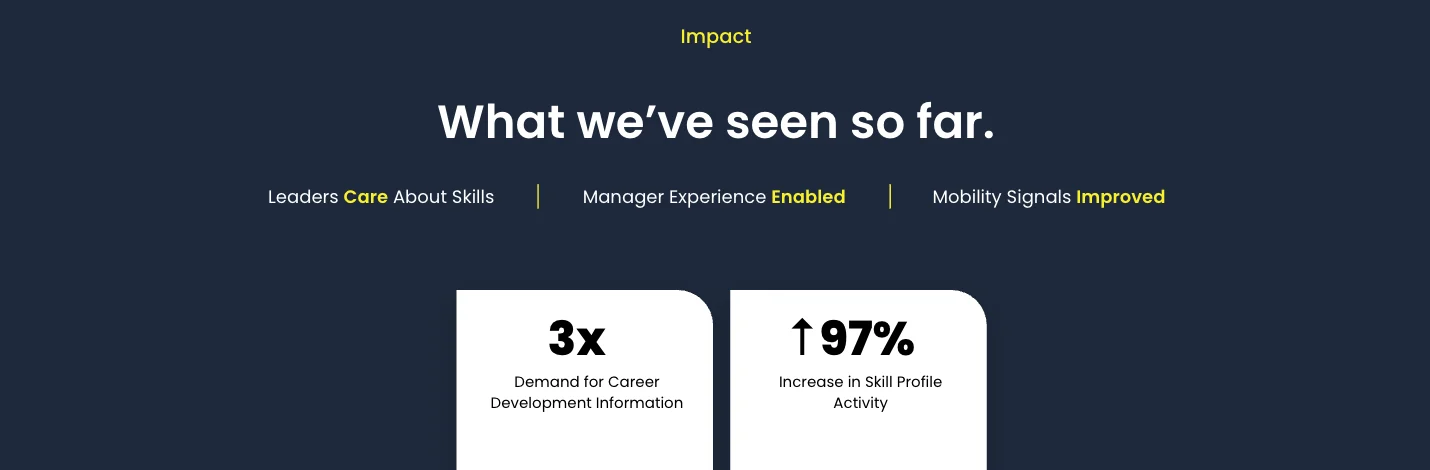
Since launching Career Compass through Phenom Career Pathing, Alight has seen a significant shift in how colleagues engage with their own development in a short period of time.
"We’ve seen a 97% increase in colleagues building out their skills profile in Phenom," Lilley said. "Getting that new language out there every place you can was really, really critical." The spike in profile activity reflected something deeper: employees had a reason to engage because now they could see where their skills might take them.
Demand for career development information increased three-fold from both managers looking for tools to support their teams and colleagues who wanted to dig into what paths were available to them. The shared language that had been missing for years was finally in place.
Where Are They Taking Career Compass Next?
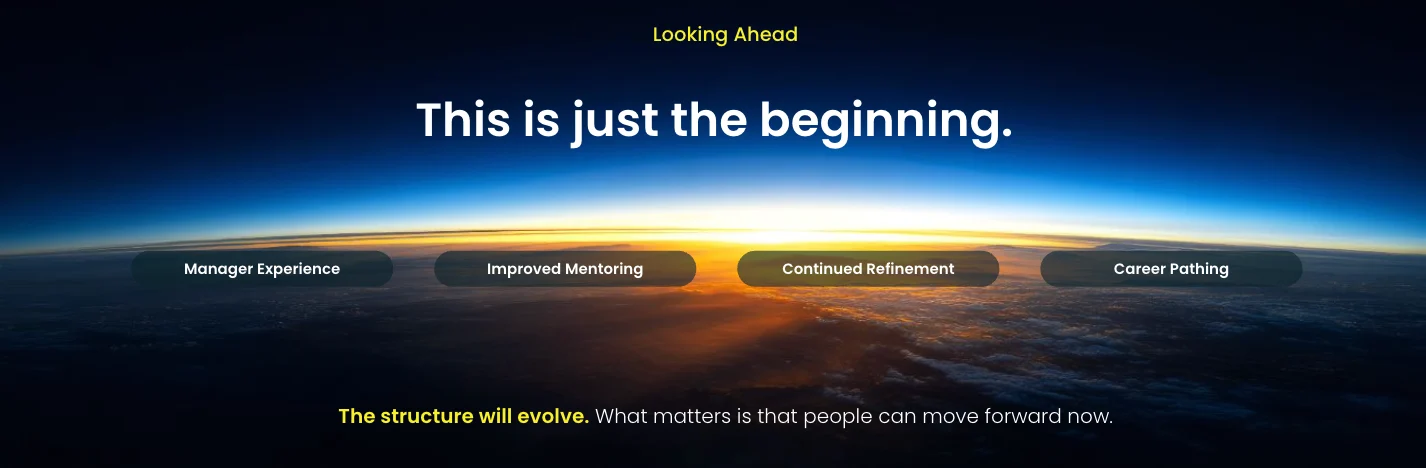
Alight’s next phase brings Phenom People Manager into the picture, giving managers visibility into their colleagues’ skills and career paths. That closes the loop between what employees are working toward and what their managers can see and support.
“We’re excited to have even more functionality built out in Phenom. We like to partner and give that feedback because we can see all the different ways that can be useful to managers as well as leaders."
For Alight, Career Compass continues to grow. Like the desire paths concept that inspired it, the best frameworks are built by following where people actually want to go.
Want to learn more about skills-first career pathing? Start with a skills snapshot!



Get the latest talent experience insights delivered to your inbox.
Sign up to the Phenom email list for weekly updates!


