

UMMS’ Transition From RPO Reliance to Internal TA Excellence
Healthcare recruiting operates under conditions most industries don’t face, including a competitive talent market, clinical roles that require rigorous vetting, and a hiring volume that doesn’t slow down.
At the University of Maryland Medical System (UMMS), those conditions were compounded by a structural shift few organizations attempt — moving an entire talent acquisition function in-house after years on an RPO model. The team had 30,000 employees across 10 hospital locations, 700 to 800 new hires needed every month, and a blank page where a tech stack should have been.
Rather than recreating the old process in a new system, UMMS made a deliberate choice to build for the future, not the past. From the start, Jeff Lowry, VP of Talent Acquisition & Workforce Planning at UMMS, directed the team to stop defaulting to what healthcare has always done and build for what good recruiting actually looks like. That mindset shaped everything that followed.
Watch the full session here, or explore the highlights below.
What Did They Have to Overcome When Leaving an RPO Model?
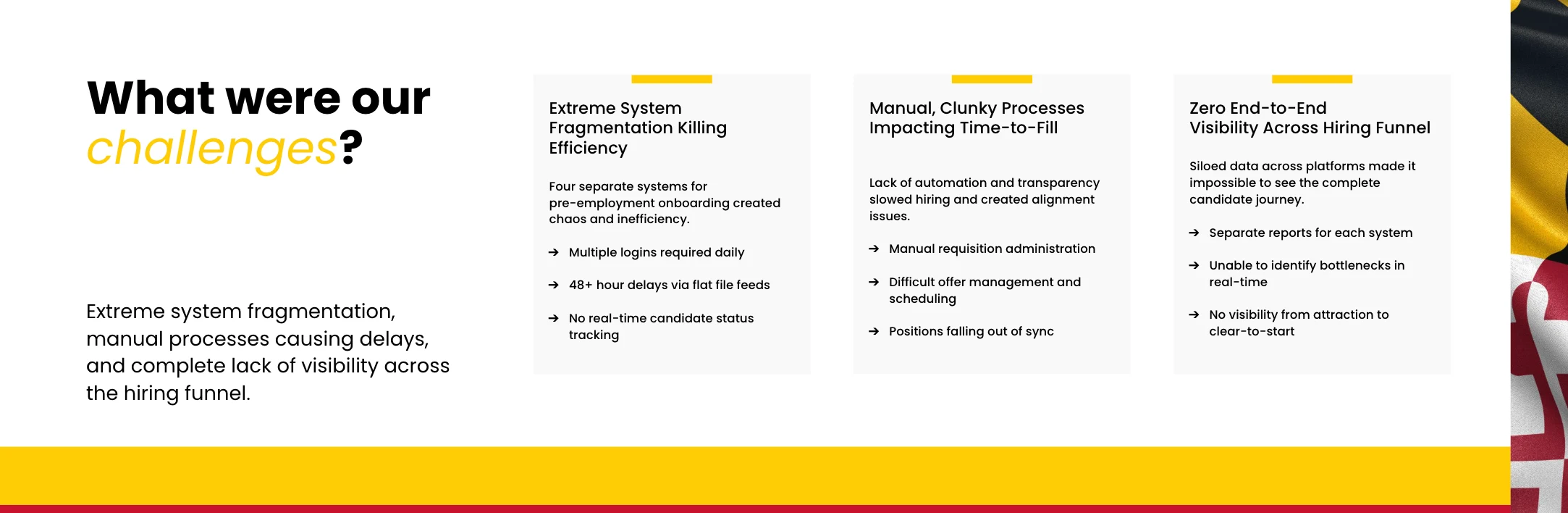
Starting fresh sounds like an advantage, and in some ways it was. UMMS had no legacy tech debt to untangle or established workarounds to preserve. But the flip side of a blank slate is having to build everything at once, including the team, the processes, the technology, and the relationships with hiring managers and clinical leaders who hadn’t previously worked closely with an internal TA function.
Data fragmentation was one of the first problems to surface. The team had been reporting out of multiple systems, working with static reports and lagging data sets that couldn’t support real-time decisions. When a candidate accepted an offer and signed, it could take 48 to 72 hours to get their employee ID from the HRIS, and everything downstream (background checks, employee health, I-9 processing, etc) was blocked while waiting for that single data point. Meanwhile, the onboarding team was logging into more than four systems just to monitor what was happening with new hires.
The risk of replication was also top of mind. Healthcare recruiting has historically carried a lot of broken processes, and implementations often fail because teams simply transfer those broken processes into a new platform. Lowry described this as a mistake he’d seen at other organizations: “You lift and shift your current bad processes into a brand-new system,” he said. UMMS was committed to avoiding that.
How Did UMMS Build an End-to-End Hiring Platform?
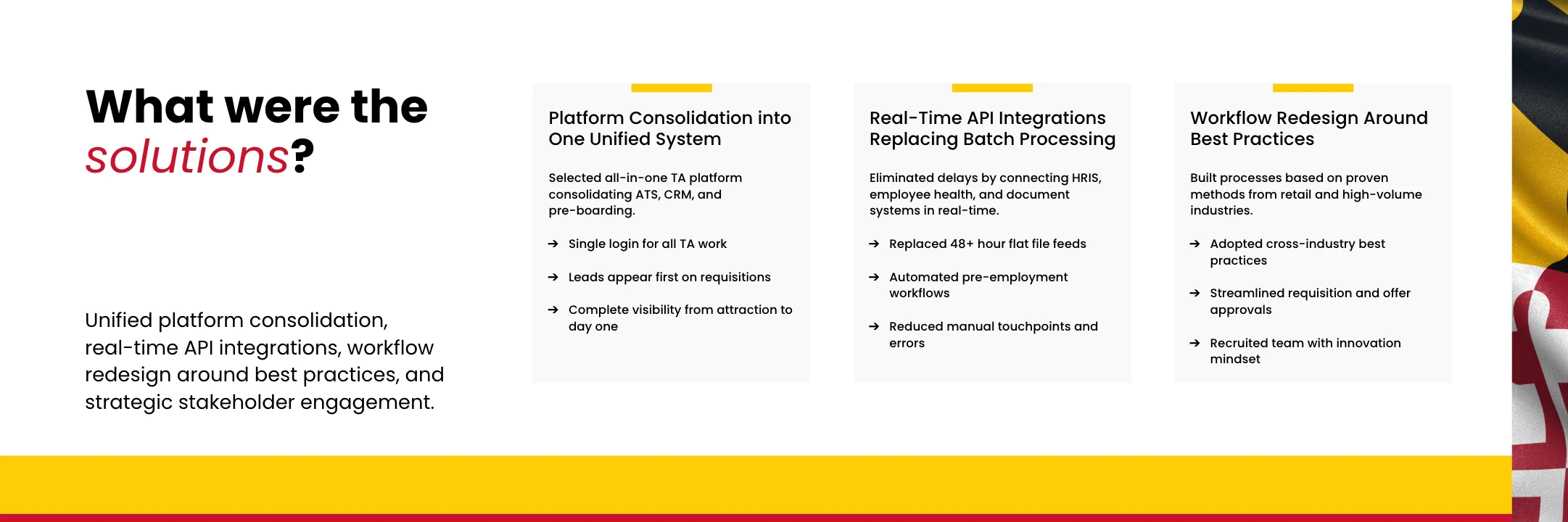
After recognizing Phenom Applied AI could address the core challenges they faced, they rolled out multiple capabilities in less than a year, including Phenom Career Site, Phenom Talent CRM, Phenom Hire, and Phenom Onboarding. The full lifecycle of talent acquisition now runs through a single platform, from candidate discovery to day-one onboarding, with real-time API integrations replacing the flat-file data transfers that had been causing delays.
The onboarding pipeline dashboard in Phenom gave the team something they hadn’t had before: full visibility into where every candidate sat in the process at any given moment. Each stage, from background check initiation to HRIS record creation to employee health clearance, was visible in one screen. "We know where they dropped off. We know where we're engaging with them the entire way through the process," said Bobbi Hicks, Director of Talent Acquisition at UMMS. Automated communications went out to candidates throughout the process, so new hires stayed informed even when the onboarding team wasn’t actively working their queue.
Change management was treated with the same seriousness as the technology deployment. Hicks described a six-week “fall in love with Phenom” campaign that delivered three-to-five-minute videos, one or two per week, walking recruiters and hiring managers through what was changing and why. “They were training videos, but they were also hype videos,” Hicks said.
When building out the internal TA team, they hired specifically for people who were energized by change and could envision the future they were working toward, even before it existed.
What Early Results Did They Achieve?
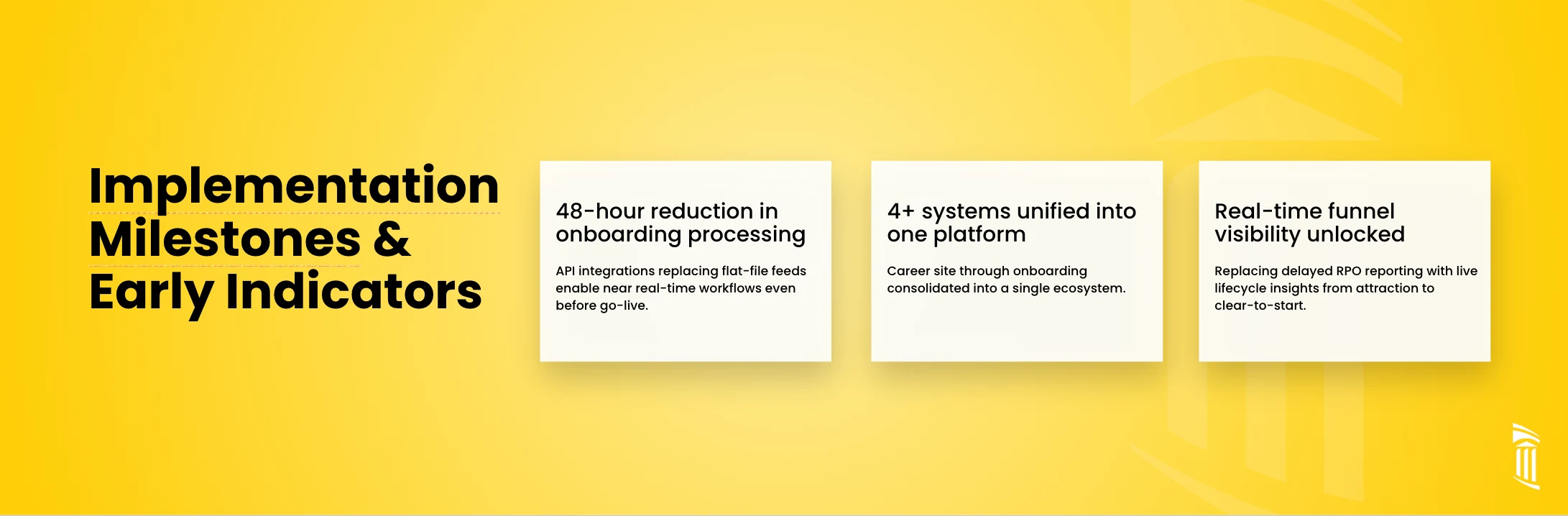
Just weeks after go-live, the results were already strong:
48-hour reduction in onboarding processing
53% same-hour interview scheduling rate for qualifying clinical candidates
4+ systems unified into one platform
Real-time funnel visibility unlocked
The 48-hour reduction in onboarding processing time was a direct, immediate consequence of the API integration. Employee IDs that previously took two to three days to surface were now available in seconds. That meant background checks, employee health, and I-9 processing could start sooner, and every day shaved off that timeline matters when healthcare organizations are competing for the same candidates.
The 53% same-hour interview scheduling rate reflected automated interview scheduling working as designed for qualified candidates. “We’re scheduling that first contact with candidates within an hour,” Lowry said. “In healthcare in Maryland, that’s a huge advantage.”
By building automated feedback check-ins into the hiring lifecycle, the team captured real-time new hire sentiment from day one. Week-one text messages asked how it was going on a simple one-to-five scale, and low scores were routed directly to HR business partners for follow-up.
"We were able to go to our executive team and say we can do this cheaper and we can do it better. And so far we are," said Lowry.
What Are They Focused on Next?
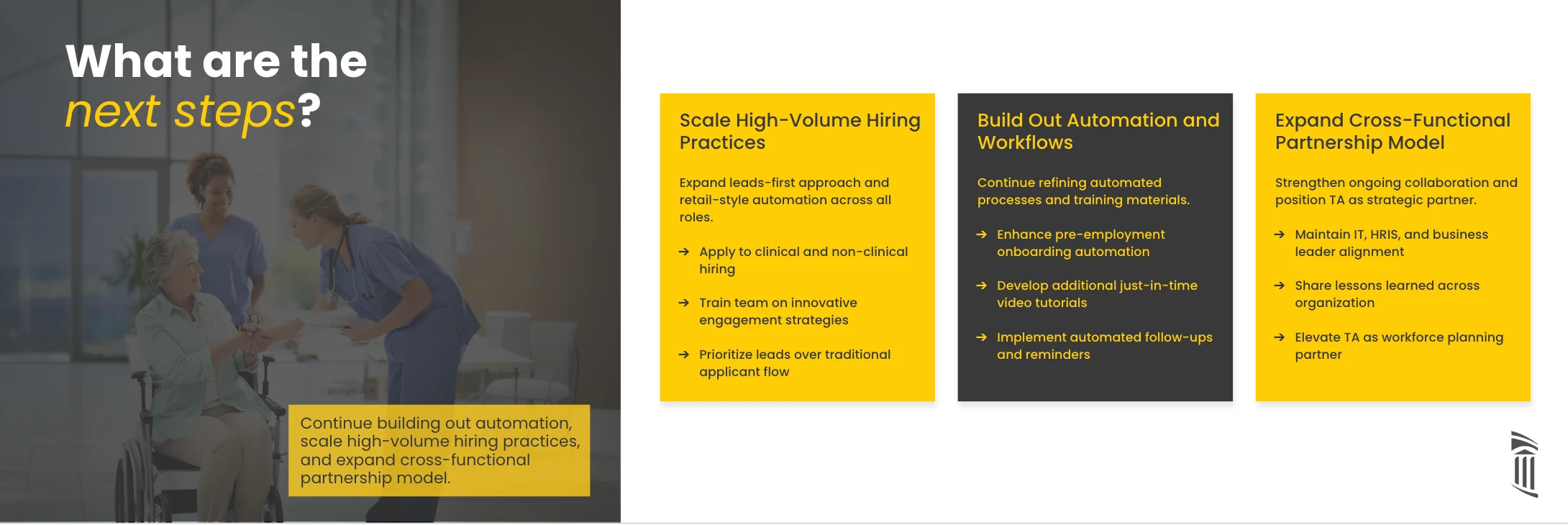
Moving forward, the team is expanding their use of Phenom Automated Interview Scheduling beyond radiology into other critical clinical roles. The goal is to build more automation workflows to free up onboarding coordinators for candidate conversations rather than data entry, and deepen cross-functional partnerships with IT and HRIS teams who have been engaged since the project began.
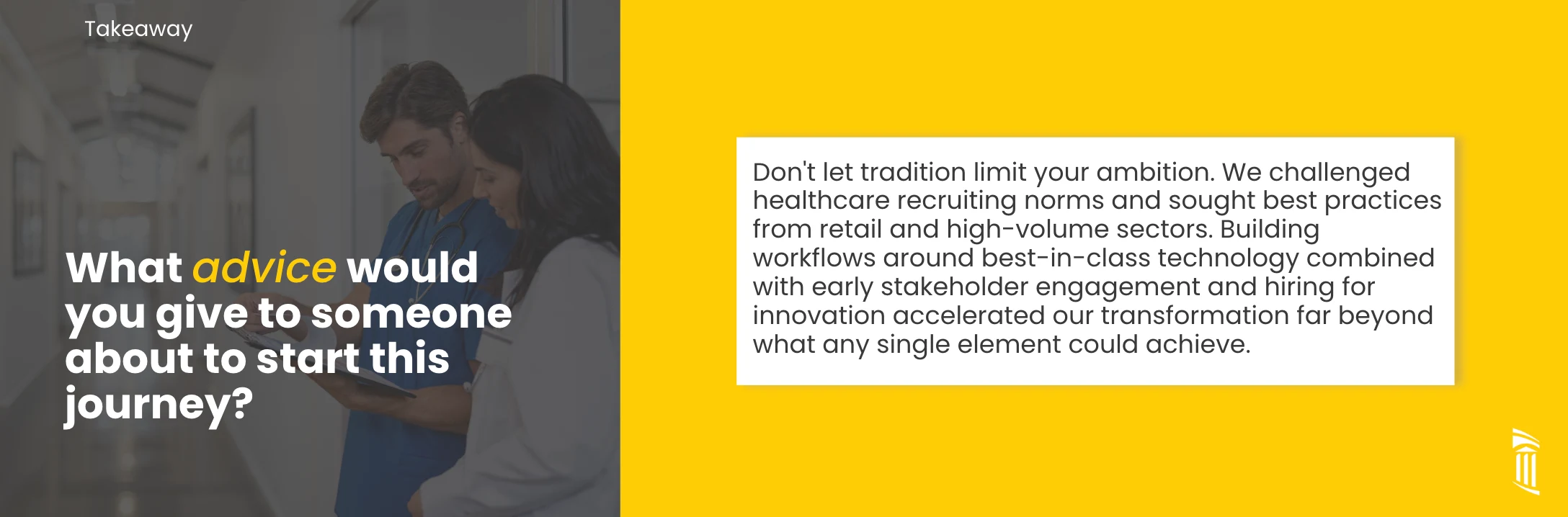
Lowry’s closing message captured the philosophy that drove the entire transformation. “Don’t let tradition limit your ambition,” he said.
UMMS had every reason to default to convention. Healthcare recruiting is hard, RPO transitions are expensive and risky, and building from scratch is difficult. But by treating the blank slate as an opportunity rather than a liability, and by refusing to let a broken past become the template for a new system, they built something worth the effort.
Learn more! Check out the Buyer's Guide for Talent Acquisition in Healthcare
Raghu is a Product Marketing Manager at Phenom. Outside work, he experiments in the kitchen and unwinds with a good thriller.


Get the latest talent experience insights delivered to your inbox.
Sign up to the Phenom email list for weekly updates!


