

Best Practices for Structuring and Preparing for an Interview
Talent acquisition (TA) teams, hiring managers, and interviewers face a bevy of challenges when it comes to interviewing: no centralized hub to access candidate information, inconsistent interview questions, and lack of streamlined evaluations of candidates, to name just a few.
These challenges highlight the importance of defining a structure and putting preparational measures in place to ensure the interview process goes as smoothly as possible. Let’s explore how to do just that.
3 Steps to a Successful Interview Process
A well-organized interview process is crucial for creating a positive experience for both job seekers and interview teams. A successful interview process:
Enhances overall candidate engagement and experience, demonstrating professionalism and respect for their time and effort. This in turn leads to higher engagement levels and a more positive perception of your organization.
Promotes consistency and fairness. Interview stakeholders also have a tendency to ask inconsistent interview questions. For example, inexperienced interviewers may fail to formulate appropriate questions that effectively assess a given candidates' skills and fit for the role. By ensuring that each candidate is evaluated based on the same criteria, bias is minimized, thus creating a level playing field for all applicants.
Saves time and resources. When candidate details, interview insights, and summaries are scattered across different platforms or aren’t easily accessible, it can create confusion and miscommunication among the interview team, hindering the decision-making process and causing delays in progressing candidates forward. When your interview process is well-structured, on the other hand, interviewers can quickly access pertinent and relevant information. This reduces the time spent searching for details, allowing for a more efficient and thorough evaluation of candidates and better overall hiring decisions.
So, what can be done to arrive at these better outcomes? Here’s a three-step process for a consistent and fast approach that leads to the best possible hiring decisions.
Step 1: Develop Comprehensive Interview Guides
Creating interview guides is essential for a structured and consistent interview process. To ensure the guides work to your advantage for each position, you should:
Outline the key competencies required for the role and develop questions that specifically assess these competencies. For example, if the role requires strong leadership skills, include questions that prompt candidates to describe their leadership experience and provide examples.
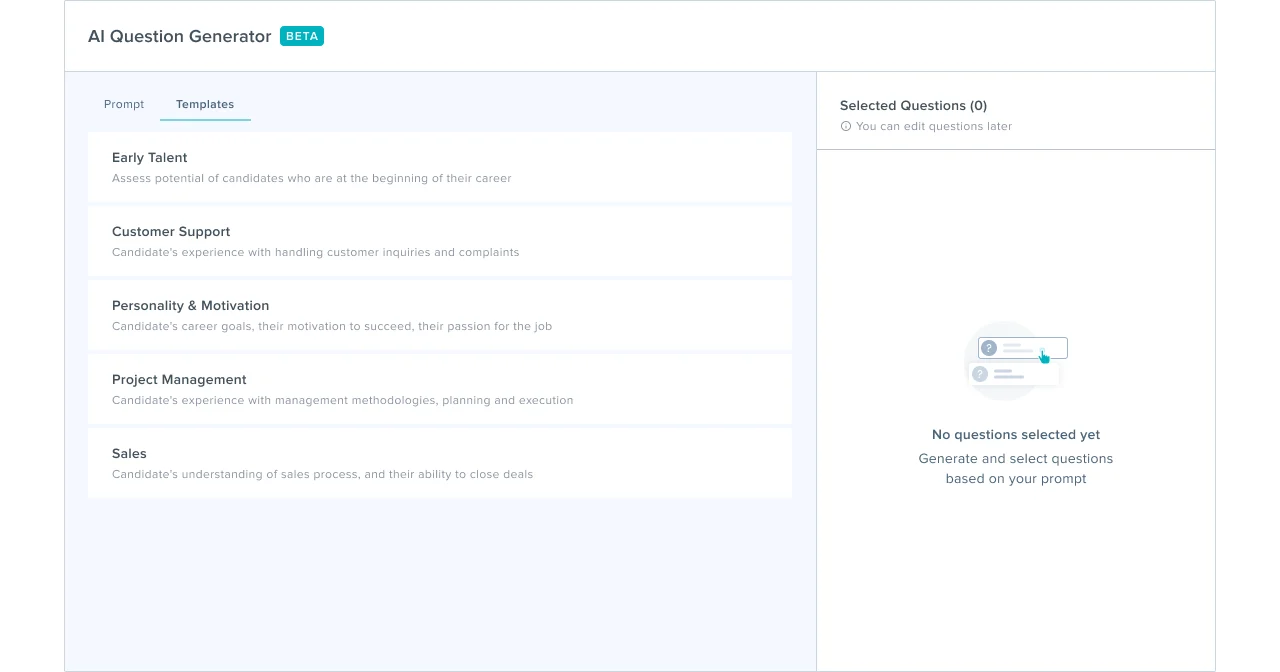
Incorporate a mix of different question types to evaluate candidates from various angles. These may include behavioral questions (asking about past experiences), situational questions (presenting hypothetical scenarios), and technical questions (assessing domain knowledge).
Provide interviewers with situational guidance. This will help interviewers evaluate candidate responses while suggesting follow-up questions that delve deeper into specific scenarios. It will help ensure that interviewers consistently assess candidates' problem-solving skills, decision-making abilities, and alignment with organizational objectives.
Step 2: Establish Clear Communication Channels
Clear communication channels are vital for efficient collaboration among the interview team. To ensure that you are doing this correctly, you should:
Define the roles and responsibilities of each team member involved in the interview process. Clearly communicate who is responsible for scheduling interviews, sharing candidate information, conducting evaluations, and providing feedback. This ensures that everyone understands their specific duties and promotes accountability.
Establish a centralized tool that can be used to facilitate communication about candidate information, interview schedules, evaluation criteria, and more. Regularly update this platform to ensure all team members have access to the latest information.
Encourage regular communication and collaboration among the interview team. Foster an environment where team members can share their observations, insights, and feedback on candidates. This collaboration enhances the overall evaluation process and enables the team to make well-informed decisions.
Step 3: Provide Training and Guidance to Interviewers
Preparing interviewers with proper training and guidance is essential for conducting effective interviews. Here's what you can do:
Offer training sessions to interviewers, particularly those who are new to the process or lack experience. Train them on effective interviewing techniques, active listening, and questioning strategies to ensure a fair and objective evaluation.
Provide interviewers with resources such as sample questions and evaluation frameworks. These resources serve as a reference for interviewers to structure their questions, evaluate responses, and maintain consistency throughout the assessment process.
Conduct periodic refresher sessions to update interviewers on best practices and any changes to the interview process. These sessions reinforce the importance of adhering to established guidelines and ensure interviewers stay up-to-date with evolving hiring practices.
Preparing Your Hiring Team to Conduct Interviews
There is always more that can be done by members of the interview process to ensure they’re taking a best-in-class approach that aligns with organizational objectives. Here are some recommendations to put in place prior to the interview:
Review the candidate's resume, cover letter, and any additional documentation to familiarize yourself with their background and qualifications. Take note of any specific areas or achievements you would like to discuss during the interview.
Read and understand the interview guide. Make sure you know the competencies being assessed and the corresponding questions.
Prepare a list of follow-up questions based on the candidate's responses to potential scenarios or situations. This enables you to dig deeper into their thought process, problem-solving abilities, and decision-making skills.
Set up your interview environment to minimize distractions and create a professional atmosphere. Test any technology or tools you'll be using, such as video conferencing software or interview evaluation platforms, to ensure a smooth interview experience.
Take a few moments to mentally prepare and adopt an open and unbiased mindset. Remind yourself of the key competencies you are assessing and the goal of finding the best fit for the role.
Putting It All Together: Assembling the Right Tech For a Seamless Interview Process
Using AI-powered technology and automation to structure your process and prepare for interviews can help fast-track your efforts to carry out steps 1-3 above and deliver an amazing experience to candidates.
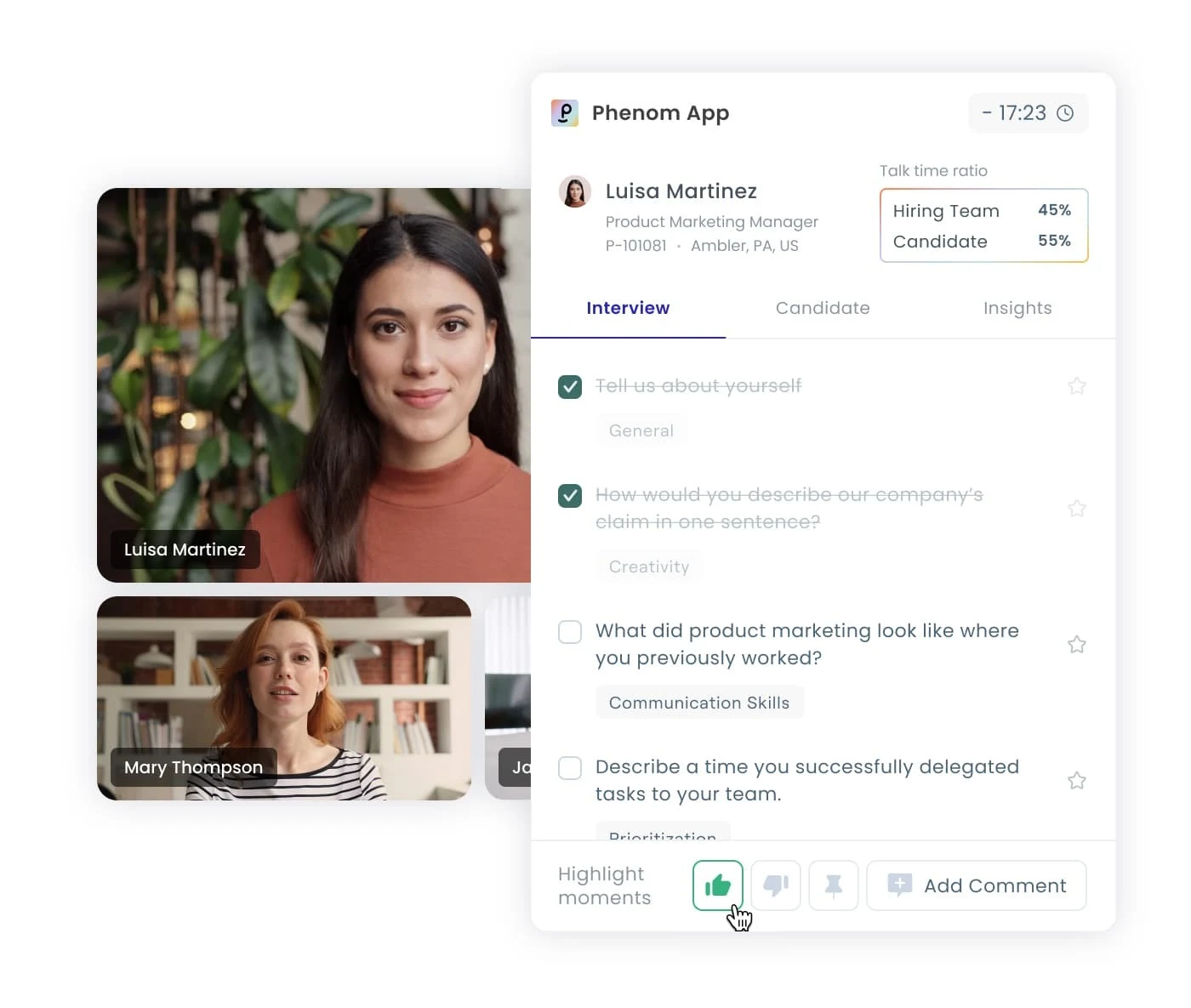
Phenom Interview Intelligence, for example, enables organizations to draft and manage their interview guides within a single software solution, providing quick and easy access to interviewers in preparation for their interviews. Leading up to and during conversations, interview stakeholders can rely on a professional question bank and even have additional questions automatically suggested based on the context of the job or candidate they are interviewing. As the process moves forward, notes and comments can be captured right in the platform, removing inefficiencies that typically occur in the process.
It can also provide in-depth analytics that showcase how resources are being used by interview stakeholders, automatically identifying interviewers who need additional training and providing recommended resources for them to sharpen their skills. Interview intelligence makes it easy to add custom questions to interview guides and resources that will help interviewers avoid asking questions that could be biased or even illegal.
When preparing for and conducting interviews with interview intelligence technology, hiring decision-makers benefit from having an overwhelming number of tasks reduced. It provides them with easy access to the most important content, so they don’t need to dig around for information or consume their time with note taking. After the conversation takes place, the solution automatically provides ideas for questions and appropriate follow-up actions depending on the context of the conversation and stage in the interview process. All this so interviewers can focus on the most important part of the interview: the candidate.
To learn more about how Interview Intelligence can improve your organization’s current interview process, request a personalized demo today.
In the next chapter of this series, we’ll explore best practices to bolster hiring team communication and efficiency. If you missed the first blog, check out Four Ways to Improve the Interview Experience.



Get the latest talent experience insights delivered to your inbox.
Sign up to the Phenom email list for weekly updates!


