


Vituity’s Pipeline-Ready Strategy for Sourcing Ahead of Demand
Most talent pipelines are built in reaction to demand. A requisition opens, recruiters scramble, and sourcing begins from zero.
Physician sourcing and recruiting doesn't resemble a typical high-volume environment. The usual playbook of posting a job and waiting doesn't hold up when your candidate pool is already narrow. With a lean sourcing team and a large recruiter base, every hour of manual work is an hour not spent building relationships that lead to hires.
The team at Vituity built a system that runs the other way. Vituity is a 100% physician-owned partnership, which means every open role comes with requirements most health systems don't face: specific specialties, geographic fit, willingness to work in rural or underserved markets, and genuine interest in a partnership ownership model. Each position takes time to match, but waiting until a job opens to start building a pipeline isn't an option.
At IAMPHENOM 2026, Stephanie McMilon, Supervisor of Talent Sourcing at Vituity, shared how a sourcing team of six supports over 50 recruiters while keeping pipelines warm before any requisition opens.
Watch the session here, or catch the key insights below!
How Does Using Tags in the Talent CRM Give Sourcing Teams an Advantage?
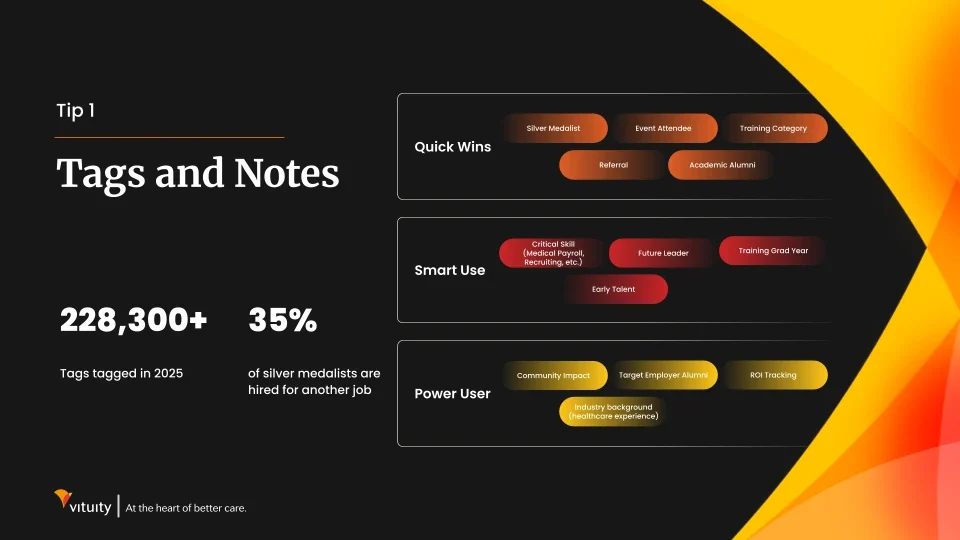
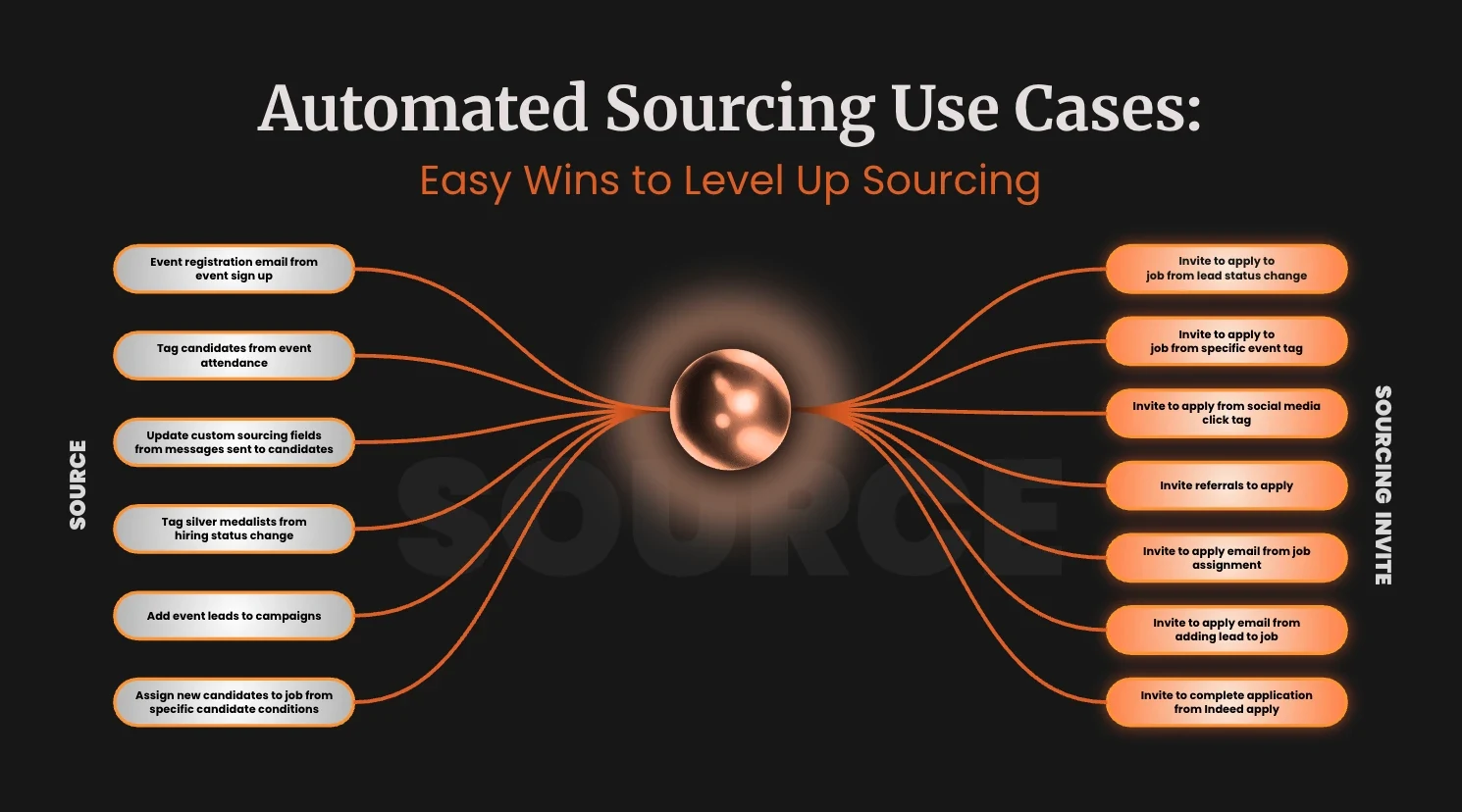
The foundation of this sourcing operation was tagging. Tags function as layered organizational buckets inside Phenom Talent CRM, broad at the top and increasingly specific as you go deeper. A tag for emergency medicine physicians might sit above one for emergency medicine residents, which sits above one for candidates who attended a specific conference. The same logic applies to event tracking: every candidate who stops by a booth, attends a sponsored reception, or signs up through an event registration form gets tagged, creating a record that answers related ROI questions later.
Automation carries a significant share of the tagging responsibility. When a candidate enters the system with a relevant job title, a university affiliation, or a qualifying set of skills, the CRM tags them automatically based on criteria set up in advance.
When a recruiter logs a phone screen under a specific category, an automation tags that candidate and adds them to a follow-up list without any extra manual steps. The full tag library is exported monthly as a simple spreadsheet showing each tag's name, creation date, and purpose, which keeps governance manageable even as the team and database grow.
"As much as I can tag and organize, the less work I have to do on the back end," McMilon explained. The practical outcome is a CRM that recruiters actively trust.
Related: Driving Impact with Talent CRM Strategies for Seamless Change Management
Can Projects Replace Spreadsheets for Candidate Tracking?
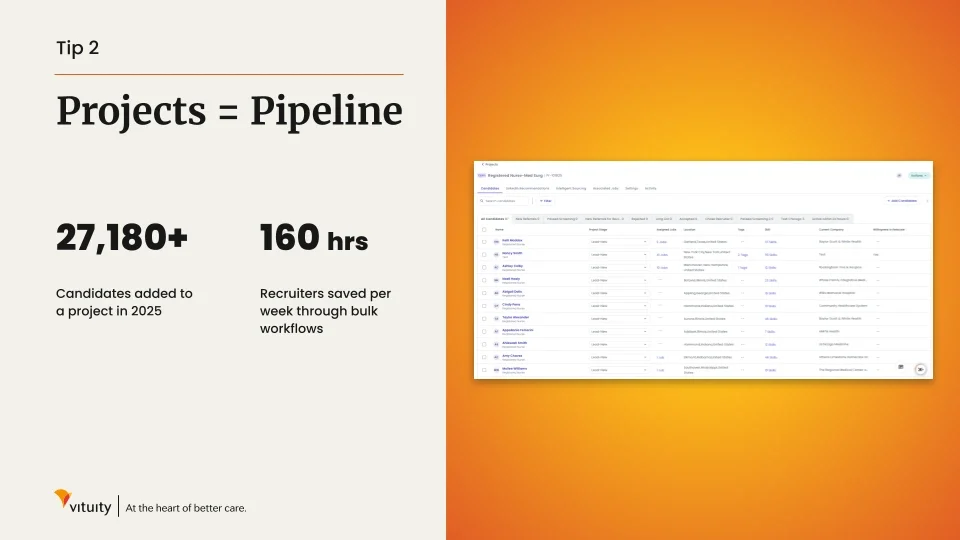
If tags are how the team organizes talent, projects are how they move it forward. A well-run project keeps recruiters from reverting to desktop spreadsheets by giving candidates a shared, always-current home with updated contact information.
Projects get built for new markets the organization is entering, specialties with consistent demand, and post-event follow-up with candidates who showed interest at a conference. Inside each project, recruiters can see at a glance whether a candidate has been called, texted, or sent a job link, and managers can check progress without scheduling a status meeting.
The real efficiency gain comes from bulk actions. Rather than contacting candidates individually, a recruiter can select up to 50 profiles at once and send an email, a text, or add a note to each, collapsing what used to be a cumbersome manual process into a three-step workflow.
The handoff from pipeline to active recruiting also runs through projects. When a recruiter changes a candidate's project stage to signal interest, an automation triggers an invitation to apply and assigns that candidate directly to the open requisition, with no separate manual step and no risk of the candidate sitting in a holding pattern.
How Do Lean Sourcing Teams Run Campaigns at Scale?
Running meaningful outreach across a large candidate database with a small team was only possible because campaigns handled what individual touches couldn't. Vituity built each campaign to be personalized to the recruiter sending it, scoped to relevant candidate segments, and filtered to exclude anyone contacted recently or currently moving through a hiring stage. That targeting discipline is what separated their results from a generic blast.
Several campaigns ran entirely in the background. The incomplete application campaign, sent roughly a day after a candidate started but didn't finish an application, recovered completed applications without requiring any ongoing attention. A quarterly nurture campaign went out to the talent community with a soft, brand-forward message about Vituity's mission and ownership model, keeping the organization visible without making a hard recruiting pitch.
The sourcer-to-recruiter bridge mattered here, too. When McMilon sent a campaign on a recruiter's behalf, the message carried that recruiter's name and contact details, and any replies landed directly in their inbox. "By the time a recruiter gets into the role and starts really recruiting, they already have a list of warm candidates ready to go that automation and our sourcers were able to build on the back end," she shared.
What Results Did Vituity's Sourcing Strategy Produce?
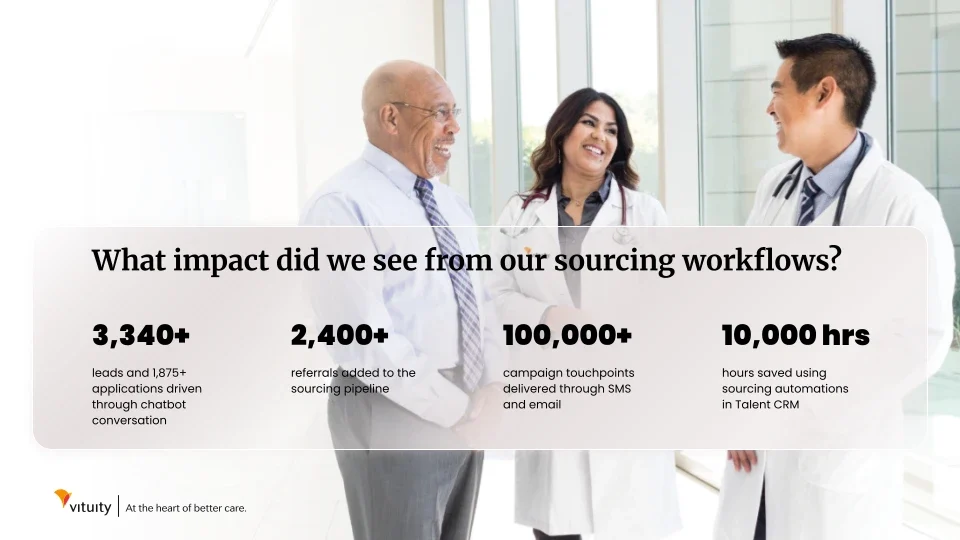
McMilon's answer was to make the Talent CRM the solution the team runs on, not a database they occasionally update. As she put it: "If my recruiters know my CRM is full and ready for them, they are not going to look for outside sources and waste time looking through 40, 50, 60 different people for that one person. We've already done that work for them." Because every part of the Talent CRM was working together, a team of six could do the work of dozens, and the numbers show the impact:
3,340+ leads and 1,875+ applications generated through chatbot conversations
2,400+ referrals added to the sourcing pipeline
100,000+ campaign touchpoints delivered via SMS and email
228,300+ candidates tagged in a single year, with 35% of silver medalists eventually placed in another role
27,180+ candidates added to projects, saving recruiters an estimated 160 hours per week through bulk workflows
51% average campaign open rate across 112 campaigns producing 13,000+ applications
10,000 hours saved through sourcing automations inside their Phenom Talent CRM
How Do You Build a Candidate Pipeline Before You Need It?
Building a proactive candidate pipeline doesn't require rebuilding everything at once. Three actions are enough to begin:
Tag talent early: Build pools for roles you know are coming before requisitions open. Tags take time to set up once and pay off every time a new position opens, especially for hard-to-fill specialties where cold sourcing takes weeks.
Launch one evergreen project: Pick your highest-volume role and build a simple workflow to track and qualify warm candidates in a single place. Give recruiters visibility into who's been contacted and where each person stands, and let automations handle the handoff when a candidate is ready to apply.
Keep the pipeline warm with campaigns: Consistent, relevant outreach is what prevents a pipeline from going cold between open requisitions. Starting with an incomplete application campaign offers a high return with no ongoing management once it's running.
Test-drive modern CRM sourcing and experience firsthand how these tools can reshape the way your team builds and manages talent pipelines.


Get the latest talent experience insights delivered to your inbox.
Sign up to the Phenom email list for weekly updates!


