

How Bright Horizons Built a Campus Recruiting Program That Proves Its Own ROI
Early talent recruiting lives in a different time zone than the rest of talent acquisition (TA). You meet someone at a college fair in October, they’re ready to graduate in May, and whether they remember you nine months later depends entirely on how well you’ve stayed in touch.
For Bright Horizons, a company founded around supporting working families since 1986, that long relationship arc is both the challenge and the opportunity.
At IAMPHENOM 2026, Susie Billingsley, Director of Candidate Experience and Early Talent, walked through how Bright Horizons replaced a manual, spreadsheet-based campus strategy with event-driven automation— and what that shift produced in candidate pipeline and cost per hire.
Watch the full session here, or explore the highlights below.
What Are the Most Common Campus Recruiting Challenges?
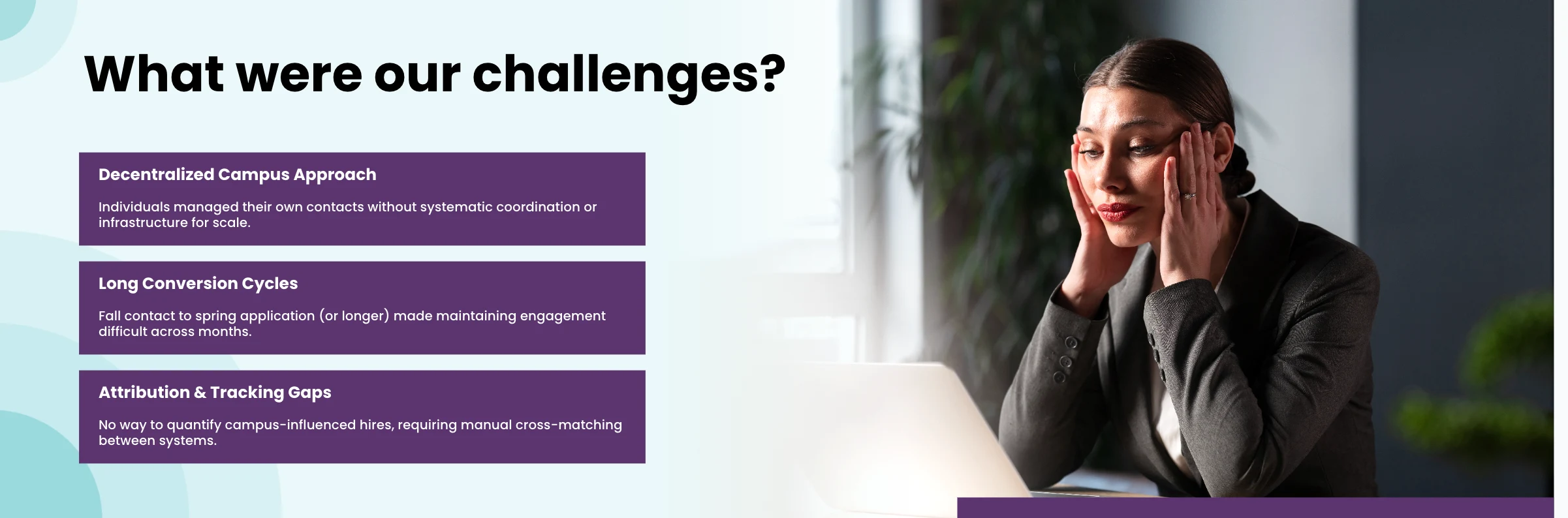
Before implementing a structured system, Bright Horizons ran its campus contact management out of a shared spreadsheet accessed by a team of roughly 50 people. Once a year, they were asked to validate contacts, remove people who had moved on, and add new ones. “Any time you have that many people manipulating one resource, obviously, there are challenges there as well… that spreadsheet was a top challenge,” Billingsley explained. Filters get set, edits disappear, and data gets stale in between annual cleanups.
The deeper challenge, however, was attribution. When a student met a Bright Horizons recruiter at a spring career fair, connected, and then applied eight months later through Indeed, the traffic source showed Indeed. The campus connection was invisible. That made it nearly impossible to measure the actual impact of campus investment or justify the cost of attending events. Billingsley’s team knew the work mattered; they just couldn’t prove it.
How Can Companies Scale Campus Recruiting With Automation?
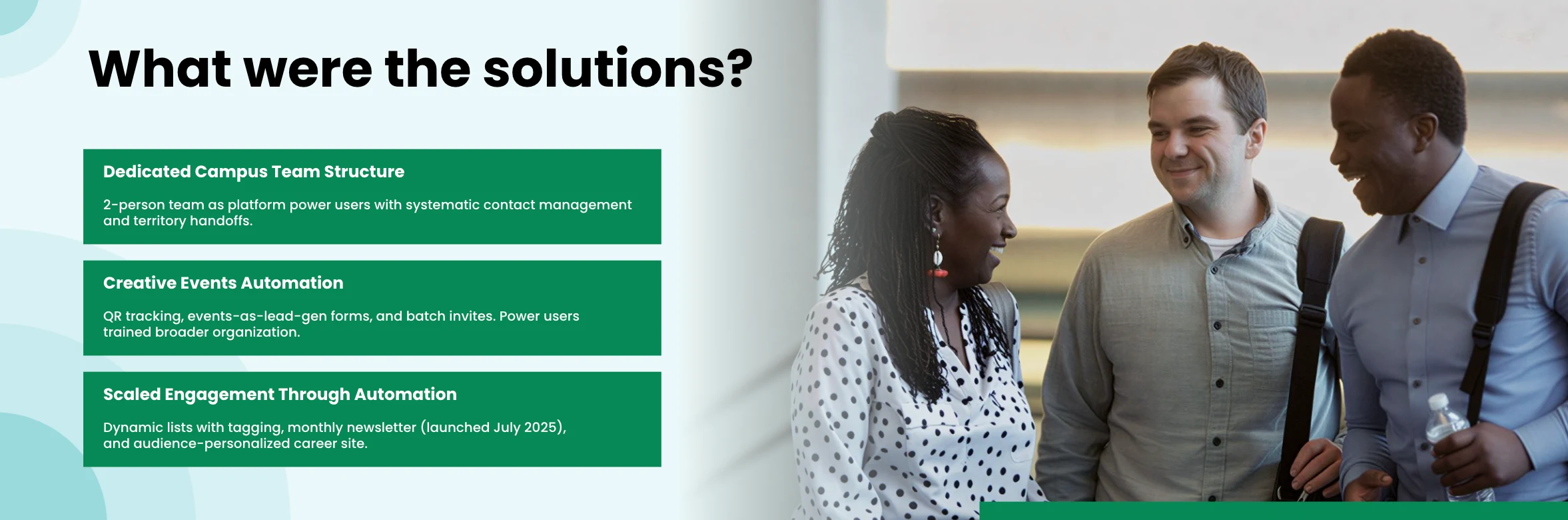
The first change was structural: Bright Horizons built a dedicated two-person campus team. The broader TA function still attends events, but these two people own the process, build the expertise, and ensure consistency across the strategy. With that foundation in place, they could start actually using the platform to scale their work. “We really needed to find better solutions for how we were going to do our campus outreach at scale — and how we could replicate that across our full team,” Billingsley said.
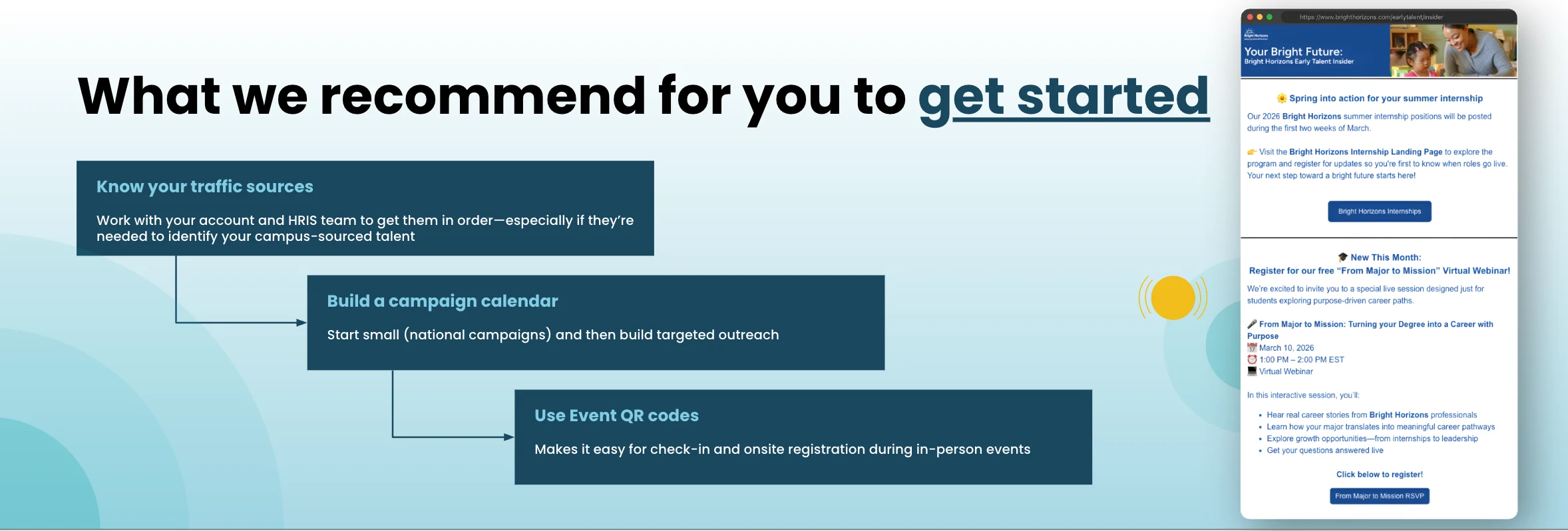
Phenom Early Talent Events gave the team two tools they didn’t have before: QR codes and event-level tracking. At every campus event, two QR codes are in play. One is for walk-in registration where students who haven’t pre-registered can scan it and submit their contact information before they walk away. The second is for self-check-in, moving pre-registered students from “registered” to “attended” without recruiter involvement. Both feed the same event record, and both trigger separate follow-up automations. Attendees get one message; registered-but-no-shows get another.
Take a quick click-through tour of Phenom Recruitment Events
Tagging is how attribution got fixed. Every lead from Handshake gets a Handshake tag. Every campus contact gets tagged as “early talent.” Those tags then drive automation membership, so the right people are always in the right nurture journeys regardless of where they eventually apply. Spotlights built off of those tags give the campus team real-time visibility into campus-influenced applicants and hires — even when a job board gets credit for the application source.
With 2,000+ campus contacts in their Phenom Talent CRM, Bright Horizons also runs a monthly newsletter to keep educators and college contacts warm. The audience here isn't job seekers but rather the school contacts who can spread the word when internships open. The newsletter is structured to respect that distinction. It’s informational, not a recruitment pitch.
Related Resource: How to Make Recruitment Events Work for Your Talent Acquisition Strategy
How Does Campus Recruiting Automation Reduce Cost Per Hire?
Bright Horizons’ results showed what the right early talent infrastructure can accomplish with AI and automation when tracking is actually working.
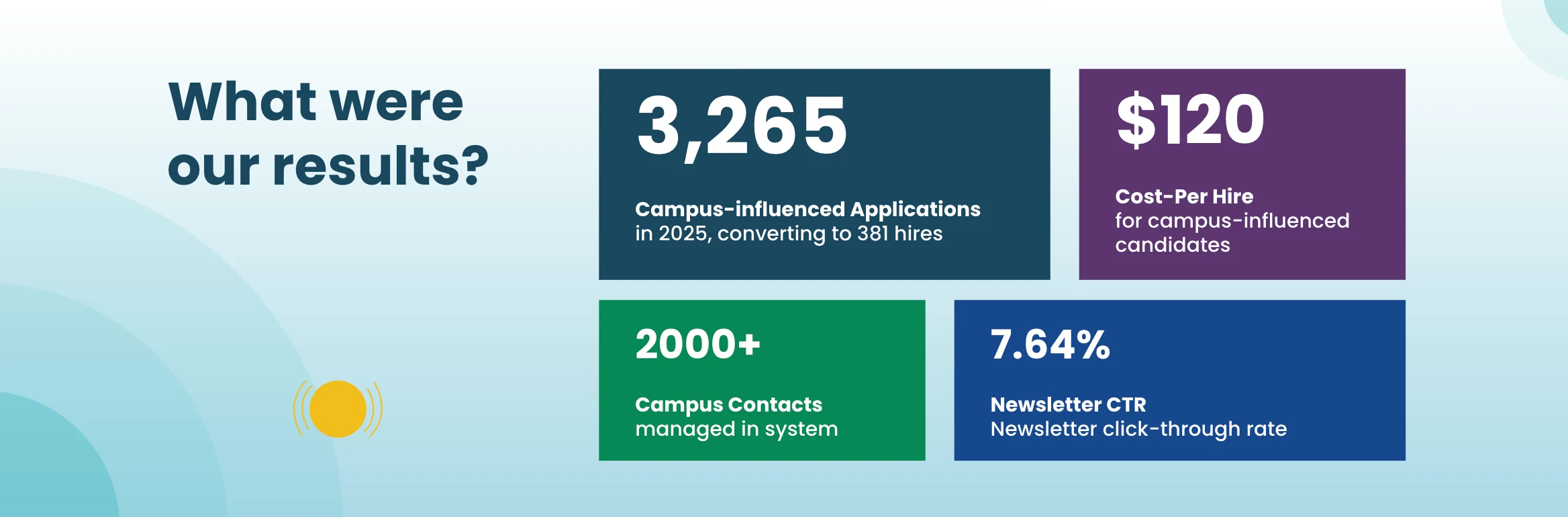
3,265 campus-influenced applications, converting to 381 hires
$120 cost per hire for campus-influenced candidates
(approximately 80% below the education industry benchmark)2,000+ campus contacts managed in the Talent CRM for easy engagement
7.64% newsletter click-through rate
(4x typical campaign engagement)
“Our cost per hire was $120 for our campus-influenced hires — almost 80% below the benchmark within the education industry. So the work that our team is doing is making an impact and doing it at a lower cost per hire.”
— Susie Billingsley, Director of Candidate Experience and Early Talent, Bright Horizons
Because Bright Horizons tracks candidates by tag, not just application source, they can see the full conversion path from campus contact to hire even when a candidate technically applies through Indeed or another channel. That visibility is what makes it possible to prove campus ROI and defend the investment when it comes to event budgets and staffing decisions.
How Else Can Employers Close Campus Hiring Attribution Gaps?
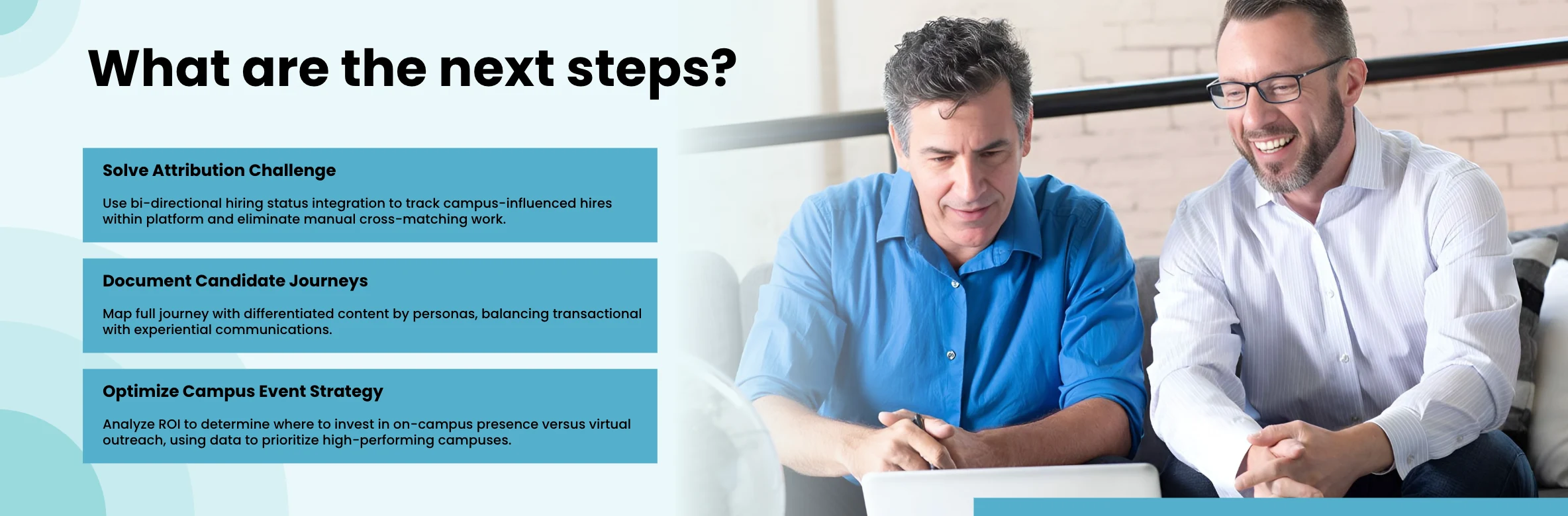
Bright Horizons’ next phase centers on closing the remaining campus hiring attribution gap. Bidirectional hiring status integration with their Applicant Tracking System (ATS) will let the team trigger automations based on candidate stage changes, eliminating manual cross-matching and documenting the full candidate journey from campus contact to hire.
The events strategy itself will also get a data-driven audit by campus and event type. The goal is to determine where in-person presence is earning its cost and where virtual outreach can achieve the same result more efficiently.
For teams building or scaling a campus program, Billingsley’s advice is to keep forms short (sometimes name, email, and phone is enough), build a campaign calendar starting with four key dates (fall graduation, spring graduation, internship opening, and one additional touchpoint), and let the system handle the nurture. The long conversion cycle of campus recruiting is only a liability if you have no way to stay in front of candidates during it. With automation, it’s an advantage.
Learn more about how to Automate Campus Recruiting

Raghu is a Product Marketing Manager at Phenom. Outside work, he experiments in the kitchen and unwinds with a good thriller.


Get the latest talent experience insights delivered to your inbox.
Sign up to the Phenom email list for weekly updates!


