


The Power of an AI Intake Agent: SSM Health’s Journey to Hiring Excellence
For most of its history, the healthcare intake process has looked like this: the recruiter gets a new requisition, finds time on their calendar, finds time on a hiring manager's calendar, schedules a meeting, takes notes, and then manually turns those notes into a job description, an interview plan, and a sourcing strategy. Every step is a chance for something to fall through the cracks.
At SSM Health, a Catholic nonprofit health system with over 40,000 employees and 23 hospitals across the Midwest, that process was already strained before the pandemic. After COVID, remote recruiters, a shift to service lines, and an average of 60 hiring managers per recruiter pushed it close to breaking.
At IAMPHENOM 2026, Annie Stone, Talent Solutions Consultant at SSM Health, walked through how SSM stood up Phenom Intake Agent — a conversational assistant that automates intake conversations between recruiters and hiring managers, turning unclear requirements into sourcing-ready job descriptions, interview guides, and screening criteria in hours.
Watch the full session here, or explore the highlights below.
Where Does the Hiring Manager Intake Process Break Down?
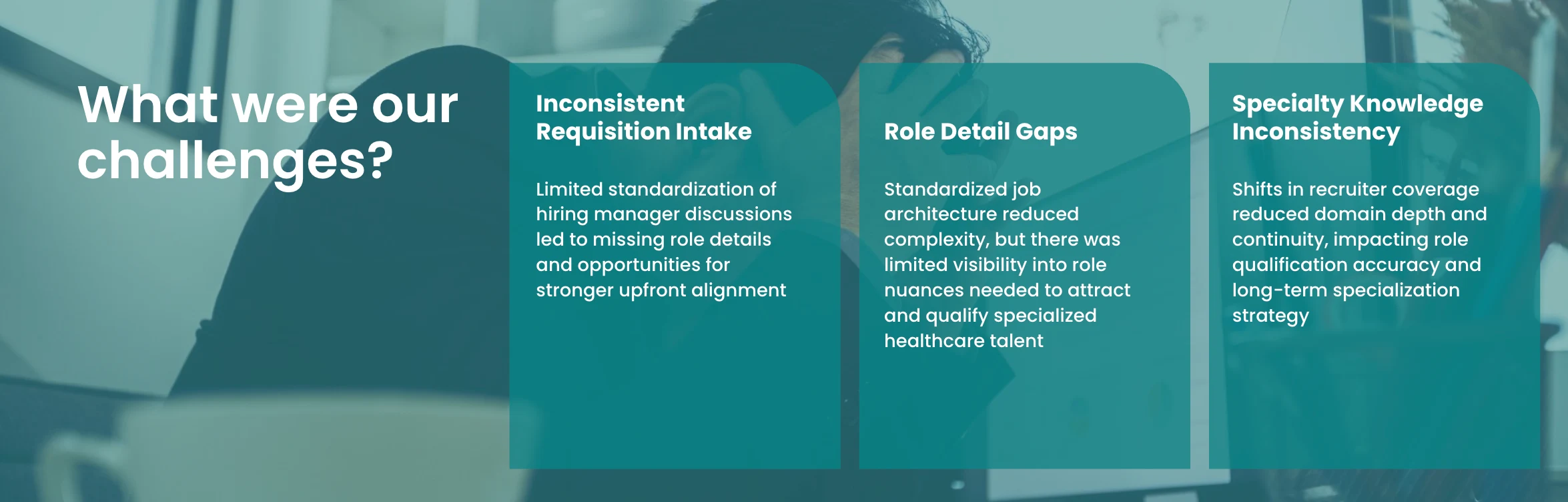
SSM Health's challenges weren't unique to healthcare, but their scale amplified them. When the system moved to a service line model, recruiters who had previously served one hospital's teams were suddenly responsible for that clinical function across the entire system. That meant supporting hiring managers in multiple states who they'd never met in person, couldn't easily call because of time constraints, and who often had deeply specific role requirements that weren't captured anywhere in their Workday Applicant Tracking System (ATS).
Stone gave a vivid example of how two nursing positions can look identical "on paper" but hinge on the makeup of the team behind them. One unit has senior nurses retiring at once with no bandwidth to onboard a new graduate. The other has senior nurses planning to mentor before they retire. "While the job description is the exact same for those two positions, the needs of that department aren't captured in the ATS or on that job description," said Stone.
Without a structured intake conversation, recruiters weren’t able to tell the difference. With recruiters carrying an average of 150 open requisitions each and no standard intake process, those conversations were happening inconsistently, incompletely, or not at all.
How Does an Intake Agent Replace the Traditional Intake Meeting?
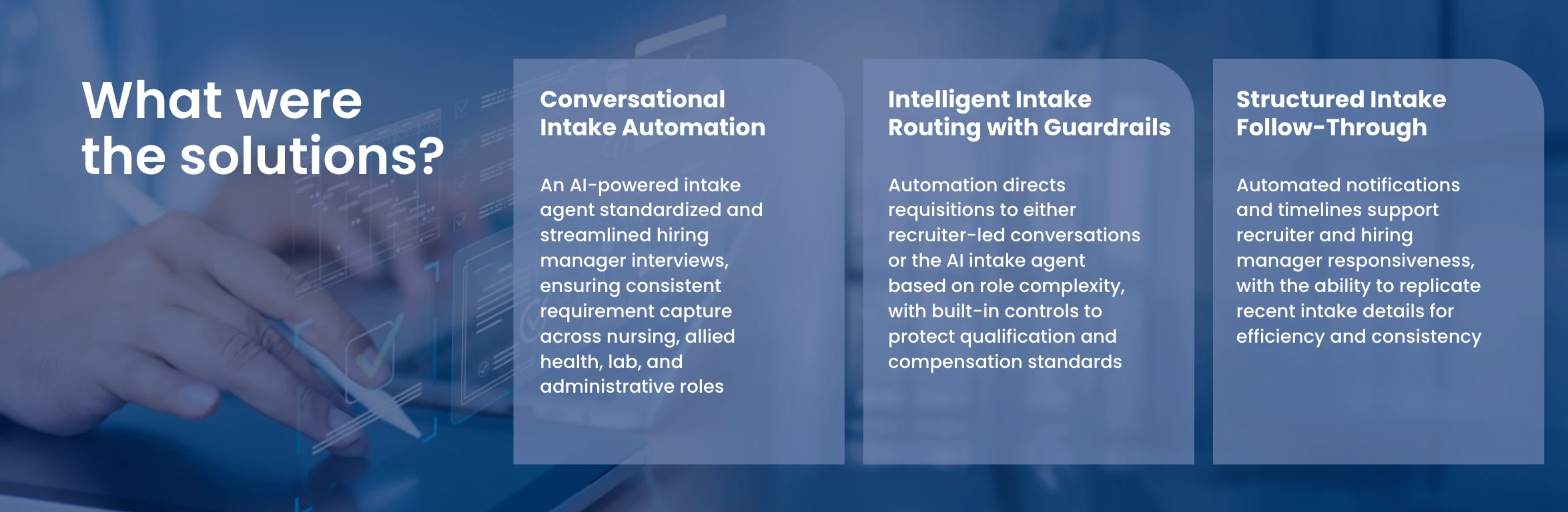
To close those gaps, SSM Health turned to Phenom Intake Agent — an AI conversational assistant designed to capture the role nuances an ATS can't.
At SSM, Intake Agent triggers the moment a requisition is approved in Workday, without any recruiter intervention. For roles below director level, the integration pulls the req into Phenom, applies conditional logic to determine the intake workflow, and initiates the conversation directly with the hiring manager. Hiring managers receive an invitation with single sign-on access. The agent guides them through a structured conversation: why the role is open, what makes someone successful in a patient-facing environment, must-have competencies, scheduling needs and shift preferences, and any other unit-specific nuances the recruiter would otherwise need to chase down.
An opt-out feature was built specifically for high-volume roles. If a manager completed an intake for a similar role within the past 30 days, they can apply that previous feedback in full, and individual questions can be skipped if the context hasn't changed. Stone called this critical to manager adoption: "Our hiring leaders don't have to be frustrated by repeating the same answers over and over again. If you have a scheduler and you're hiring 30 of those a month, there's not going to be a lot of nuance between that."
Once the conversation is complete, the recruiter receives a full intake package including transcript, job highlights tailored to the role, a recommended interview plan, and a sourcing prompt ready to activate. Hiring managers also select up to three ideal candidate profiles to calibrate Phenom Fit Score matching against the specific needs described, not just the generic job title.
Related Resource: Meet the Intake Agent: The Intelligent Intake Assistant Built for Recruiters
What Measurable Impact Did the Intake Agent Deliver in the First Month?
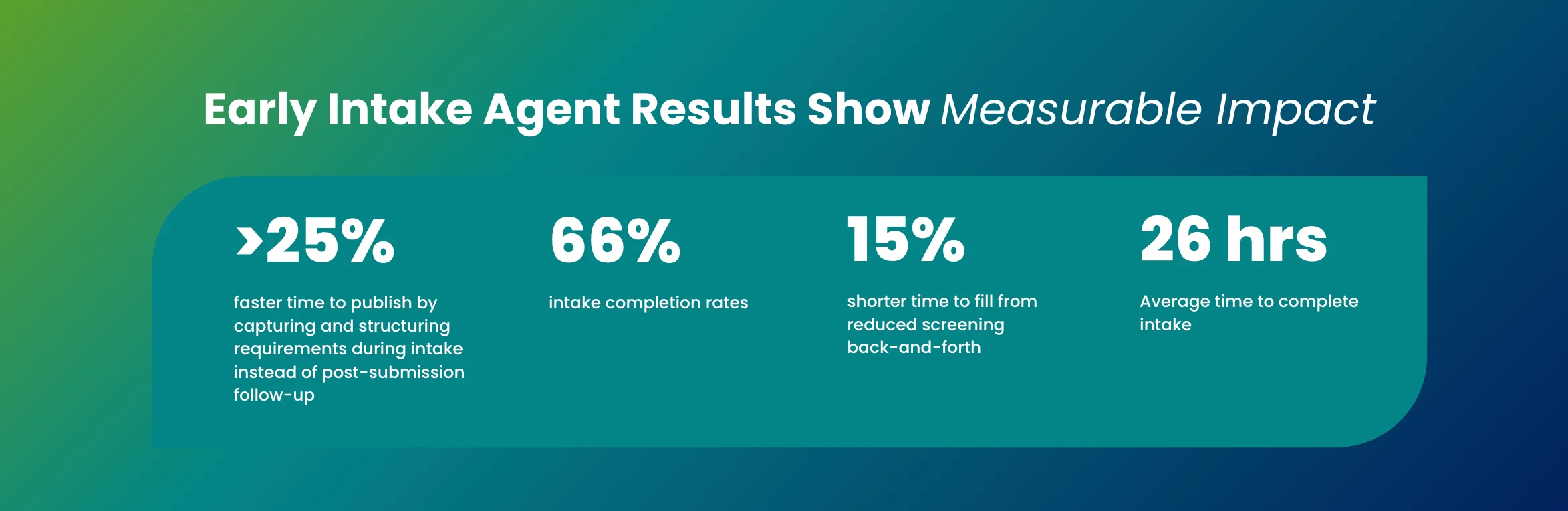
SSM’s discovery-to-go-live timeline for Intake Agent was just over two months. They rolled it out across all roles below Director level at once with impactful early results:
25%+ faster time to publish
66% intake completion rate
15% shorter time to fill
26 hours average intake time
Stone was quick to put the 66% completion rate in context. Before Intake Agent, SSM had no standardized intake process in place, so the comparison isn't 66% versus 100%. It's 66% versus a starting point of zero. That 66% represents intake conversations recruiters no longer have to schedule, run, or manually document. The remaining 34% still happen through a recruiter-led one-to-one meeting reserved for senior or strategic roles.
That number also reflected another milestone. "This was really our hiring leaders' first true foray into the Phenom system themselves," Stone noted. "Before, our system was really relegated just to our recruiters. So this was their first opportunity to log in, start getting comfortable with the framework."
Where Is SSM Health Taking AI Intake Next?
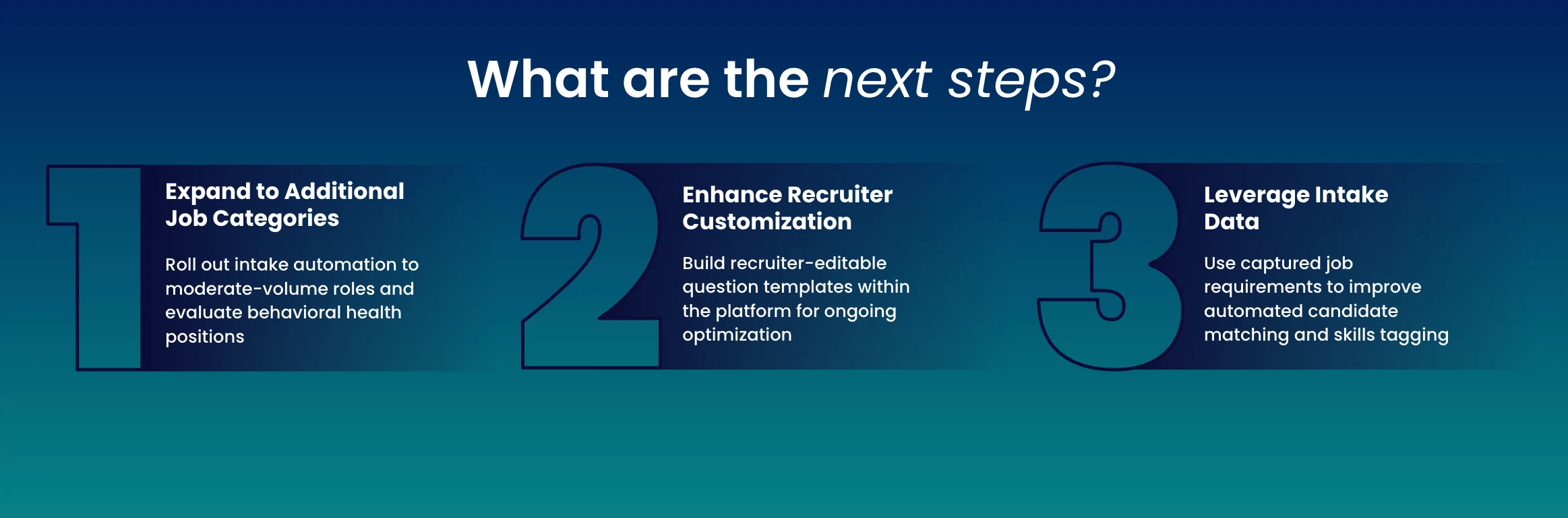
SSM’s roadmap focuses on three priorities. First, expanding Intake Agent into additional job categories, including moderate-volume roles and behavioral health positions. Second, building recruiter-editable question templates inside Phenom so recruiters can fine-tune the agent's questions over time without engineering support. Third, putting the intake data itself to work: using captured job requirements to improve automated candidate matching and skills tagging.
"We are looking for ways to have that additional partnership of the recruiter with the AI to enhance that automation," Stone said, "but allow them to maintain autonomy of their job."
Stone also flagged an unexpected benefit already taking shape. The interview plan generated by Intake Agent is helping recruiters build better scheduling templates in Phenom Automated Interview Scheduling, incorporating the hiring manager's stated preferences for interview timing and team composition without requiring a separate calendar coordination step. The intake data is doing more than informing the requisition. It's starting to drive automation across the rest of the hiring workflow.
Stone's advice for healthcare systems considering a similar move was to start by identifying the noise. What are pre-boarding and hiring teams hearing after a new employee starts? Those are the details the recruiter should have known upfront.
That's exactly the gap Intake Agent is built to close.
Watch how organizations use Phenom Intake Agent to eliminate the manual back-and-forth between recruiters and hiring managers.


Get the latest talent experience insights delivered to your inbox.
Sign up to the Phenom email list for weekly updates!


