

From Job Descriptions to Skills Matching: How Sleep Number Cut Time to Fill and Cost Per Hire
A smart sleep and wellness company that tracks 18 billion data points per night for 16 million customers knows something about precision. Sleep Number applies that same mindset to hiring. In year one with Phenom Applied AI, the team got the foundation in place. In year two, they rebuilt how they think about who they’re looking for.
Mick Joneja, Sr. Director of Workforce Strategy and Talent Acquisition at Sleep Number, detailed the company’s shift from traditional screening to AI skills-based matching and what that change produced in time to fill, cost, and candidate quality.
Watch the full session here, or explore the highlights below.
How Can Skills-Based Hiring Improve Candidate Quality?
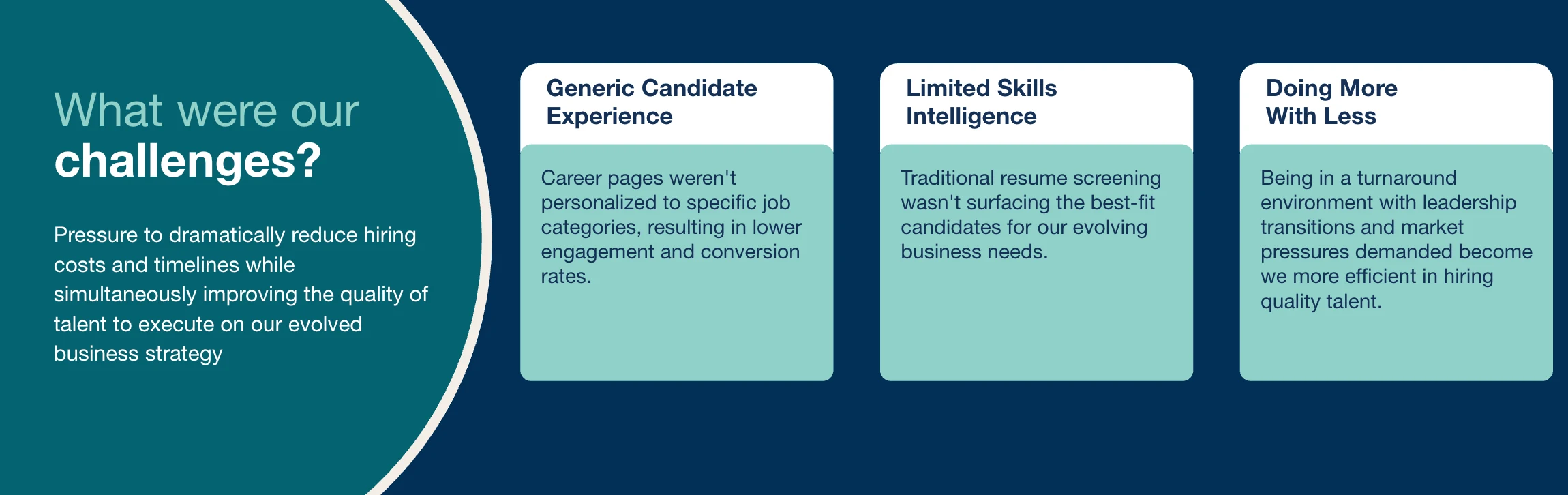
A 28% surge in applicant volume should be good news. For Sleep Number, it came with a problem: quality mismatch. Warehouse workers and forklift drivers were applying for sales professional roles. With 79% of hiring concentrated in field sales, getting that pipeline right was central to the entire talent acquisition (TA) strategy.
The underlying cause was a career site and intake process that hadn’t been built around personas due to a tight 90-day launch. There was no targeted content, no persona-specific pages, and no structured way for recruiters to assess skills rather than job description requirements. Intake conversations were focused on the candidate’s experience and qualifications, but the deeper question of what skills someone actually needed to succeed never came up.
Sleep Number was also in the middle of a leadership overhaul. A new CEO and half the C-suite had been replaced, and the skills TA needed to hire for were actively shifting.The team was competing for candidates without a clear picture of who the right candidate actually was.
How Did Sleep Number Build a Skills-Based Hiring System?
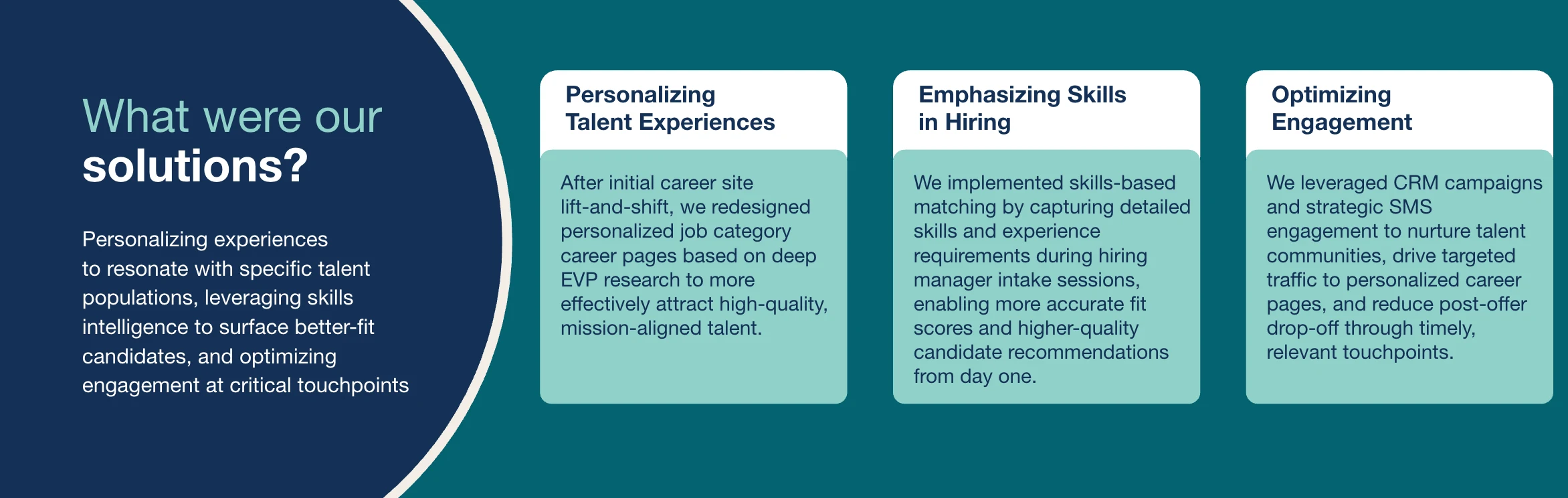
The process started not with technology but with research. Before updating a single page on their new Phenom Career Site, Joneja’s team interviewed recruiters, HR business partners, and business unit leaders to understand what actually made candidates successful. The goal was to uncover the traits, skills, and signals that distinguished successful hires.
That research became the foundation for new candidate personas, new career site content, and ultimately the skills criteria built into Phenom Talent CRM, where AI fit scoring, dynamic talent pipelines, and actionable insights would help recruiters engage and prioritize candidates more efficiently.
The career site revamp centered on a sales professional persona page — built around what Joneja called “the answers to the test.” Content reflected real recruiter insight about what candidates respond to, not generic copy. Skills collection across the site runs through multiple touchpoints: a personalized career assessment widget, a chatbot, and a talent community form. All of it feeds directly into the Talent CRM, so recruiters can search on skills without manual effort.
Intake conversations changed, too. "What skills do you need? What's important to have this person be successful?" Those signals fed directly into Phenom Fit Score (an AI matching tool in the CRM) which adapted as recruiters used it, becoming more specific to Sleep Number's needs over time.
For high-volume sales hiring, that meant the system could surface strong candidates with non-traditional backgrounds, such as people with customer service and interpersonal skills who had never worked in retail sales but could learn.
Related: 4 Steps to Becoming a Skills-First Organization
What Results Can Skills-Based Hiring Bring To Talent Acquisition?
The impact showed up across speed, cost, and candidate quality:
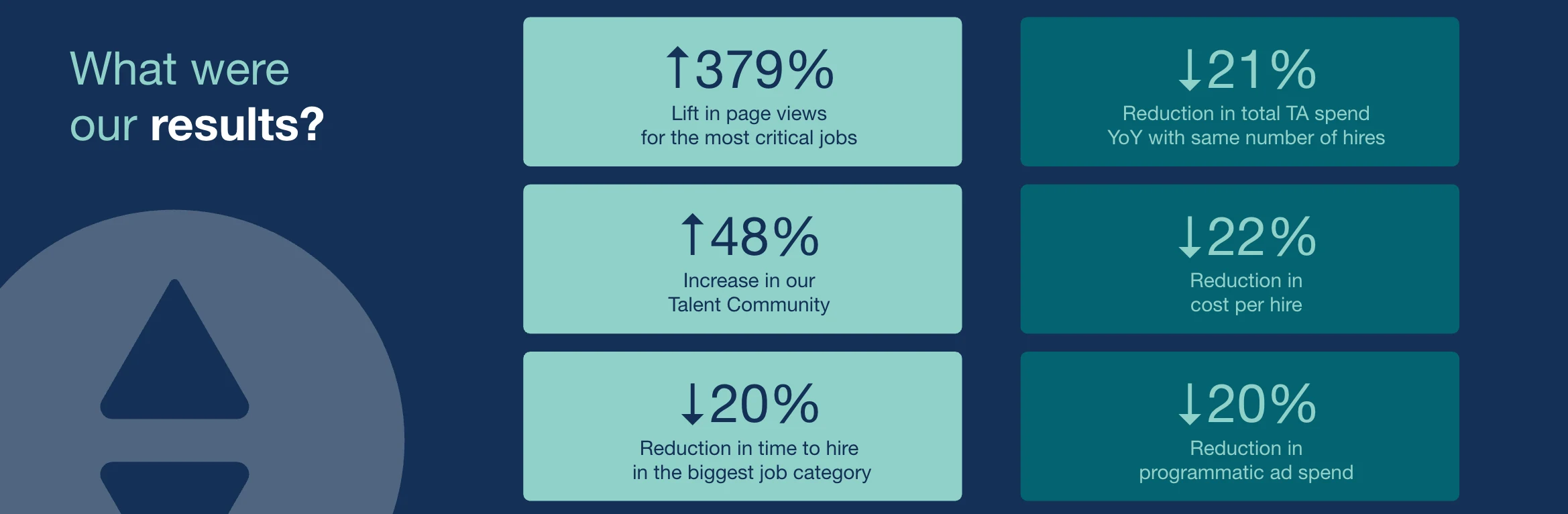
20% reduction in time to hire (48 → 38 days) for the largest hiring category
21% reduction in total TA spend YoY with the same number of hires
22% reduction in cost per hire
20% reduction in programmatic ad spend
60%+ reduction in post-offer drop-off rates for delivery drivers (from a 47% baseline)
379% increase in page views for the most critical job categories
48% increase in talent community growth
4x growth in CRM talent database after importing 50,000 historical candidates
Early signs on skills-based hire performance are promising. "We don't have it yet, because it's soon," Joneja said, "but initially it looks good." The team is tracking 60-, 90- and 120-day retention alongside commission attainment to build the full picture.
“Skills matching is so critical… the hiring processes, the speed, cost, having the most qualified applicants and hires — there are so many things that domino when you have skills matching the right way.”
— Mick Joneja, Sr. Director, Workforce Strategy & Talent Acquisition, Sleep Number
The delivery driver stat tells a story that applies beyond that role. Nearly half of candidates who received an offer dropped out before their start date. A manual SMS recruiting check-in process through Phenom surfaced the reason and kept candidates engaged. Automating it cut the loss rate by more than 60%. All it required was thinking about the candidate journey past the offer and using tools already available to intervene at the right moment.
"By doing the same thing, we were losing candidates," Joneja said. The 10-day improvement in time to fill came from faster matching, more targeted sourcing from the CRM, and intake conversations that gave recruiters clearer criteria from the start.
How Can Organizations Scale Skills-Based Hiring for Long-Term Success?
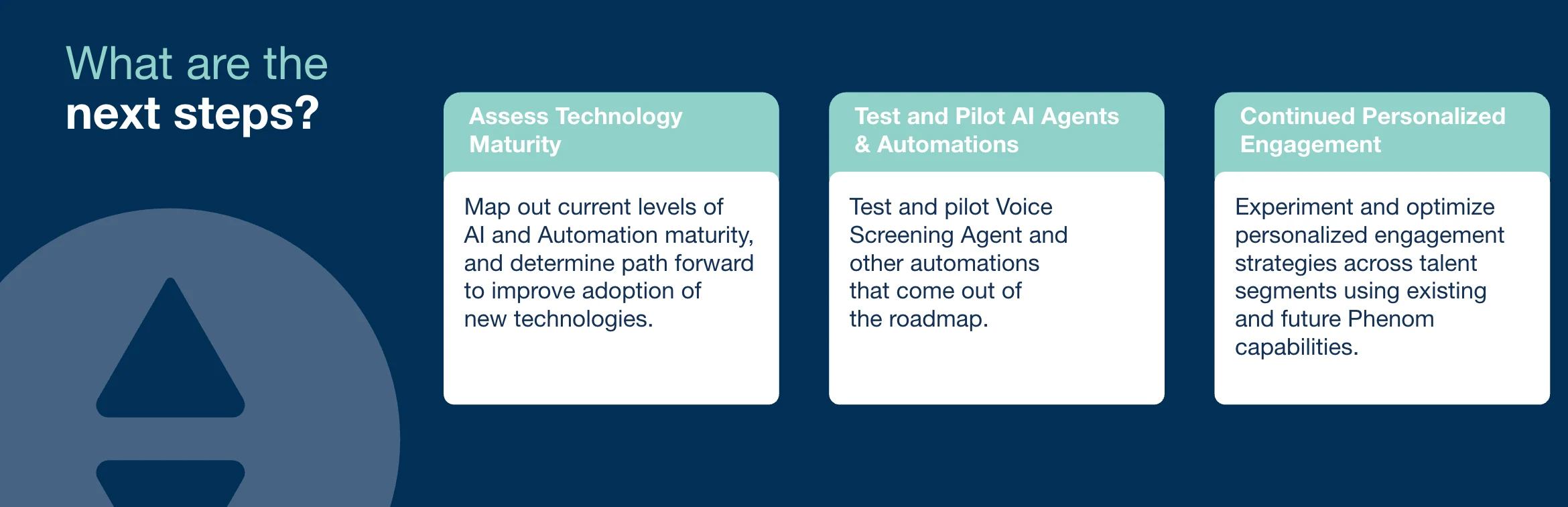
A pilot of Phenom Voice Screening Agent is the immediate next step, with Joneja estimating a minimum of 40 hours per recruiter per month returned just from automating phone screens.
That number came after the team completed Phenom’s AI maturity roadmap assessment, a process Joneja recommended to any team still trying to figure out where to prioritize. “When you find out where you’re at, not only are you getting a glimpse of where you sit... they’ll give you answers to the tests of what are the things that take you to the next step.”
Continued persona work is also on the roadmap. The 379% traffic lift from a single page built on real research showed the Sleep Number team that this investment pays. Not just on their career site, but across every channel.
As the company continues its turnaround, the skills profile they’re hiring for will keep shifting. Building a process that can adapt to that, rather than one built around static job descriptions, is what makes the whole system built to last.
Get The Strategic Guide to Skills-Based Hiring for a Competitive Edge

Branka’s a marketer with flair, a teacher turned Phenom player. She loves products that shine, making candidates’ paths fine and turns job hunts into a winner.


Get the latest talent experience insights delivered to your inbox.
Sign up to the Phenom email list for weekly updates!


